

You had your permanent makeup done, waited for it to heal, and then noticed that the color looked lighter, some areas seemed less even, or the shape looked slightly different from the first day.
That does not necessarily mean anything went wrong.
Permanent makeup almost always changes as it heals. Once the skin has recovered, it becomes much easier to see where the color looks balanced and where the result may need a small adjustment.
A permanent makeup touch-up is not about starting over. Its purpose is to refine the result: even out the color, add pigment where it healed lighter, and make small adjustments to the shape if needed.
Here is why the first result is not always the final one, when a touch-up is usually done, and whether you really need one.
Why the Result Changes After the First Procedure
Right after the procedure, the color usually looks brighter and more intense than it will once the skin has fully healed.
The area may also look slightly swollen or red, so the first day is not the right time to judge the final shade.
As the skin heals, you may notice dryness, peeling, or fine scabbing. Once this stage passes, the color softens, and some areas may look lighter than others.

How the pigment heals can depend on your skin, the treatment area, the artist’s technique, your aftercare, and your individual healing response.
That is why the true result is assessed after healing, not immediately after the appointment.
When Can You Have a Touch-Up?
There is no reason to rush into a second session.
The skin needs time to recover fully, and the color needs time to settle. This usually takes several weeks.
The exact timing depends on the area, how quickly your skin heals, and your artist’s recommendations.
If you go back too early, it can be difficult to tell which areas truly need more pigment and which ones are simply still going through the normal healing process.
It is also worth knowing that many artists have their own time window for what they consider a touch-up rather than a separate new procedure.
It is best to ask about this before your first appointment.
Is a Touch-Up Always Necessary?
Not always.
If you are happy with the color, shape, and overall evenness once everything has healed, your artist may not see a reason to make any changes.
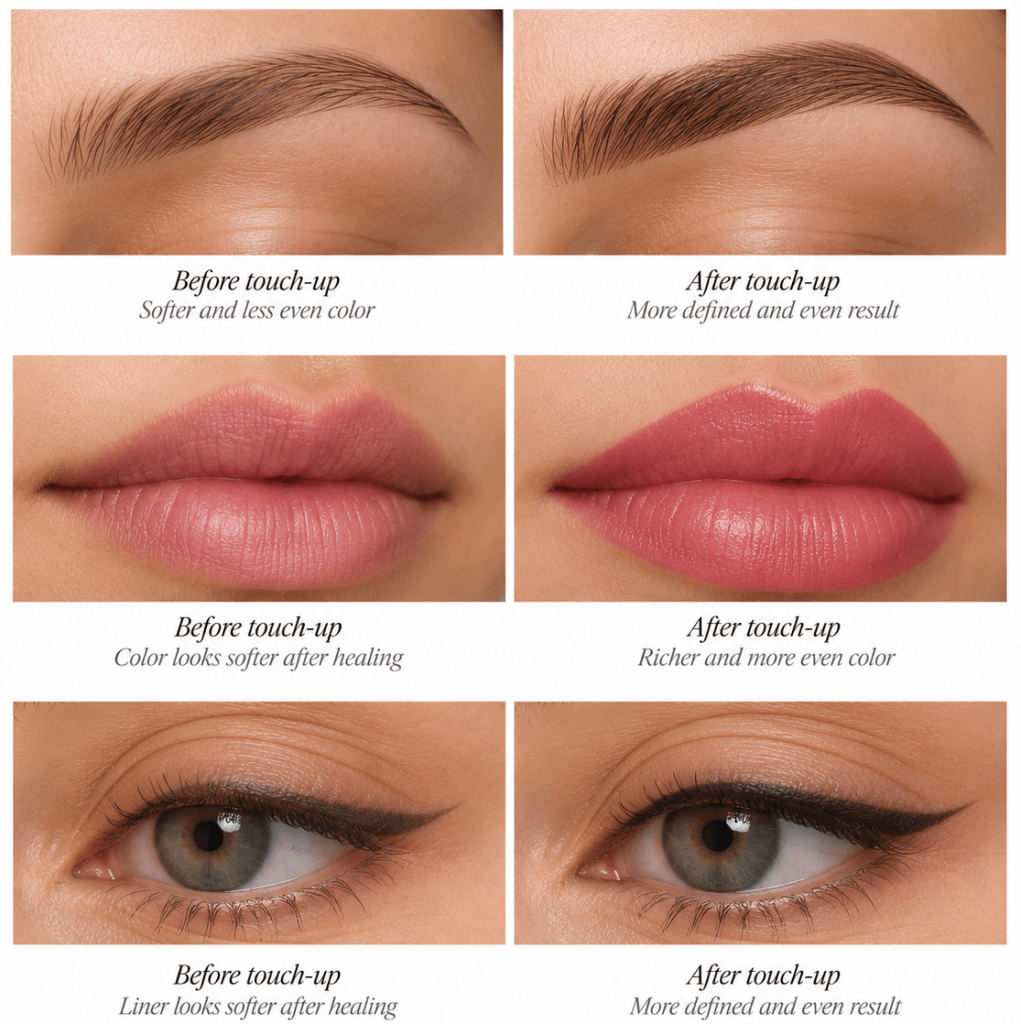
But it is also common for small lighter areas or uneven patches to become visible after the first session.
In that case, a permanent makeup touch-up can help make the result look more balanced and complete.
This is especially noticeable with soft shading or powder techniques, where the final evenness of the color is easier to judge after healing.
What Does the Artist Actually Do During a Touch-Up?
A touch-up is not simply a second layer of the exact same pigment.
First, the artist looks at how your skin healed and how the color settled.
During the appointment, they may:
- add pigment to lighter areas;
- make the color look more even;
- refine certain lines;
- make small adjustments to the shape;
- slightly change the color intensity if needed.
Only after the first procedure has healed can the artist clearly see where a small adjustment would help and where it is better to leave the result alone.
Can a Touch-Up Change the Shape?
Small changes are often possible.
For example, the artist may slightly refine the lip outline, add a little more density to one part of the brows, or adjust the lash line.
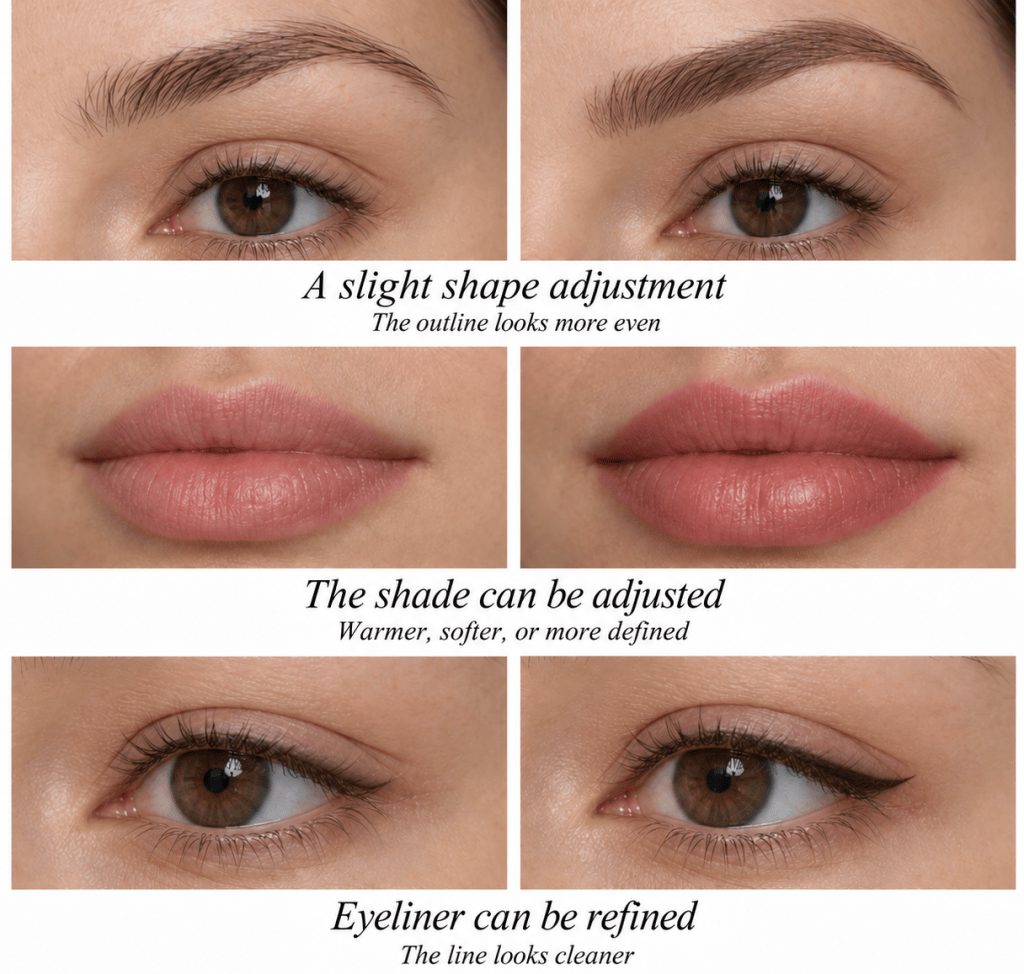
However, a touch-up cannot always completely change a shape that has already been created.
If you want a very different result after your first appointment, that should be discussed separately with the artist.
Can the Color Be Changed?
Small color adjustments are often possible.
Once the skin has healed, the artist can see how the pigment developed in your skin and may slightly change the mix or the level of saturation.
For example, they may make the shade a little warmer, softer, or more defined.
What can be changed depends on the color that has already healed into the skin.
Is a Touch-Up Always Necessary?
Not always. If the shape looks good after healing, the color is even, and you’re happy with the intensity, you may not need a touch-up at all.
Still, small details can become more noticeable once the skin has fully healed. One area may look a little lighter, the color may have settled unevenly, or you may simply want a bit more definition.
A touch-up is not about doing everything again from scratch. It is a chance to fine-tune what is already there and even out any small areas that need a little extra attention.
Once the skin has healed, the artist can see how the pigment actually settled. This matters especially with lips, because the same lip blush pigment can look different from person to person depending on the natural lip tone, skin, technique, and healing process.
If you’re happy with how everything looks, there is no need to book a touch-up just because it is often recommended.
And one more thing: a touch-up does not guarantee that permanent makeup will last a certain number of years. How long it stays visible still depends on the treatment area, your skin, the technique, the pigment, sun exposure, aftercare, and how your body holds the color.
Will You Need to Heal Again After a Touch-Up?
Yes, but this time the process usually feels more familiar because you already know what to expect.
During a touch-up, pigment is placed into the skin again, so the area needs time to recover. For the first few days, the color may look brighter than expected, the skin can feel a little sensitive, and some dryness or light flaking may appear.
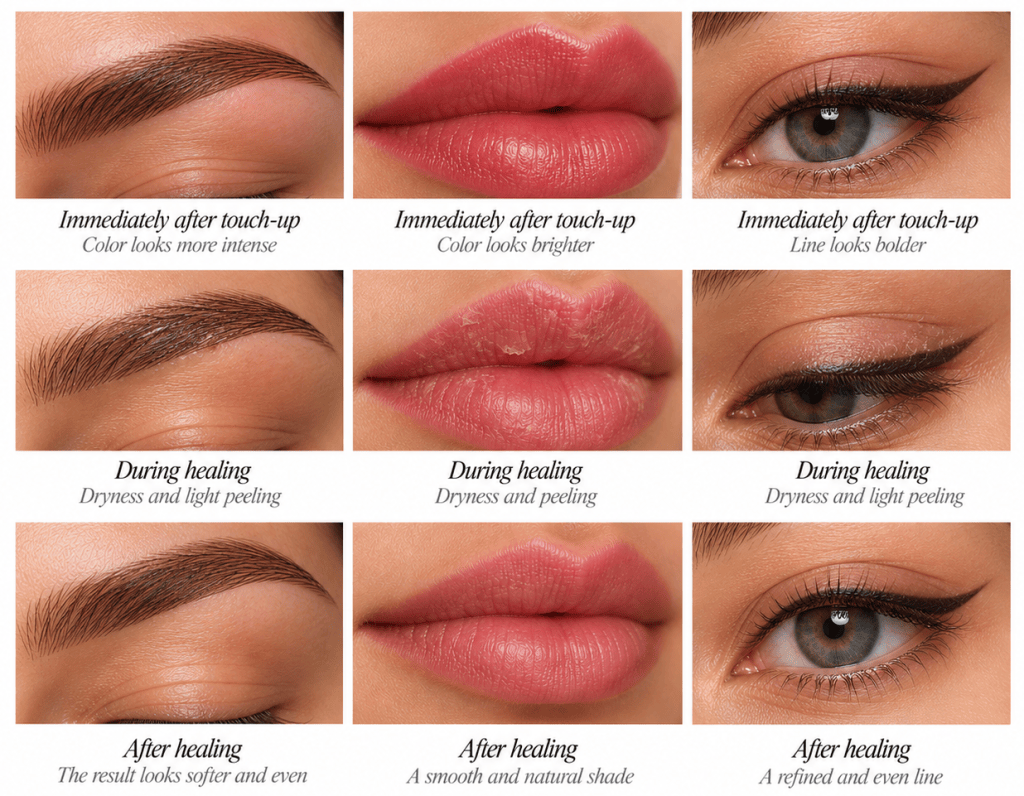
The healing process is often similar to what you experienced after the first procedure, although your skin may react a little differently each time.
Aftercare is just as important the second time around. Follow your artist’s instructions and give the area enough time to settle before deciding how the final result looks.
Questions and Answers
Can I Have a Touch-Up Done by a Different Artist?
Yes, but the new artist will first need to assess the healed work.
They did not see the original shape, the pigments that were used, or how the first procedure was performed, so not every artist will agree to correct someone else’s work.
Is a Touch-Up More Painful Than the First Procedure?
Not necessarily.
The sensation may be similar to the first session, but pain sensitivity varies from person to person.
Is Numbing Used During a Touch-Up?
That depends on the treatment area, the technique, and the artist’s approach.
If numbing is needed, the artist should explain what will be used.
What If I Still Do Not Like the Result After the Touch-Up?
Give the skin time to heal again before making a final judgment.
Only after the healing process is complete should you assess the color and shape with your artist.
If more changes are genuinely needed, they can be discussed once the area has fully recovered.
Read also
- Permanent Eyebrow Makeup: Techniques, Brow Shape, and Healing
- Permanent Lip Makeup: Techniques, Color, and Healing
- Permanent Eye Makeup: Lash Line Enhancement, Eyeliner Styles, and Healing
- Permanent Makeup Healing: Stages and Aftercare
- How Long Does Permanent Makeup Last and What Affects the Results?