
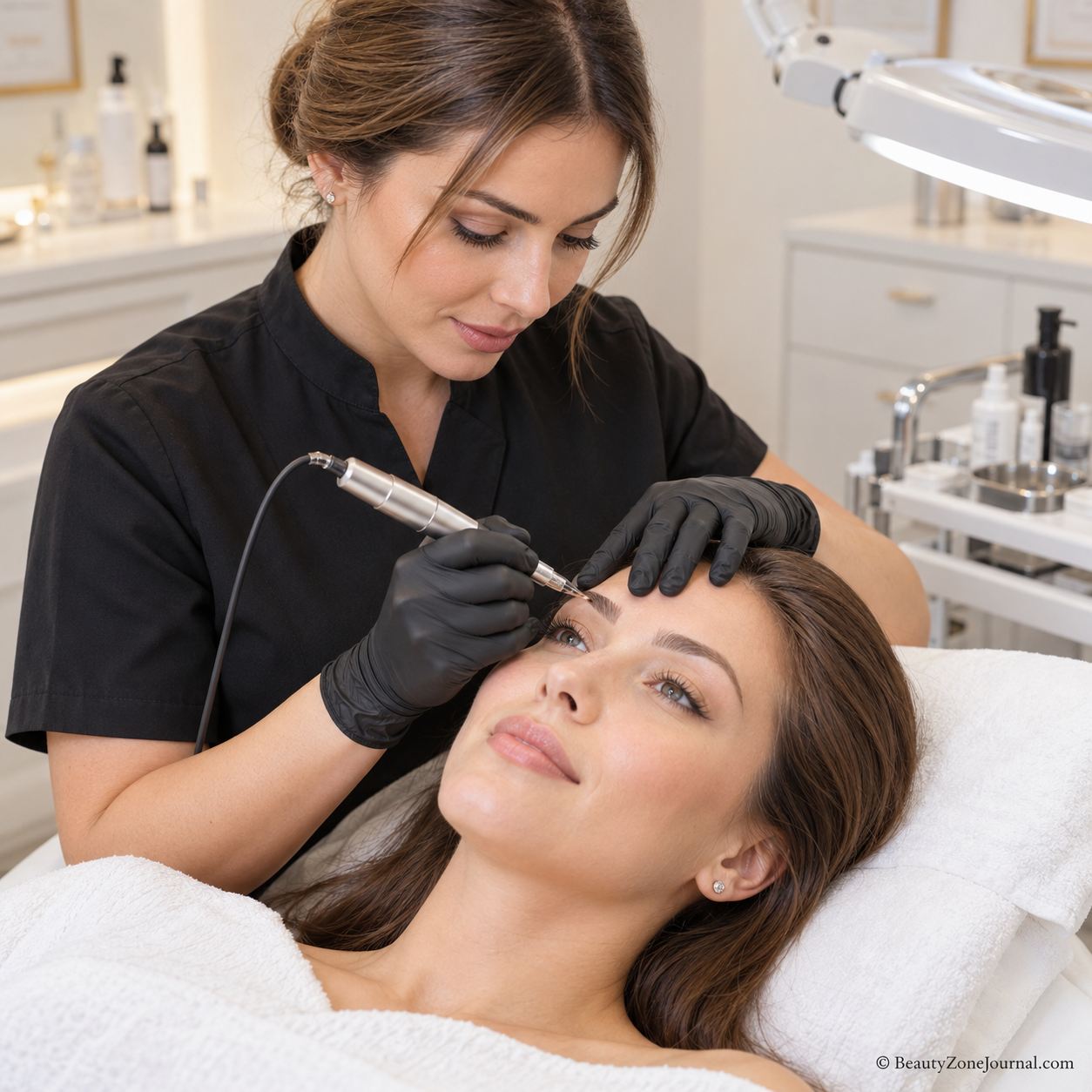
Brows can have a noticeable effect on your overall expression. The right shape can make the eyes appear more open and bring greater balance to the face. But filling in sparse areas, defining the outline, and trying to make both brows look even every morning can become tiring.
This is why many women consider permanent eyebrow makeup, especially when their natural brows are sparse, very light, or uneven. During the appointment, an artist deposits pigment into the skin to refine the shape, add color, and create a fuller appearance.
Still, this is not a procedure to choose based only on attractive before-and-after photos. The final result depends on the technique, brow shape, skin type, the artist’s experience, and proper aftercare while the skin heals.
Below, we look at how the most popular techniques differ, how to choose a brow shape that suits your face, and what to expect during the first few weeks after the appointment.
Permanent Eyebrow Makeup Techniques

This is often where the confusion begins. Clients may hear several technique names at once and wonder how they differ.
Powder brows create a soft, shaded finish.
During the procedure, a machine places tiny dots of pigment into the skin, creating a blended effect without harsh outlines.
How the skin heals and how long the results last depend on the technique, skin type, pigment, and aftercare.
Machine hair strokes are created with a device that draws fine lines designed to follow the natural direction of brow growth.
The result can look very natural, making the brows appear fuller than they are.
Microblading is performed manually with a handheld tool fitted with a row of very fine needles. The tool creates small strokes in the skin, where the pigment is placed.
The main difference is the application method: microblading is performed by hand, while machine hair strokes are created with a device.
How fine and natural the strokes look depends on the artist’s experience and the individual characteristics of the skin.
Combination brows bring together powder shading and hair-like strokes, adding both fullness and natural-looking texture.
| Technique | Main Effect |
|---|---|
| Powder brows | Soft, shaded finish |
| Machine hair strokes | Mimics natural brow hairs |
| Microblading | Manual method with defined hair-like strokes |
| Combination brows | Shading and texture in one design |
How to Choose the Right Brow Shape
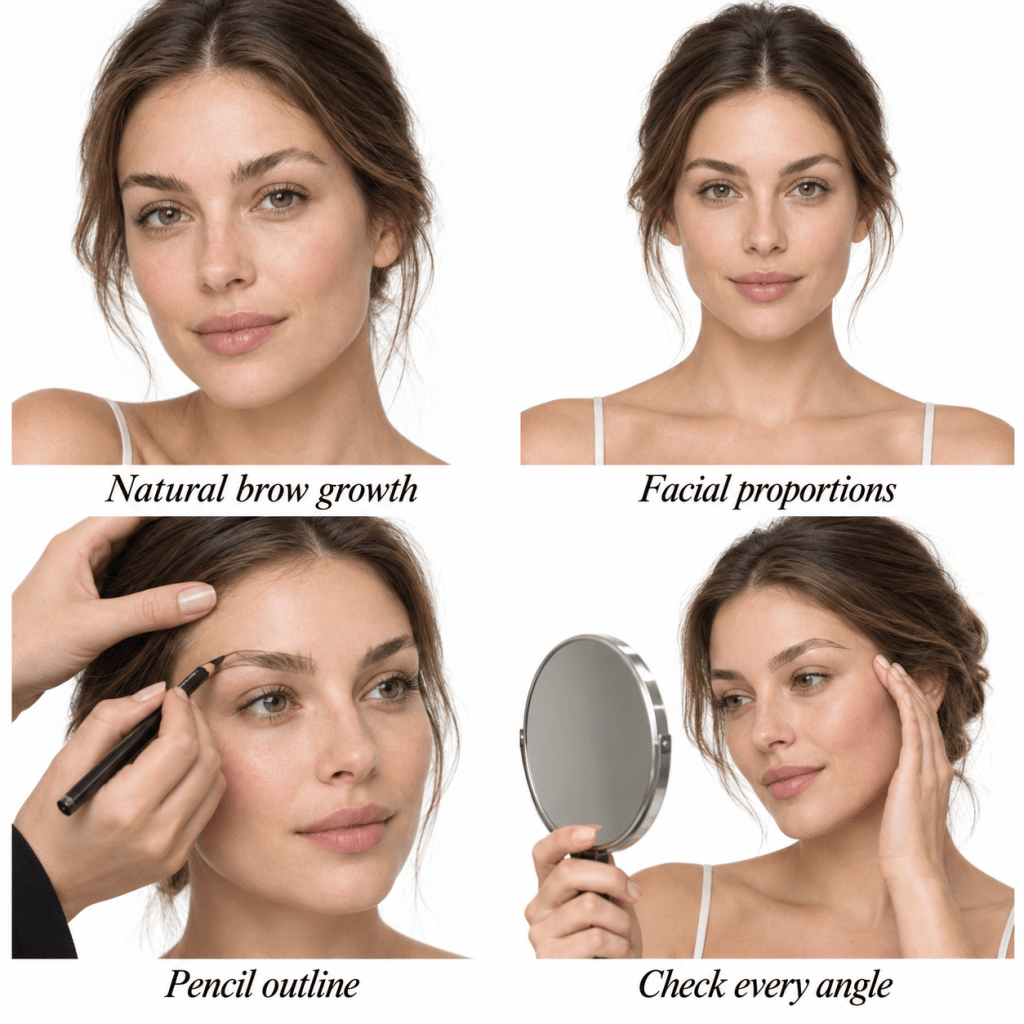
Brow shape is one of the main reasons people choose permanent makeup, so this part of the process should never be rushed.
A skilled artist will not use the same template for everyone. The design should work with your natural brow growth, facial proportions, eye placement, and expressions.
Before the procedure, the artist usually draws the proposed outline directly on the skin with a pencil. You should be given enough time to examine it in the mirror and view it from different angles.
This is the right moment to ask questions and request adjustments. Once the pigment has been placed in the skin, changing the shape becomes much more difficult.
What to Expect During Healing
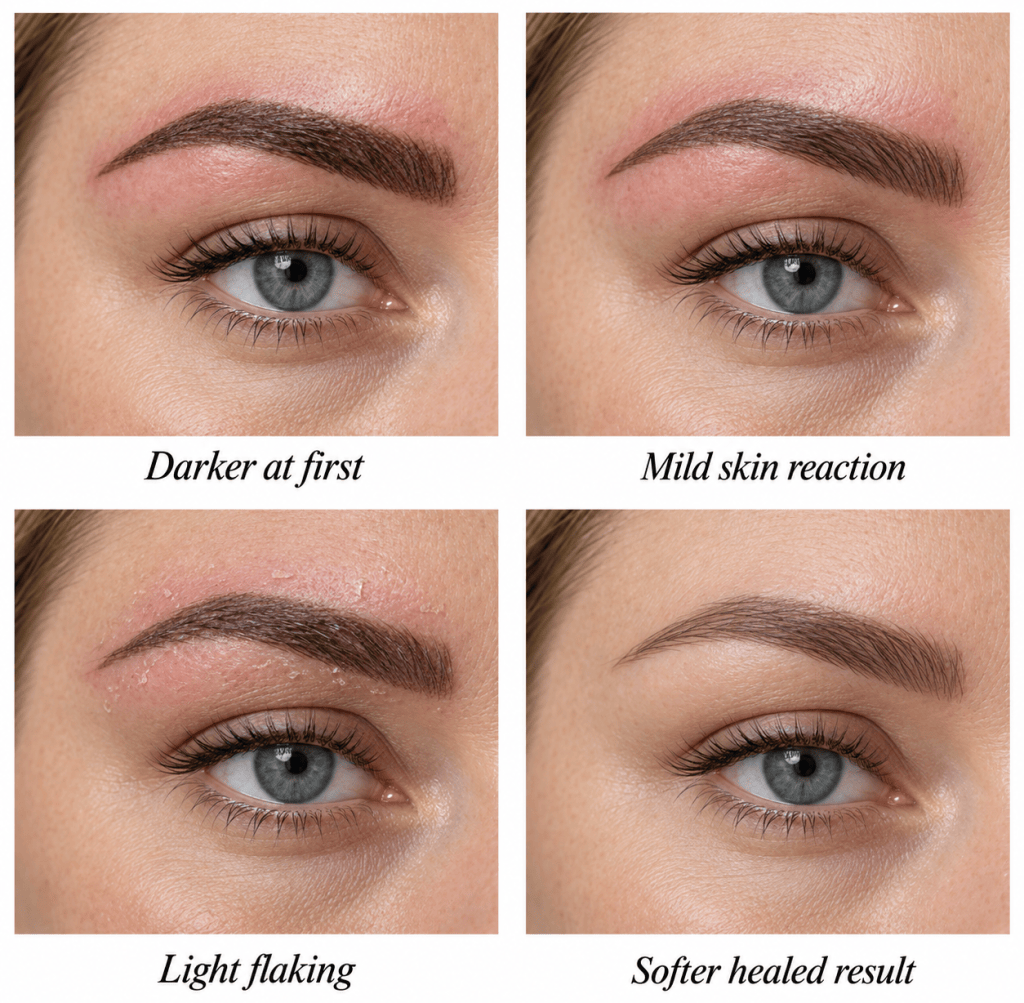
Immediately after the procedure, the brows usually look darker and more intense than the final result. This is expected because the skin is still reacting to the pigment application.
Mild tenderness, redness, swelling, or a small amount of clear fluid may occur during the first few days. Light flaking or crusting can also be part of the normal healing process, but the area should not be rubbed or picked.
The surface may begin to settle within the first couple of weeks, while the final color can take several weeks to develop. Healing times vary from person to person.
During this period, the pigment may look uneven or temporarily lighter in some areas. The result should only be assessed after the skin has fully healed.
Follow the aftercare instructions provided by your artist. Avoid saunas, swimming pools, intense workouts, and prolonged soaking until the treated area has healed or for as long as your artist recommends.
Strong sun exposure and tanning beds should also be avoided during healing because ultraviolet light can affect how the color settles and how quickly it fades.
If pain becomes worse, redness begins to spread, or you develop significant swelling, pus, fever, or feel generally unwell, seek medical care. The FDA’s information on tattoos and permanent makeup explains possible risks such as infection and allergic reactions.
When Is a Touch-Up Needed?
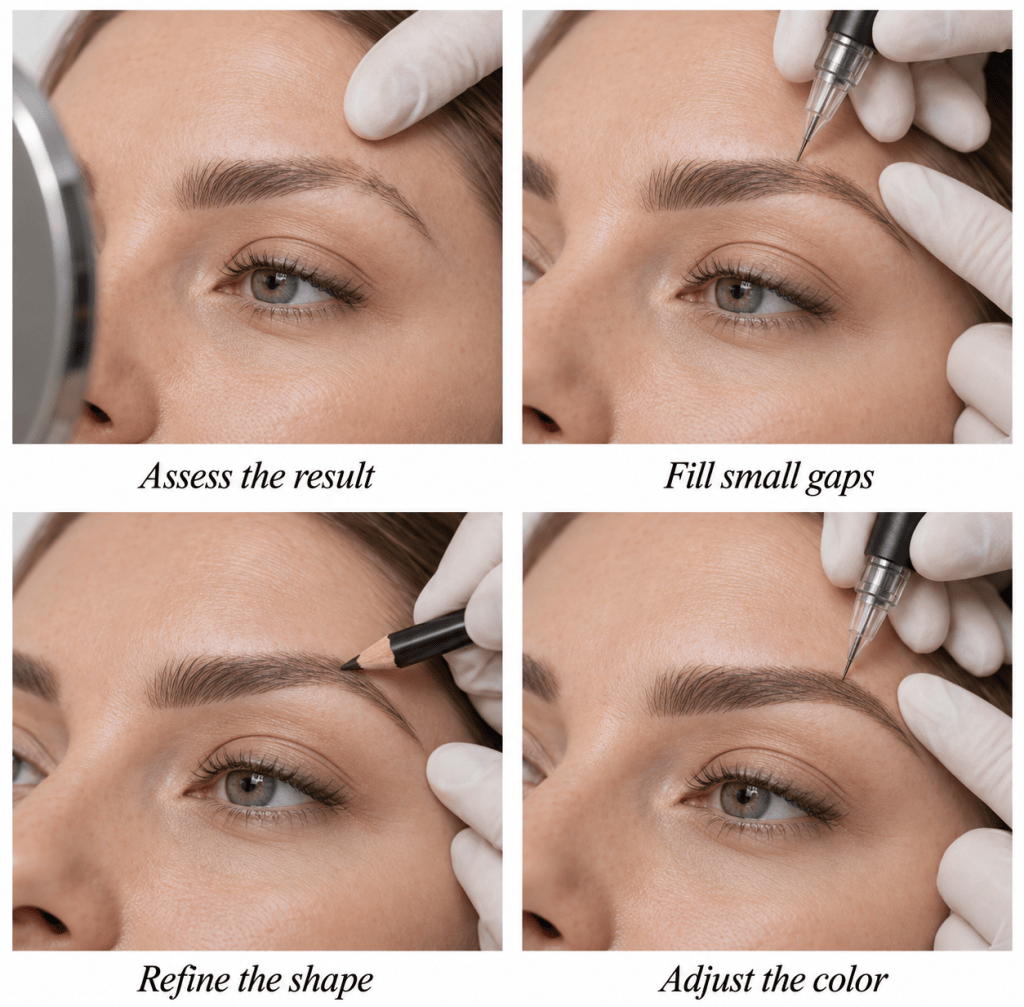
Once the skin has fully healed, the pigment may look lighter or less even in some areas. At that point, the artist can assess whether a touch-up is needed.
A touch-up may be used to fill small gaps, refine the shape, or adjust the color intensity. However, not every result requires the same amount of additional work.
It should not be used simply to layer more pigment over a shape you dislike. If the healed result looks very different from the design you approved, consider getting an independent opinion from another experienced professional before adding more pigment.
Permanent eyebrow makeup gradually fades over time. The results may remain visible for one to two years, and sometimes longer, depending on the technique, skin type, pigment, sun exposure, skincare routine, and aftercare.
Common Questions About Permanent Eyebrow Makeup
Can you get permanent eyebrow makeup during pregnancy or while breastfeeding?
Elective permanent makeup procedures are usually postponed during pregnancy. If you are breastfeeding, speak with your healthcare provider and the artist before booking, especially about infection risks, pigments, and any topical anesthetic that may be used.
Can you tint your natural brow hairs after permanent makeup?
Yes, but wait until the skin has fully healed and follow your artist’s advice. Permanent makeup adds color to the skin, while brow tint colors the natural hairs, so some people may still choose to use both.
Can permanent eyebrow makeup from another artist be corrected?
Sometimes, but the best approach depends on the existing shape, color, depth, and condition of the pigment. Some results can be adjusted, while others may need to fade or be partially removed before new pigment is added. Consult an artist who has experience correcting previous work.
Does permanent eyebrow makeup affect natural hair growth?
When performed correctly, the procedure is not intended to reach the hair follicles. However, excessive skin trauma, infection, or scarring can affect the treated area, so unusual or worsening symptoms should not be ignored.