

One of the first questions people ask before booking a permanent makeup appointment is simple: how long will the results actually last?
The honest answer is not as precise as most people would like. How long does permanent makeup last? It depends on several factors, and the timeline can be different for every client.
For some people, the color remains visible for up to three years. Others may feel that the result needs refreshing after about a year.
Let’s look at what affects pigment retention and why the same procedure, even when performed by the same artist, can fade differently from one person to another.
How Long Does Permanent Makeup Last?
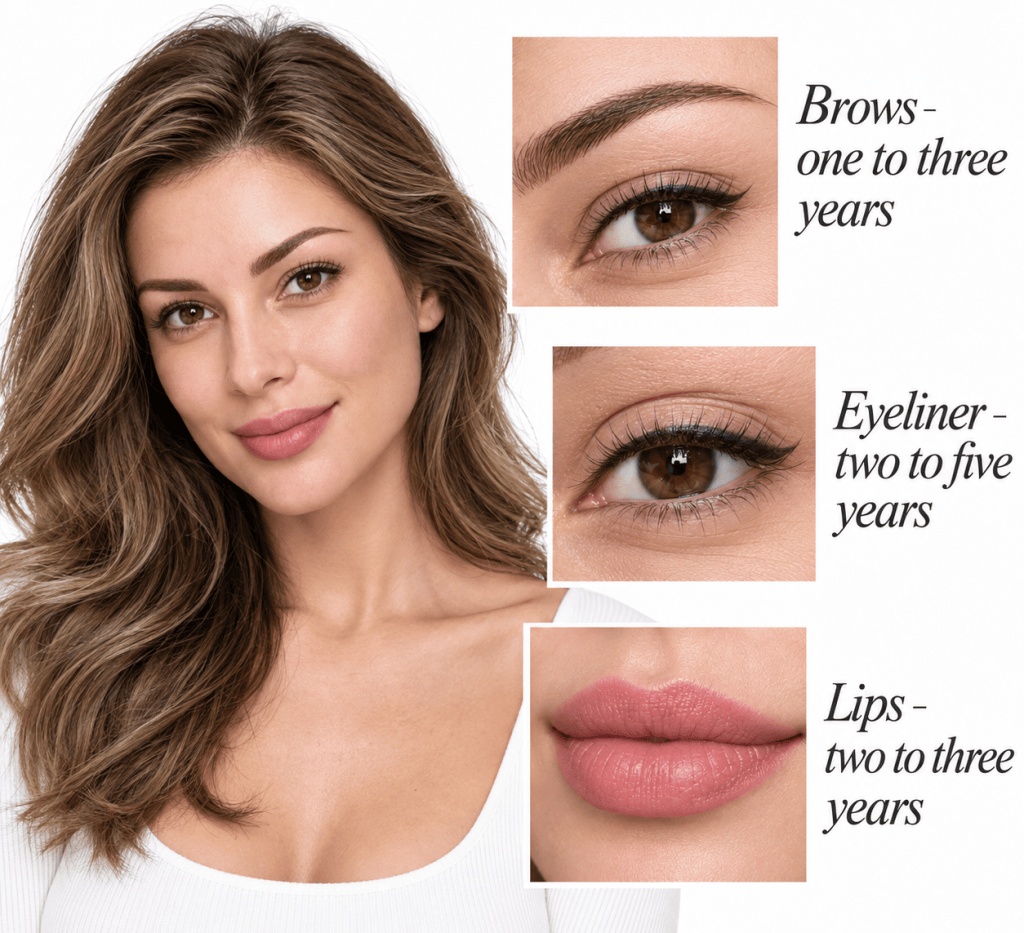
On average, visible results last between one and three years. However, this is only a general guide. Brows, lips, and eyeliner can retain pigment differently, while the rate of fading depends on your skin, the technique used, the chosen shade, and aftercare.
Permanent makeup does not disappear overnight. Once the area has healed, the color looks softer and gradually loses intensity over time. The outline may become less defined, and some areas may fade more unevenly than others.
Even after several years, a faint tint or shadow of the original shape may remain in the skin. Before refreshing the result, the artist should assess both the amount of fading and the remaining pigment.
How Skin Type Affects the Results
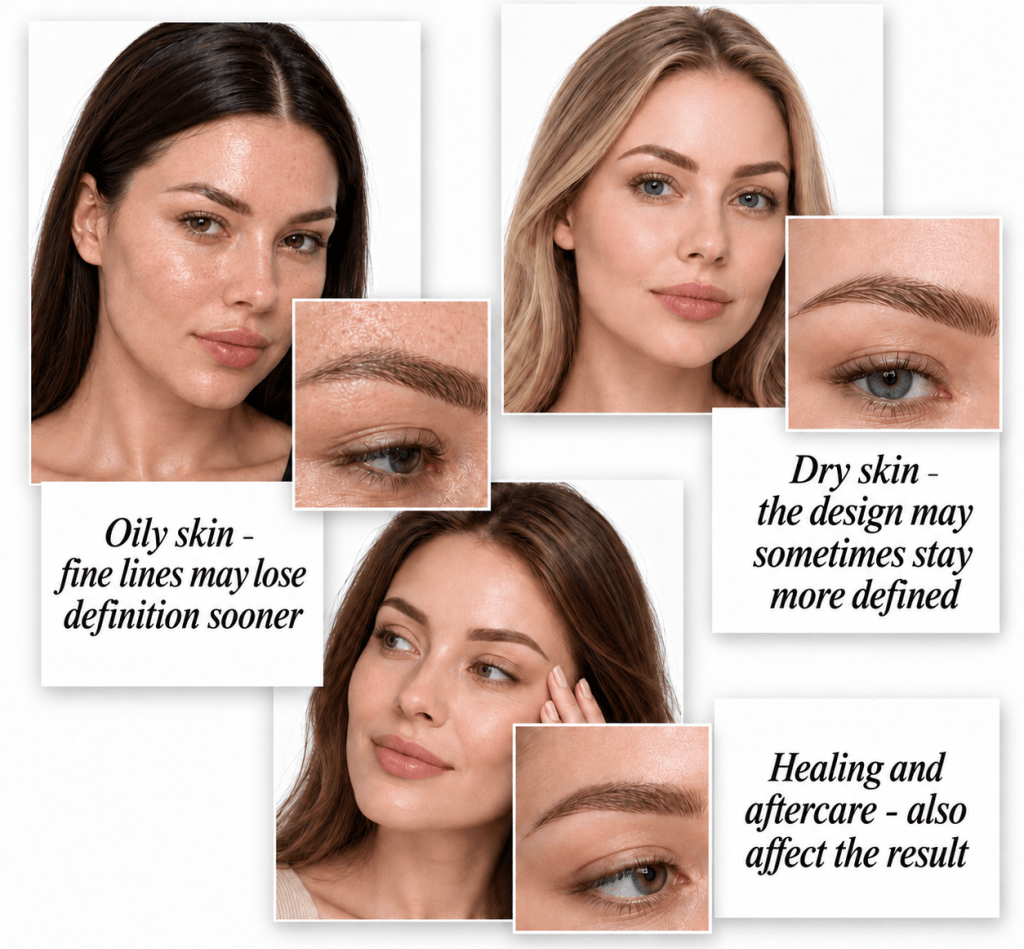
Your skin type and condition can affect how permanent makeup heals and how well it keeps its definition over time. However, skin type is only one part of the picture, so it cannot predict exactly how long the results will last.
On oily skin with more visible pores, fine lines may lose their crispness sooner, especially in the brow area. In this case, the artist may recommend a powder or combination brow technique instead of very fine hair strokes.
Dry skin may sometimes retain sharper definition, but this does not necessarily mean that the pigment will last longer. Skin sensitivity, overall skin condition, healing, aftercare, and the chosen technique can all affect the final result.
Other Factors That Affect How Long Permanent Makeup Lasts
| Factor | How It May Affect the Results |
|---|---|
| Treatment area | Brows, lips, and eyeliner can retain pigment differently |
| Technique | Fine hair strokes may lose their definition sooner than soft powder shading |
| Pigment depth | Pigment placed too close to the surface may fade quickly, while pigment placed too deeply can blur or change color |
| Pigment shade | Light, natural shades usually become less noticeable sooner than darker colors |
| Sun exposure | UV exposure can gradually reduce the intensity of the color |
| Skincare | Acids, retinoids, peels, and some cosmetic treatments near the area may speed up fading |
| Healing | Picking at flakes or scabs and ignoring aftercare instructions may lead to uneven color |
The treatment area, technique, chosen shade, and the way the skin heals can all make a noticeable difference. This is why the same procedure may heal and fade differently, even on clients with similar skin types.
Sun exposure also deserves special attention. The American Academy of Dermatology notes that UV light can fade some tattoo inks. Once the area has fully healed, broad-spectrum sun protection can help the color stay fresh for longer.
How the Artist’s Technique and Pigment Affect the Results
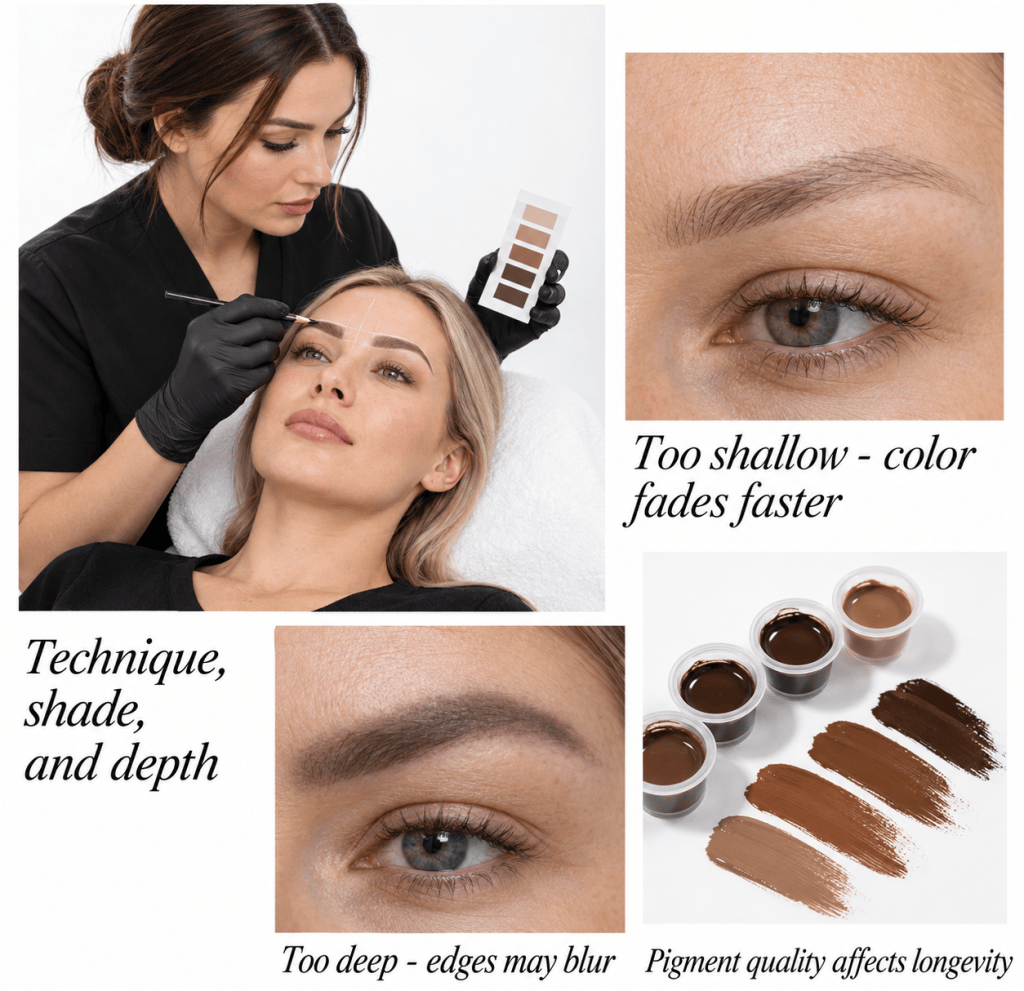
The longevity of permanent makeup depends not only on your skin, but also on how well the artist chooses the technique, shade, and pigment depth.
If the pigment is placed too close to the surface, some of the color may be lost during healing. Placing it too deeply is not better – the edges may blur, while the shade may change or remain visible for longer than expected.
The pigment itself also matters, including its formula, color, and quality. Light, delicate shades usually become less noticeable sooner, while darker colors may leave a visible trace for much longer.
An experienced artist will not promise the same result to every client. Instead, they will choose the technique and materials based on the treatment area, skin condition, and desired effect.
How to Make the Results Last Longer

During the first few weeks, proper aftercare matters most. Avoid picking at scabs, rubbing the treated area, or applying products that your artist has not recommended. These habits can affect both healing and how evenly the color settles.
Once the area has fully healed, protect the skin from strong sun exposure. Avoid applying acids, retinoids, and harsh exfoliating products directly over permanent makeup.
If you are planning a peel, laser treatment, or another cosmetic procedure for your face, tell the specialist about the pigment beforehand.
After about 6-8 weeks, the artist can assess how the area has healed and whether an additional touch-up is needed. Future refreshes should be based on visible fading or uneven color rather than a strict schedule.
If the shape and shade still look even and well defined, there is no need to rush into another procedure.
Common Questions About How Long Permanent Makeup Lasts
Can hormonal changes affect how long permanent makeup lasts?
Hormonal changes may affect skin condition, sensitivity, and healing. However, it is impossible to predict whether they will make the pigment last longer or fade sooner. If you are pregnant, undergoing hormonal treatment, or have recently changed medication, discuss the procedure with your doctor and artist first.
Does permanent makeup last equally long on the brows, lips, and eyelids?
No. Each area has different characteristics, and artists use different techniques and shades for brows, lips, and eyelids. Skin condition, healing, and pigment placement also affect longevity. Even on the same person, the brows may need refreshing sooner while lip or eyelid pigment remains visible for longer. In other cases, the opposite may happen.
Can an artist predict how long the results will last for you?
An experienced artist can give you a general estimate based on your skin type and condition, the treatment area, the chosen technique, and your lifestyle. However, no one can predict the exact timeline because healing and fading are highly individual.
Can medication affect the results of permanent makeup?
Some medications may affect skin sensitivity, bleeding, or healing. Tell your artist about any medication you take before the procedure. Do not stop prescribed treatment on your own – speak with your doctor if you are unsure whether the procedure is suitable for you.
Does fast fading mean the procedure was poorly done?
Not necessarily. Skin type and condition, the treatment area, healing, aftercare, sun exposure, technique, and pigment shade can all affect how quickly the color fades. However, pigment placed too close to the surface or a technique that was not suitable for the skin may also lead to shorter-lasting results.
You May Also Like