

Permanent makeup can define the brows, refresh the color of the lips, or add subtle definition along the lash line.
But a good result does not begin with choosing the latest technique. It begins with understanding what will suit your features, what healing involves, and what to look for when choosing an artist.
Modern permanent makeup rarely looks like heavy makeup that cannot be changed.
More often, the goal is to enhance natural features, create better balance, or add definition without having to apply makeup every day.
Still, the procedure breaks the skin, so it is worth taking your time and having a proper consultation before making a decision.
Table of Contents:
What Is Permanent Makeup?
During the procedure, an artist uses a specialized device to deposit pigment into the upper layers of the skin.
This can create a soft wash of color, define an outline, or fill in areas that look sparse or uneven.
Unlike regular makeup, the result does not wash off at the end of the day. However, the word “permanent” can be misleading.
The pigment gradually fades, and its color and longevity depend on the treatment area, skin type, technique, quality of the work, and aftercare.
Right after the appointment, the color usually looks more intense, and the skin may be slightly red or swollen.
It is best to judge the final shape and shade only after the skin has fully healed.
Main Types of Permanent Makeup

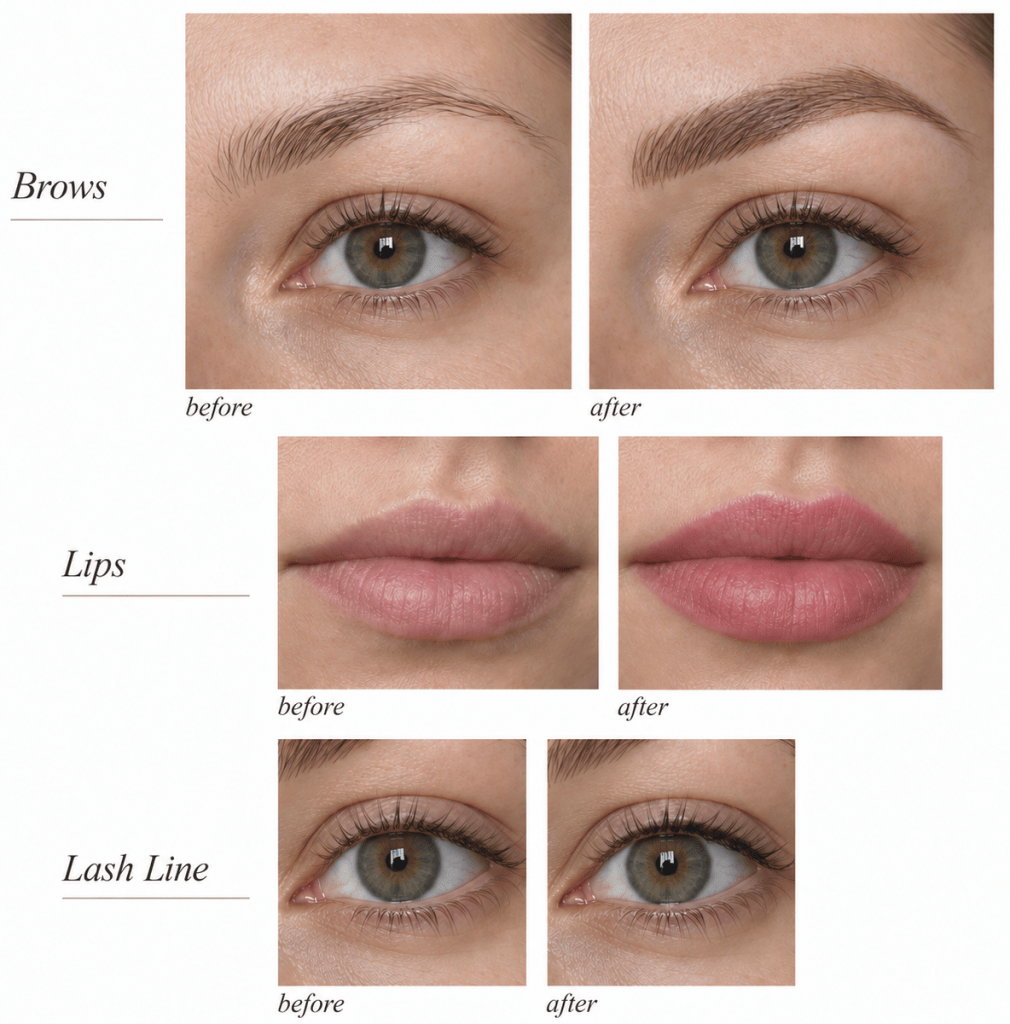
Permanent eyebrow makeup can make sparse brows look fuller, soften minor asymmetry, and create a more polished shape. Depending on the desired result, the artist may use soft powder shading, fine hair-like strokes, or a combination of both.
The shape should never be based on a template alone. Natural hair growth, facial expressions, facial proportions, and the way you normally fill in your brows all matter.
Permanent lip makeup can refresh the natural lip color, create a more even outline, and gently balance minor asymmetry.
It does not add physical volume. This procedure works with color and the visual perception of shape rather than actually making the lips larger.
The artist should choose the shade based on your natural lip color and skin undertone. Reference photos are helpful, but a shade that looks beautiful on someone else may heal very differently on you.
Permanent eye makeup can make the eyes look more defined and the lashes appear fuller. A subtle lash line enhancement creates a softer effect, while permanent eyeliner gives a more noticeable makeup look.
The shape should suit your eyelids and stay balanced with your natural expressions.
The skin in this area is thin and sensitive, so the artist’s experience, hygiene standards, and realistic expectations are especially important. A wide, trend-driven wing can feel dated sooner than expected, while a subtle lash line enhancement usually looks more timeless.
Restorative micropigmentation. This is a specialized field that may include camouflaging certain scars, blending areas where skin pigmentation has changed, or recreating the appearance of the areola after surgery.
These treatments should not be approached in the same way as cosmetic brow or lip procedures. They require specific training and, in some cases, a medical consultation beforehand.
| Area | Possible Effect |
|---|---|
| Brows | Fuller-looking brows, a more balanced shape, and less noticeable asymmetry |
| Lips | A fresher color, a more even outline, and a more balanced shape |
| Eyelids | A more defined lash line or a permanent eyeliner effect |
| Scars and areola | Specialized visual correction after the skin has been assessed |
How Does the Procedure Work?
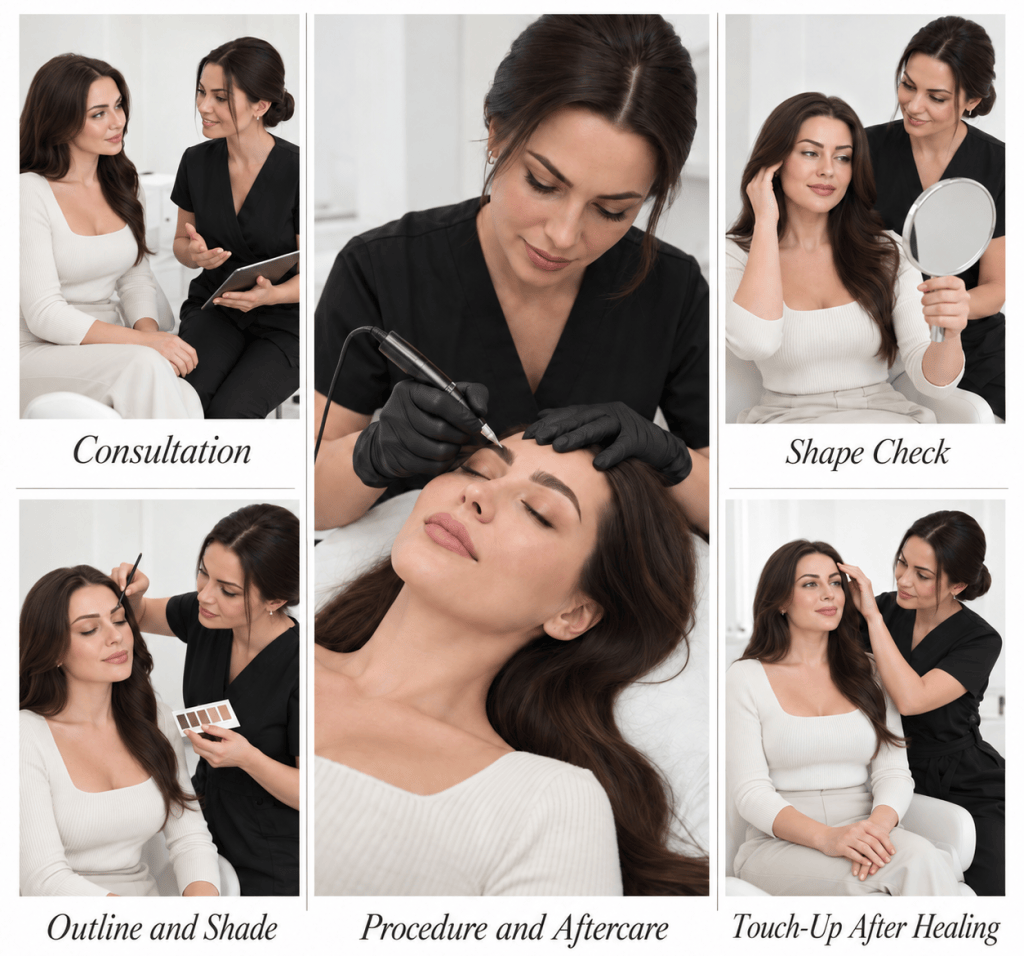
The process begins with a consultation. The artist asks what kind of result you want, examines the skin, and discusses allergies, medications, previous treatments, and any reasons the procedure may need to be postponed.
You then choose the technique and pigment shade together.
Next, the artist maps and draws the proposed shape on the skin. Do not feel pressured to approve a design simply because the artist likes it.
Look at yourself both up close and from a distance. Smile, frown, and check how the lines work with your natural expressions.
Once you approve the shape and color, the artist performs the procedure and explains the aftercare.
The full appointment may take several hours, depending on the area and the complexity of the work. A touch-up is often scheduled after healing to even out the color or fill in small gaps.
How Long Does Permanent Makeup Last?
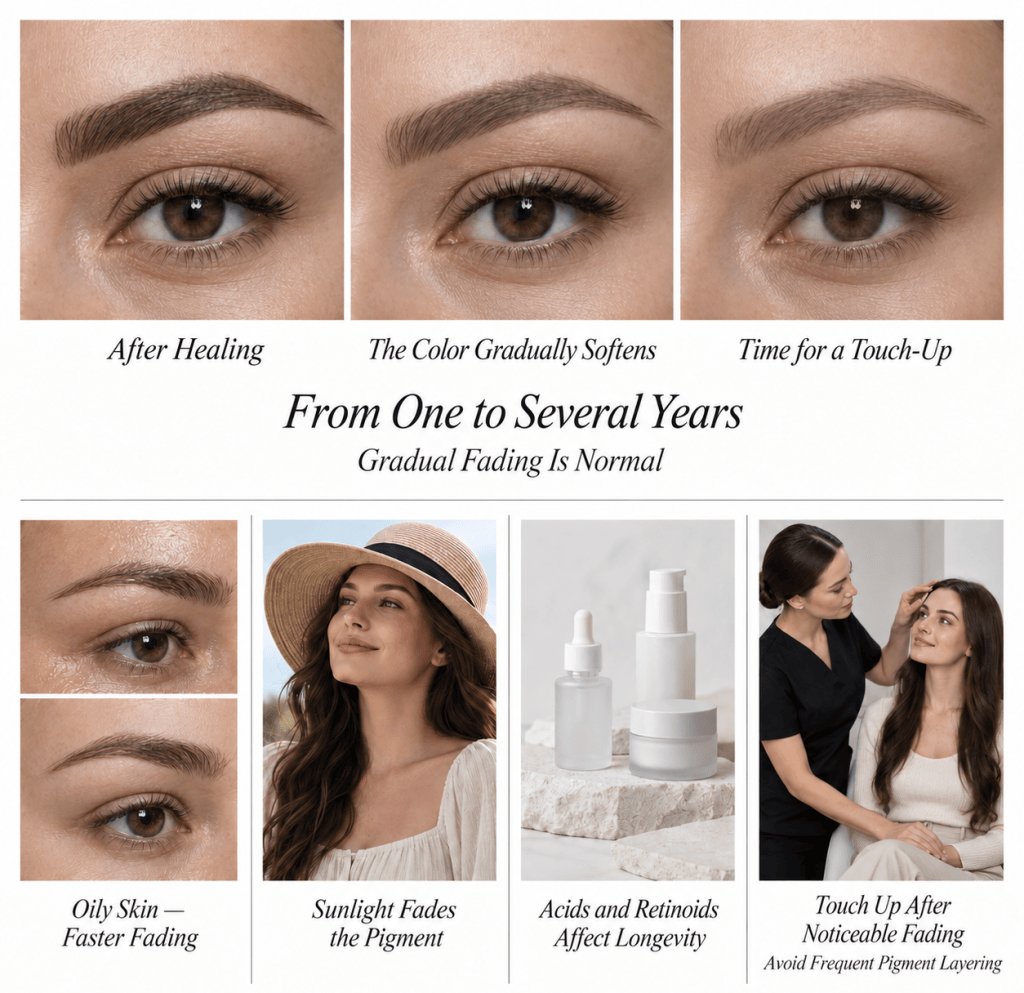
Permanent makeup usually remains visible for one to several years, although no one can predict the exact timeline in advance. Pigment often fades faster on oily skin than on dry or normal skin.
Longevity also depends on how deeply the pigment was placed, the chosen shade, sun exposure, skincare habits, and how often acids, retinoids, or professional skin treatments are used near the area.
Gradual fading is normal. It is usually better to schedule a color refresh while the shape is still visible but the shade has become noticeably softer.
Adding new pigment too often can make the result look heavy and make future correction more difficult.
Benefits and Limitations
The decision to get permanent makeup shouldn’t be based on beautiful photos of finished results alone. It’s important to understand what to expect from the procedure and what to consider beforehand.
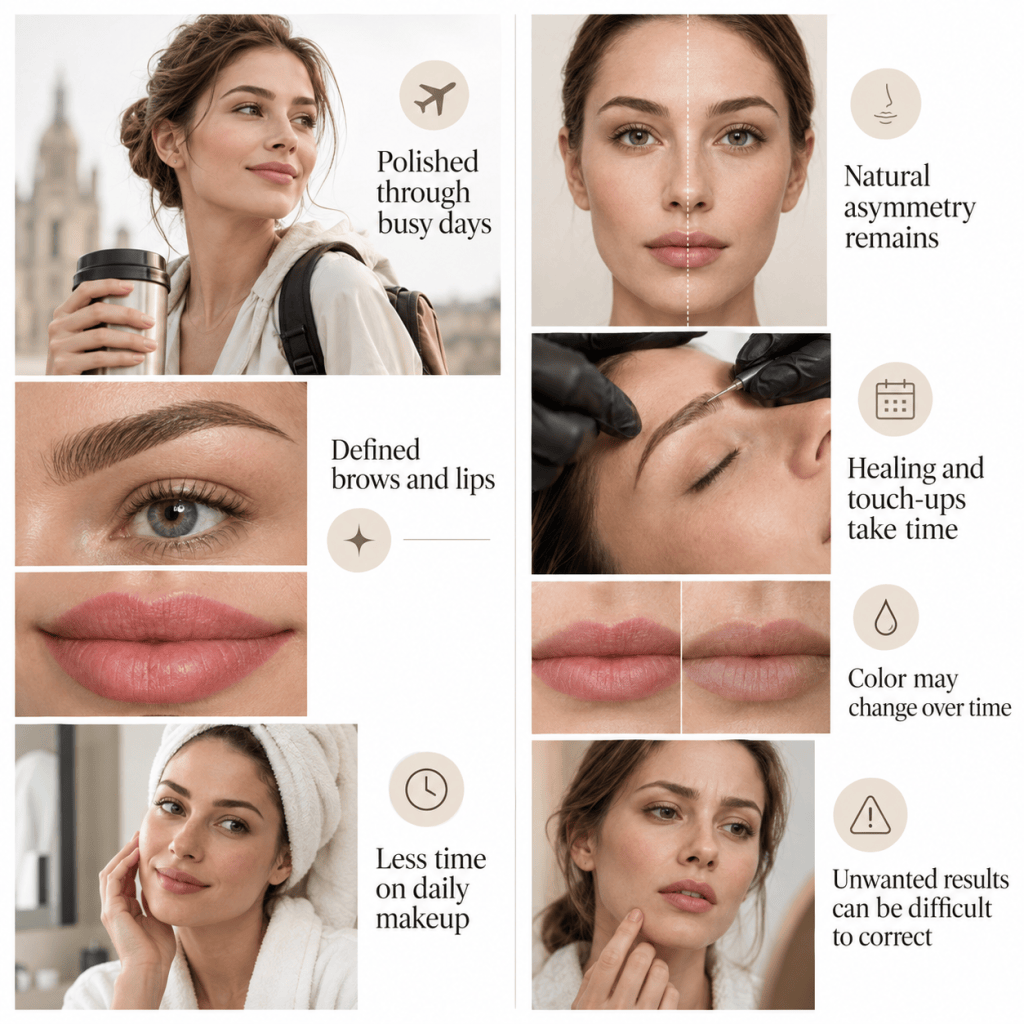
Convenience is the main advantage.
The procedure can shorten a morning makeup routine, help define sparse brows or an uneven lip outline, and keep the features looking polished during exercise, travel, or days at the pool or beach.
However, permanent makeup does not eliminate the need for makeup altogether, and it cannot create perfect symmetry.
Every face is naturally asymmetrical. The artist’s job is to make those differences less noticeable, not to create two mathematically identical sides.
The real drawbacks include the healing period, the possible need for a touch-up, color changes over time, and the difficulty of correcting an unwanted result.
If you are considering a bold shape or unusual color, try it with regular makeup first before committing to it long term.
Who Is Permanent Makeup For?
Permanent makeup may appeal to women who want to spend less time applying makeup, have sparse brows or an uneven lip outline, or simply want to enhance their natural features.
It may also help people who find regular makeup difficult to apply because of reduced vision or limited hand mobility.
However, the procedure is not right for everyone or in every situation. Postpone it if the area has active irritation, a rash, broken skin, or signs of inflammation or infection.
If you have a chronic health condition, a bleeding or clotting disorder, a tendency to develop keloid scars, or a history of significant allergic reactions, speak with a healthcare professional first.
Medical advice may also be needed during pregnancy or while using treatments that affect the skin or healing process.
How to Prepare for Permanent Makeup
Tell the artist about your health, allergies, medications, and any recent cosmetic treatments.
Do not stop taking medication prescribed by a doctor, even if it may affect blood clotting. Any change to your treatment should only be discussed with the healthcare professional who prescribed it.
Before the appointment, avoid irritating the area with scrubs, peels, waxing, or intense sun exposure.
The skin should be free from cracks, irritation, and fresh injuries.
If you are planning permanent lip makeup and have a history of cold sores, tell the artist in advance and speak with a healthcare professional about safe preparation.
Healing and Aftercare
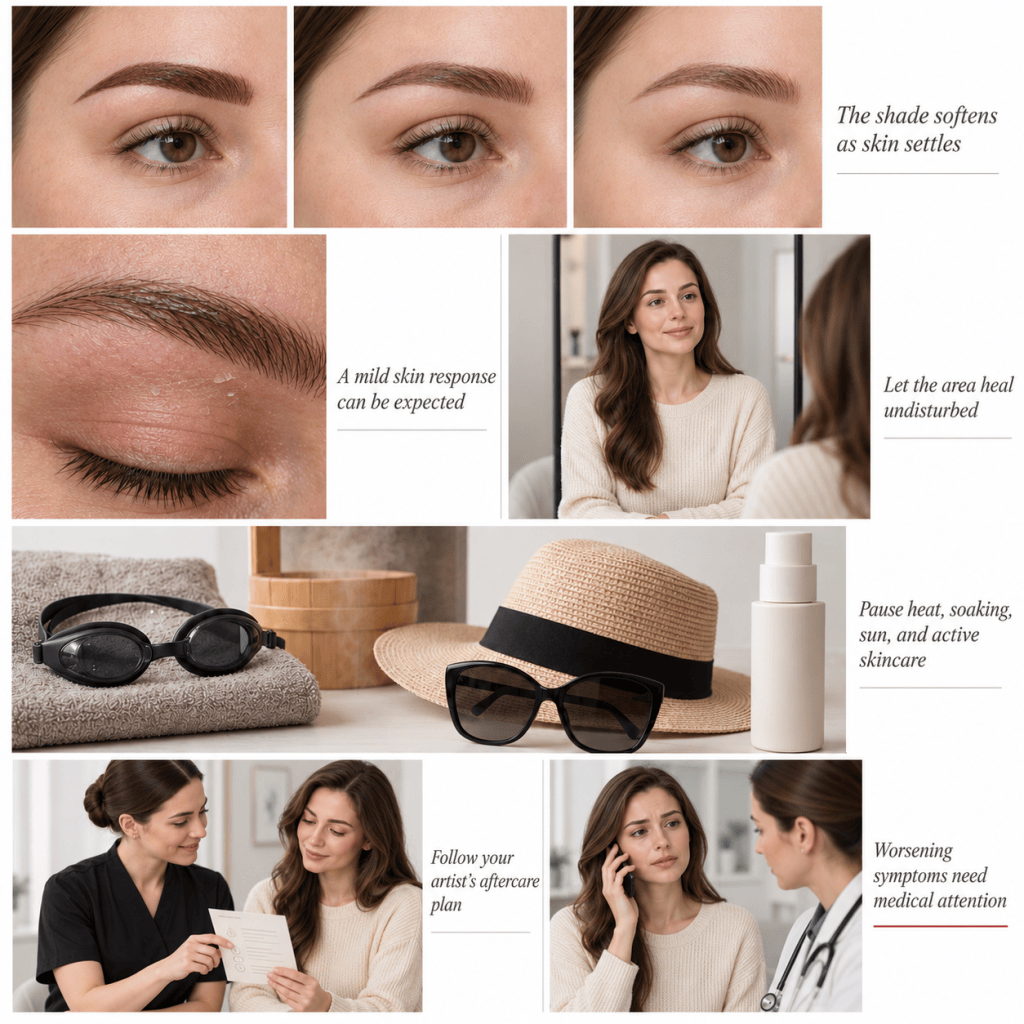
Mild tenderness, redness, or swelling may occur during the first few days.
The color often looks too intense at first, then becomes lighter and more even as the skin heals. Light flaking can also be normal.
Do not rub the treated area or pick at flakes or scabs. Avoid steam, swimming pools, saunas, tanning beds, strong sun exposure, and cosmetics that may irritate the skin.
Do not soak the area in water for long periods. Your artist should explain how to cleanse it and which aftercare products are suitable for the specific procedure.
If the pain gets worse, the redness begins to spread, or you develop significant swelling, pus, fever, or feel generally unwell, do not wait for the symptoms to disappear on their own. Seek medical care.
Why Is a Touch-Up Needed?
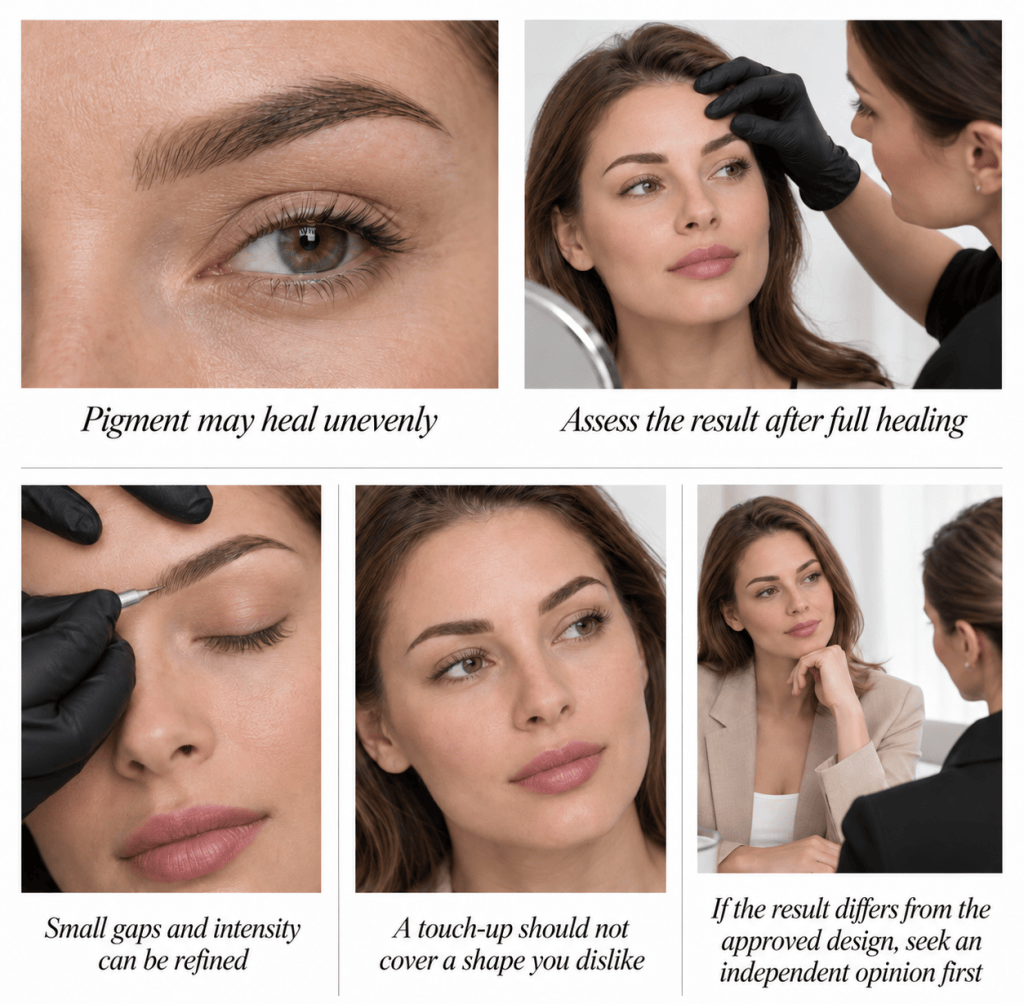
After the first appointment, the pigment may heal unevenly.
The color may stay stronger in one area and become lighter in another. This does not always mean the artist did a poor job.
Skin heals differently from person to person, so the final result can only be assessed after the area has fully recovered.
At that point, the artist can fill small gaps, refine the shape, or adjust the intensity if needed.
A touch-up should not be used to simply layer more pigment over a shape you dislike.
If the healed result looks very different from the approved design, get an independent opinion from another experienced professional before adding more pigment.
How to Choose an Artist
Do not judge a portfolio only by fresh photos taken immediately after the procedure.
Ask to see healed results, as these show the true color, shape, and density once the skin has recovered.
During the consultation, notice whether the artist opens single-use needles and supplies in front of you, works in a clean and organized space, and asks about your health, allergies, and medications.
It is also a good sign if the artist explains which pigments are used, gives clear aftercare instructions, avoids promising the same result to everyone, and discusses the risks as openly as the benefits.
Permanent makeup breaks the skin, so potential complications include infection, allergic reactions, scarring, and unwanted pigment changes or migration.
The FDA information on tattoos and permanent makeup explains these risks in more detail.
Common Questions About Permanent Makeup
Should I get permanent makeup right before a vacation?
It is better to plan the appointment well in advance. During healing, you will need to avoid strong sun, swimming pools, the sea, and saunas. That is probably not how you want to spend the first days of a long-awaited vacation.
Can I bring a reference photo to the appointment?
Yes. A reference photo can help explain the style you like. However, copying it exactly may not work because the same shape or shade can look very different on another face or skin type.
Can I use regular makeup after the area has healed?
Yes. Once the skin has fully healed, you can usually return to your regular makeup routine. If you plan to tint your brows, have a peel, or book another intensive treatment in the same area, tell the professional that you have permanent makeup.
What if I am planning lip fillers or Botox?
Discuss the order and timing with both the permanent makeup artist and the medical professional performing the injections. Injectable treatments can temporarily change the shape of the treated area, so the skin and tissue need time to heal and settle between appointments.
Can permanent makeup help if my natural brows barely grow?
Yes. It can create the appearance of fuller, more defined brows, but the technique needs to be chosen carefully. In areas with little or no natural hair, dense shading or identical strokes may look artificial. Look for an artist whose portfolio includes healed work on clients with similar brows.
Read Also