
For many women, doing eye makeup in the morning starts the same way: a mirror, an eyeliner, and the hope of creating two even wings on the first try.
By the end of the day, that carefully applied liner may have smudged beneath the eyes after work, a workout, or simply a few hours in hot weather.
This is why some women consider permanent eye makeup. It can make the lash line look more defined and reduce the time spent on daily makeup.
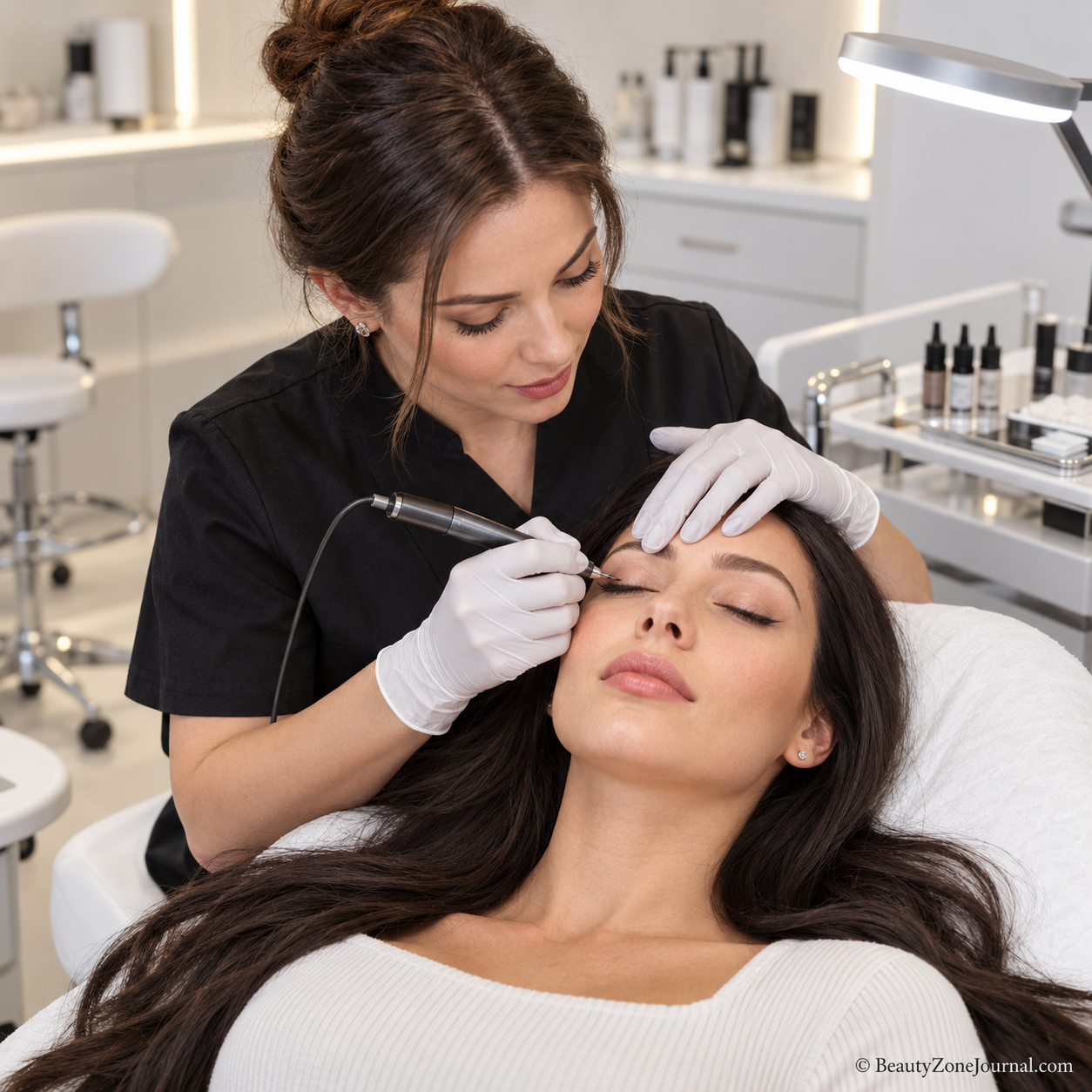
During the procedure, pigment is placed into the upper layers of the eyelid skin to create anything from subtle lash definition to a more noticeable eyeliner effect.
However, the eye area is one of the most delicate parts of the face. Choosing an attractive shape is only part of the decision. It is just as important to understand how the techniques differ and what to expect while the skin heals.
In this article, we will look at the difference between lash line enhancement and permanent eyeliner, explain how the procedure is performed, and walk through the first few weeks of healing. Let’s begin with the techniques.
If you are still comparing different options, our guide to permanent makeup types explains how eye, brow, and lip procedures differ.
Popular Permanent Eye Makeup Techniques
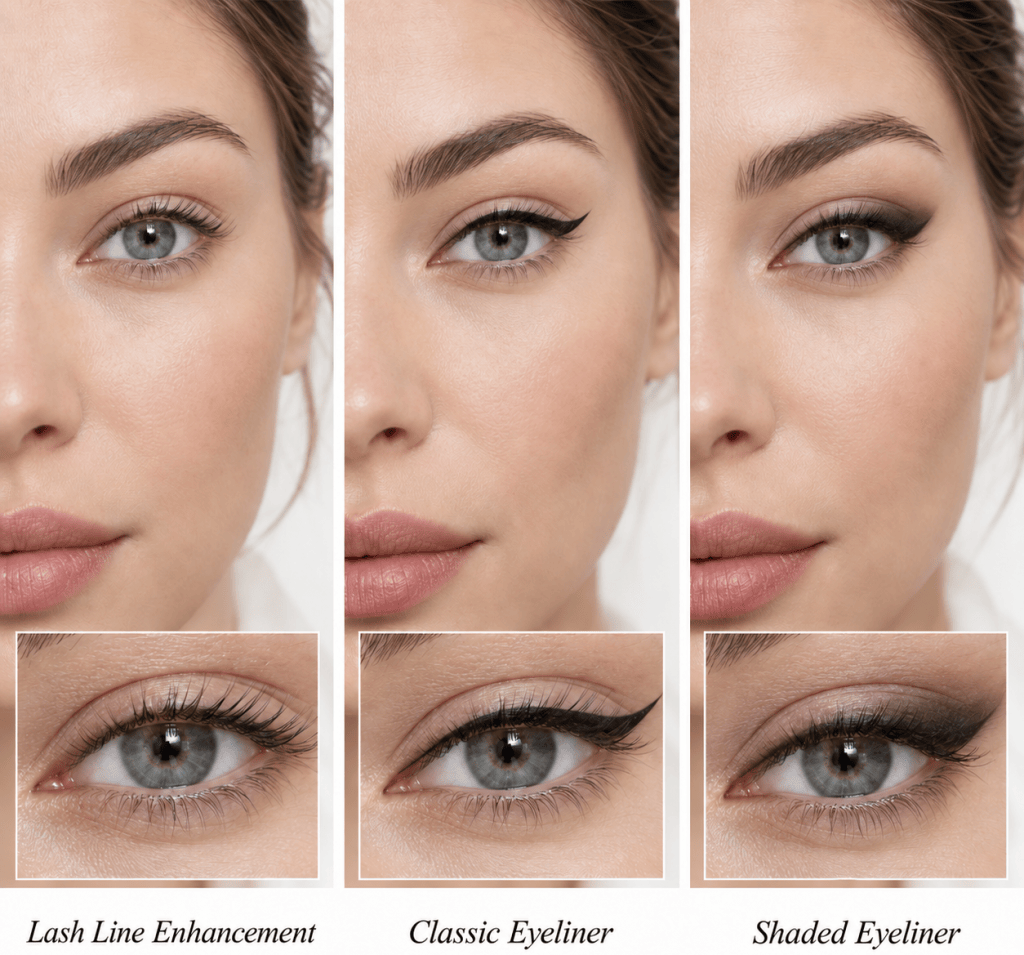
The technique you choose will determine how noticeable the final result looks, from subtle definition along the lashes to a more pronounced eyeliner effect. When making your choice, consider not only the photos you like but also your eye shape, eyelid anatomy, and usual makeup style.
Lash line enhancement involves placing pigment between the natural lashes. It does not create a visible eyeliner line, but it makes the lash line look more defined and the lashes appear fuller.
This technique is often chosen for its natural-looking effect. It adds subtle depth to dark lashes and creates gentle definition around lighter lashes, which can be enhanced with mascara.
Classic eyeliner looks like a neatly applied line along the lashes. Its thickness, length, and wing are tailored to your eye shape, eyelids, and the result you want.
The line can be very subtle or more noticeable, but the shape should look flattering not only in photos but also in everyday life.
Shaded eyeliner combines a more defined line along the lashes with soft shading above it. The blended upper edge makes the result look less graphic and more like softly applied eyeshadow.
This technique can be a good choice if you want more definition around the eyes without a sharply drawn line.
| Technique | Effect |
|---|---|
| Lash line enhancement | Fuller-looking lashes without a visible eyeliner line |
| Classic eyeliner | A clean, defined line along the lashes |
| Shaded eyeliner | A soft, smoky effect |
One thing to keep in mind is that lash line enhancement will not replace bold eyeliner. If you usually wear more dramatic eye makeup, it can serve as a subtle base. Once the skin has fully healed, you can still apply eyeliner or eyeshadow over it for a stronger look.
How the Procedure Works
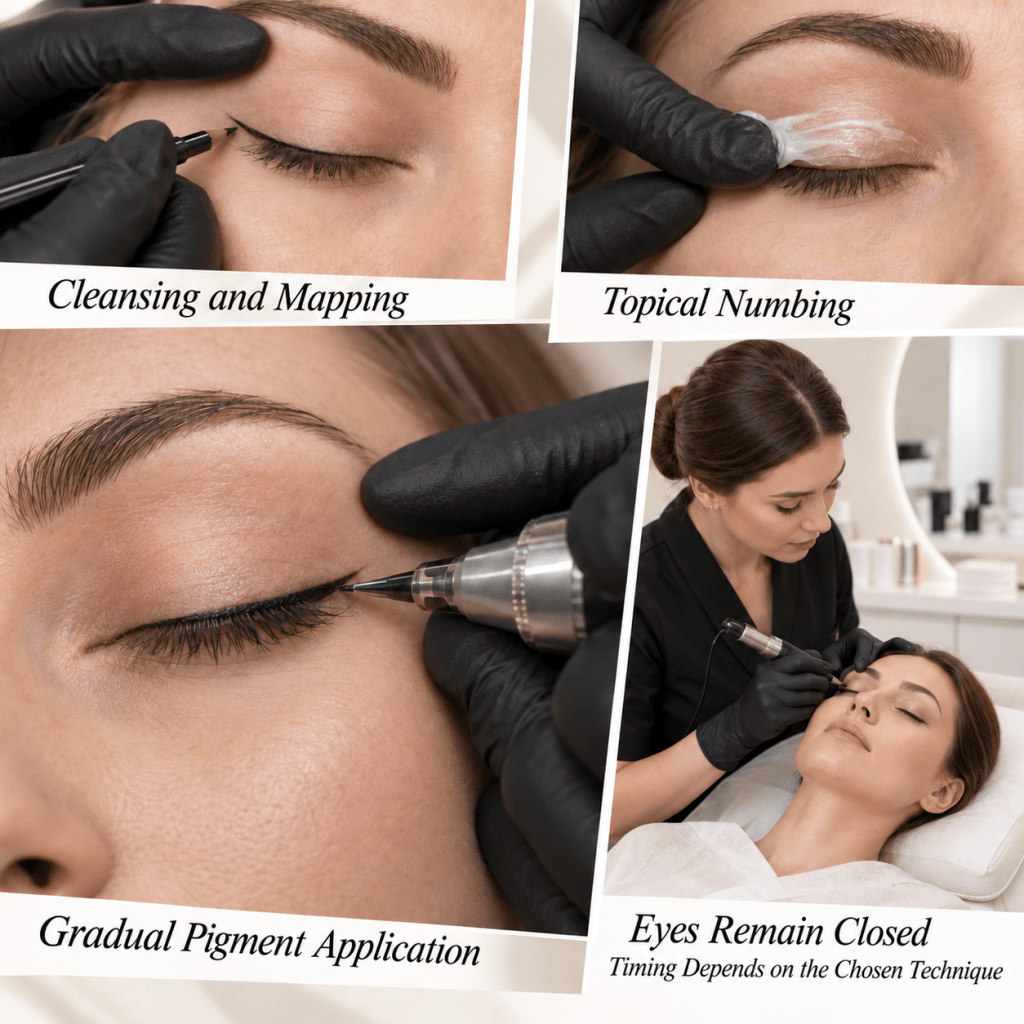
Before the procedure begins, the artist cleans the eyelid area, discusses the desired eyeliner shape with the client, and sketches the outline.
Once the shape has been approved, a topical numbing product is usually applied to help reduce discomfort.
After it takes effect, the artist gradually places pigment into the upper layers of the eyelid skin.
The eyes remain closed during the procedure, and the length of the appointment depends on the chosen technique and the complexity of the design.
Pigment is applied only to the eyelid skin, not to the waterline or the surface of the eye.
The artist should also avoid working too close to the inner corners, where the skin is especially thin and sensitive.
What to Expect During Healing
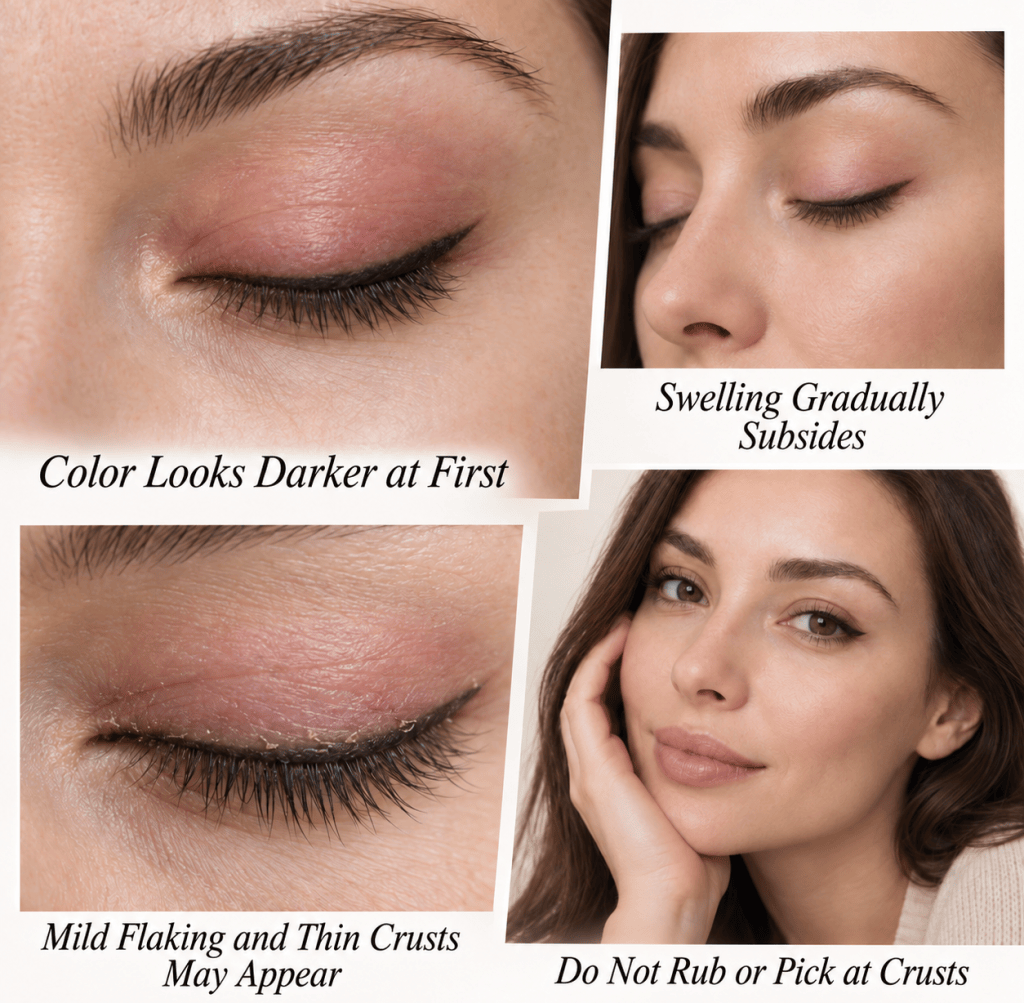
Immediately after the procedure, the eyelids may look slightly swollen or red and feel tender. The eyeliner will also appear darker and more intense than expected.
This is not the final result, and the color will gradually soften as the skin heals.
Over the next few days, the swelling should begin to settle. The eyelids may feel a little tight, and light flaking or thin scabs may appear.
Do not rub the area or pick at the flakes, as this can damage the skin and remove some of the pigment.
The visible healing stage usually takes around one to two weeks, although the final color may take longer to settle. During this time, avoid tinting your lashes or having lash extensions applied.
Existing extensions should be removed before the procedure and reapplied only after the skin has fully healed.
Contact lenses should also be removed before the appointment. You can begin wearing them again once the swelling, tearing, and irritation have disappeared, following the advice of your artist or eye doctor.
Once the area has healed, the artist can check how evenly the pigment has settled and whether a touch-up may be needed. The timing of this follow-up should be arranged individually, as everyone’s skin heals at a different pace.
If pain or swelling becomes worse, redness begins to spread, or you develop eye discharge, sensitivity to light, or changes in vision, seek medical care rather than waiting for the symptoms to go away on their own.
When to Postpone the Procedure
Before booking your appointment, tell your artist about any chronic health conditions, allergies, and medications you take.
Some medications can affect bleeding, skin sensitivity, or healing, but you should never stop taking prescribed medicine on your own. If you have any concerns, speak with your healthcare provider before going ahead with the procedure.
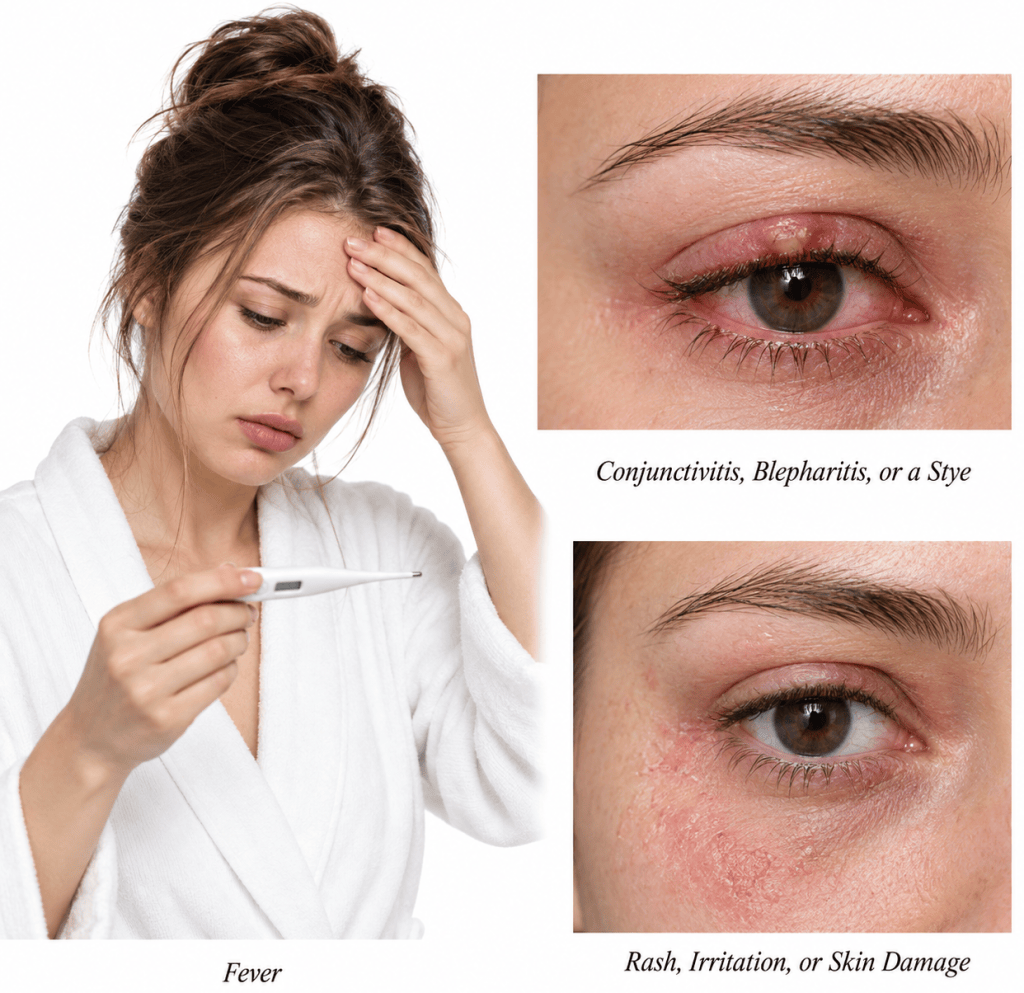
If you are taking antibiotics, have a fever, feel unwell, or are still recovering from an illness or surgery, it may be better to postpone your appointment until you have recovered.
The procedure should also be delayed if you have conjunctivitis, blepharitis, a stye, a rash, irritation, or damaged skin around the eyes. Allow the area to heal completely before scheduling a new appointment.
Permanent makeup is generally postponed during pregnancy and breastfeeding. Since it is an elective cosmetic procedure, it is usually safer to wait until this period has passed.
For general information about pigments and safety considerations, you can also read the FDA guide to tattoos and permanent makeup.
What Else Should You Know?
Can I have permanent eye makeup if I wear glasses or contact lenses?
Glasses do not affect the procedure or the final result. Contact lenses should be removed before the appointment and worn again only after swelling, tearing, and irritation have disappeared.
How should I prepare for the appointment?
Avoid alcohol before the procedure and consider limiting coffee, especially if caffeine makes you feel anxious or more sensitive. Arrive without eye makeup or contact lenses, and tell your artist about any allergies, eye conditions, or medications you take. Never stop prescribed medication without speaking to your healthcare provider.
When can I start wearing eye makeup again?
Wait until the eyelid skin has fully healed and any flaking or irritation has disappeared before applying mascara, eyeliner, or eyeshadow. Your artist can advise you based on how the area is healing.
Can permanent eye makeup affect natural eyelash growth?
When performed correctly, the pigment is placed in the upper layers of the skin without reaching the hair follicles. It should not affect the growth or thickness of your natural lashes.
How long does the result last?
The pigment gradually fades, but the pace is different for everyone. Skin type, technique, pigment shade, aftercare, and sun exposure can all affect how long the result remains visible.