

Tattoos over scars can do more than conceal a noticeable area of skin. They may also help someone see their body in a new way.
A well-planned design can draw attention away from the scar, incorporate it into the composition, or transform it into part of a personal story.
However, tattooing over scar tissue is more complicated than working on unaffected skin.
Scar tissue can vary in density, color, and sensitivity, and it may hold pigment unevenly. For this reason, the condition of the skin and personal safety should matter more than the desire to conceal a scar quickly or recreate an attractive image found online.
Table of Contents
When Can You Get a Tattoo Over a Scar?
A tattoo should be applied only after the wound has healed completely and the scar has fully matured.
The area should no longer be red, inflamed, painful, warm, itchy, or continuing to change shape.
A recent scar may appear healed on the surface even though the tissue underneath is still changing.
It often takes around a year for a scar to reach its final appearance, and in some cases, the process may take even longer.

For this reason, the decision should not be based only on how many months have passed since the injury or surgery. A doctor should assess whether the skin is ready.
A consultation with a dermatologist or surgeon is especially important after surgery, a burn, a deep injury, or difficult healing. The doctor can check whether the scar has finished developing and whether it may need treatment before tattooing.
What Does a Mature Scar Look Like?
A mature scar usually becomes lighter in color, more stable, and no longer causes ongoing discomfort.
It should not continue to grow, ooze, or show signs of inflammation.
However, even a calm-looking scar may still differ from the surrounding skin.
It may be flat, indented, stretched, or raised above the skin’s surface.
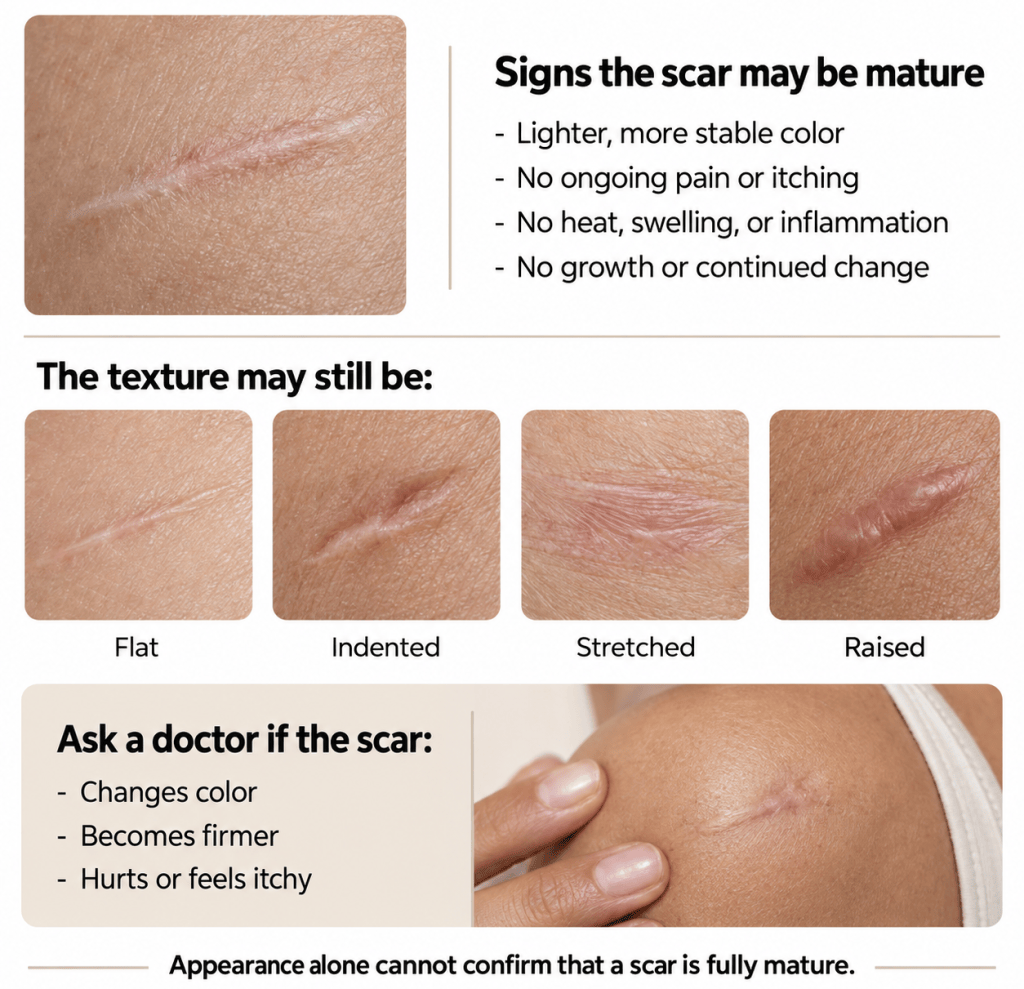
Each type of scar requires a different approach to the tattoo design and application technique.
You should not try to determine on your own whether a scar has fully matured.
If it continues to change color, becomes firmer, hurts, or feels itchy, consult a doctor before considering a tattoo.
Can Scar Care Make a Scar Less Noticeable?
While a scar is still developing, proper care may help reduce dryness and tightness and gradually make it less noticeable.
However, no cream or gel can completely remove scar tissue.
Scar care should begin only after the wound has fully closed and there are no scabs or signs of irritation.
Silicone gels, silicone sheets, and other scar-care products may be used at home. They help maintain hydration and may gradually make the scar feel softer and appear less pronounced.
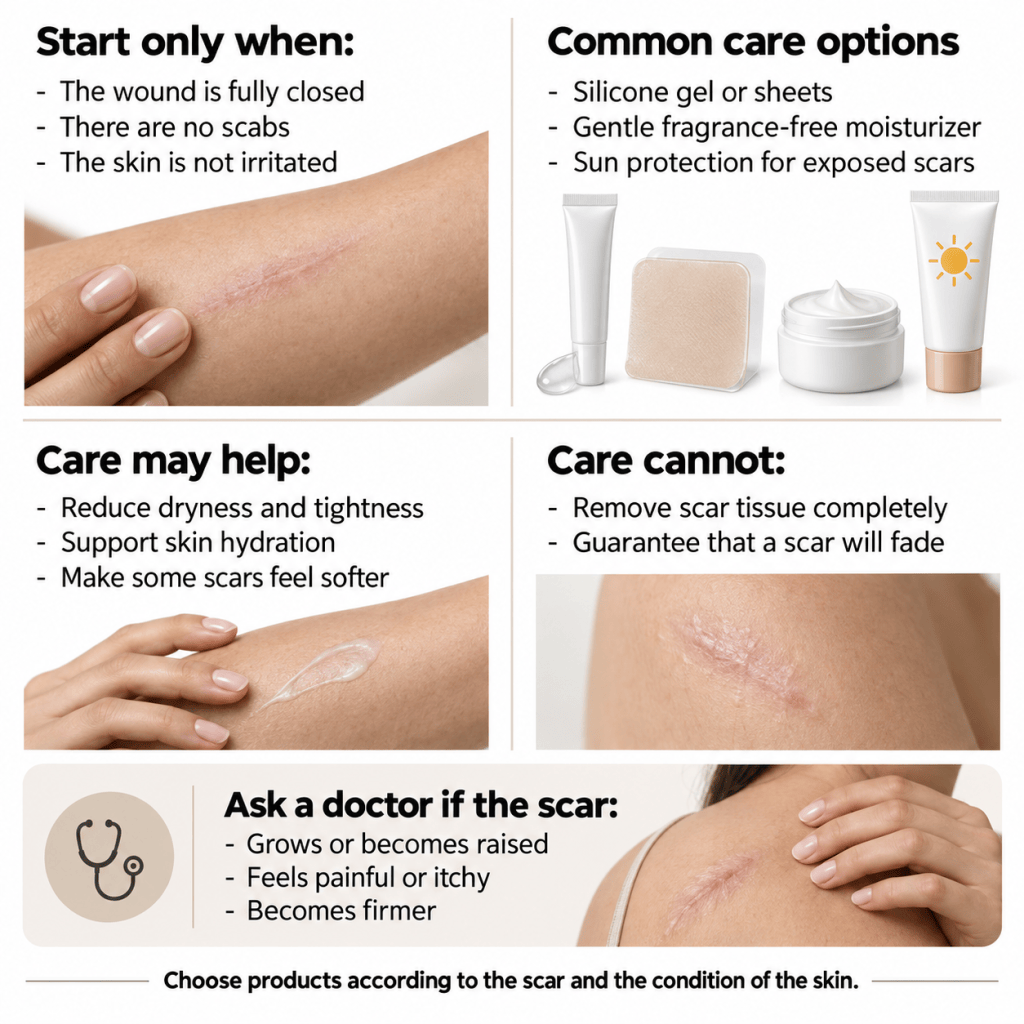
Results depend on the type of scar and how consistently the product is used.
A gentle moisturizer without harsh ingredients or strong fragrances may also be suitable for daily care. It will not remove the scar, but it can help keep the skin comfortable.
Exposed scars should be protected from the sun because a developing scar may darken and become more noticeable.
When choosing a scar-care product, consider the scar’s age, location, and the condition of the surrounding skin.
If the scar is growing, painful, itchy, becoming firmer, or raised above the skin, consult a dermatologist or surgeon before trying to cover it with a tattoo.
When You Should Not Tattoo Over a Scar
A tattoo should never be applied over a fresh wound, scabs, irritated skin, or an area showing signs of inflammation.
The procedure should also be postponed if the scar is still growing, changing, repeatedly becoming irritated, or located in an area that is still being treated.

Keloid scars require particular caution.
They rise above the skin and may continue growing beyond the boundaries of the original wound.
Tattooing creates another injury to the skin, so people who are prone to keloids may develop additional scar tissue after the procedure.
The NHS guidance on keloid scars advises people who are more likely to develop keloids to avoid tattoos and piercings.
A raised scar is not always a keloid.
It may be a hypertrophic scar that remains within the boundaries of the original injury.
However, the type of scar cannot be diagnosed from a photograph. It should be assessed by a dermatologist or another qualified medical professional.
Can a Tattoo Completely Hide a Scar?
A tattoo can change the color and visual appearance of the area, but it cannot remove the texture of the skin.

If the scar is raised, indented, or uneven, its texture may still be visible under certain lighting.
For this reason, an experienced tattoo artist may not try to cover the entire scar with dense ink.
Sometimes it is more effective to place leaves, petals, shadows, wings, or decorative lines around it.
This draws attention toward the overall composition and can make the uneven texture less noticeable.
It is important to have realistic expectations. The goal is not always to make the scar disappear completely, but to incorporate it naturally into the design.
Which Tattoo Designs Work Best for Covering Scars?
Designs for tattoos over scars should be chosen not only according to personal taste but also according to the scar’s shape, length, and direction.
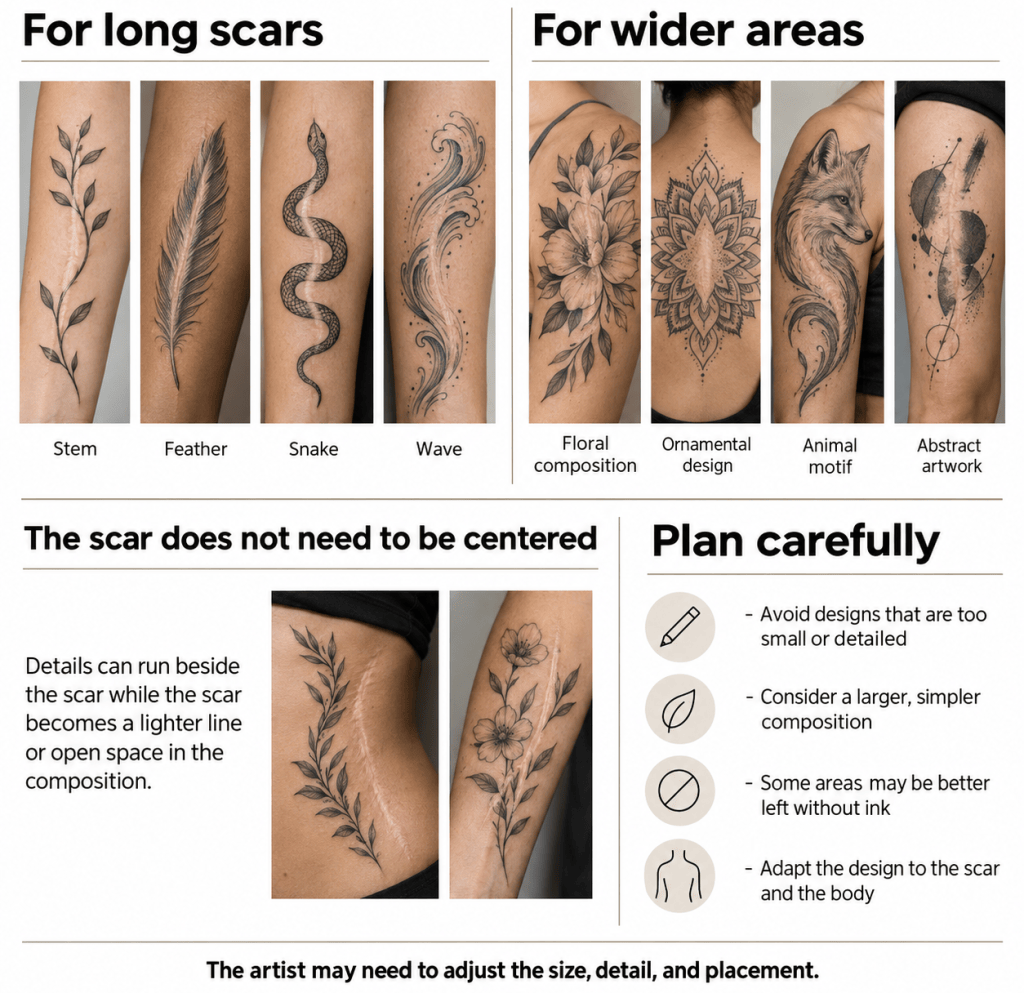
Long scars can sometimes be incorporated into a branch, stem, feather, snake, or wave.
Wider areas may work better with floral compositions, ornamental designs, animals, or abstract artwork.
The scar does not always need to be placed directly in the center of the tattoo.
In some cases, the composition looks more natural when certain details run beside the scar while the scar itself becomes a lighter line or open space within the design.
A very small and highly detailed tattoo may not be the best choice.
Scar tissue does not always hold pigment as evenly as unaffected skin. For this reason, the artist may recommend making the design larger, simplifying certain details, or leaving part of the scar without ink.
Tattooing and Healing Considerations
Scar tissue may be thicker or thinner than the surrounding skin.
Sensitivity can also vary. One area may feel almost numb, while another may react more strongly during the procedure.
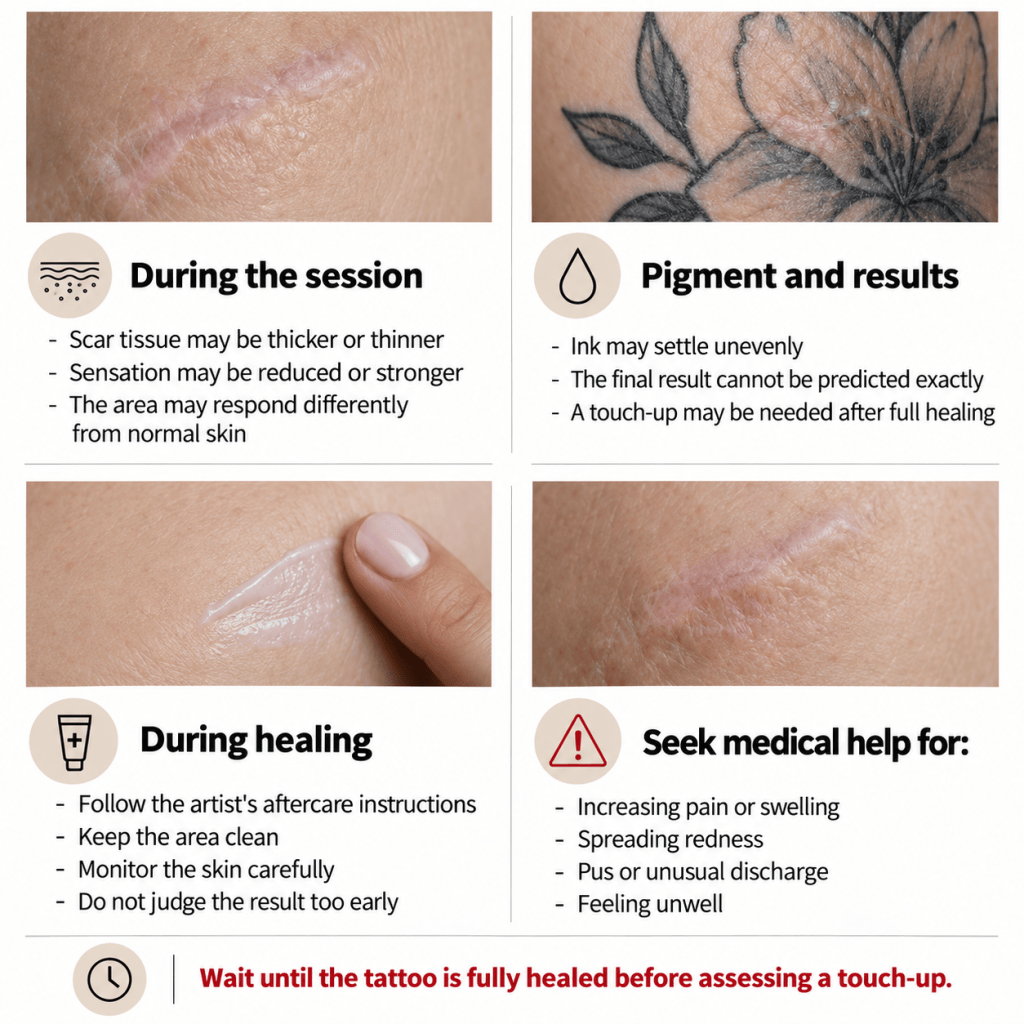
Pigment may settle unevenly in scar tissue, so a touch-up may be needed after the tattoo has healed completely.
It is impossible to predict the final result with complete accuracy.
After the procedure, follow the tattoo artist’s aftercare instructions and monitor the condition of the skin carefully.
Increasing pain, swelling, spreading redness, pus, or feeling unwell may indicate an infection and require medical attention.
Should You Treat the Scar First?
If the scar is raised, red, firm, itchy, or restricts movement, it is best to discuss treatment with a dermatologist or plastic surgeon before considering a tattoo.
Depending on the type of scar, treatment may include silicone products, injections, laser procedures, or other methods. The right option should always be chosen individually.
It is best to plan the tattoo only after treatment is complete and the skin has been reassessed.
Otherwise, further procedures may change the appearance of both the scar and the tattoo.
What You Need to Know
Tattoos over scars for women can look beautiful and may help someone see changes in their body in a new way. However, scar tissue should not be treated like unaffected skin.
First, the scar must be fully mature. It is also important to consult a doctor and find a tattoo artist with experience working over scars.
A successful result begins not with choosing a flower or ornament, but with an honest assessment of whether the skin is ready for another injury.
Tattoos Over Scars: Questions and Answers
How do I choose a tattoo artist for a scar-cover design?
Look for an artist who has experience working with scar tissue. Ask to see clear photos of fully healed results, not only pictures taken immediately after the session.
What should I bring to the consultation?
Bring several photos of the scar in natural light, examples of designs you like, and any relevant information about previous surgery or scar treatment.
Can a scar-cover tattoo require several sessions?
Yes. A large or complex design may be completed gradually, allowing the artist to see how the skin responds between sessions.
Should the tattoo artist create a custom design?
A custom design is usually the better choice because it can follow the scar’s individual shape, direction, and position on the body.
Can I see the design on my body before tattooing?
Yes. Ask the artist to apply a stencil so you can view the placement from different angles and check how the design moves with your body.
Is scar camouflage the same as a decorative tattoo?
No. Scar camouflage usually uses skin-toned pigments to reduce color differences, while a decorative tattoo uses an artistic design to redirect attention or incorporate the scar.
Can I use numbing cream before the appointment?
Do not apply it without discussing it with the tattoo artist first. Some products may affect the skin or interfere with the artist’s usual procedure.