

Graphic tattoos for women often resemble illustrations created with ink, pencil, or a black pen.
Lines, hatching, contrast, and negative space play the main role in this style. Color is not necessary to convey shape, movement, or mood because the character of the drawing creates its visual impact.
A graphic tattoo can look delicate and lightweight or dark and dramatic. Flowers, animals, portraits, mythological scenes, and abstract compositions can all work beautifully in this style.
The key is to choose the right level of detail, size, and placement for the design.
Table of Contents
What Makes Graphic Tattoos Different from Other Styles
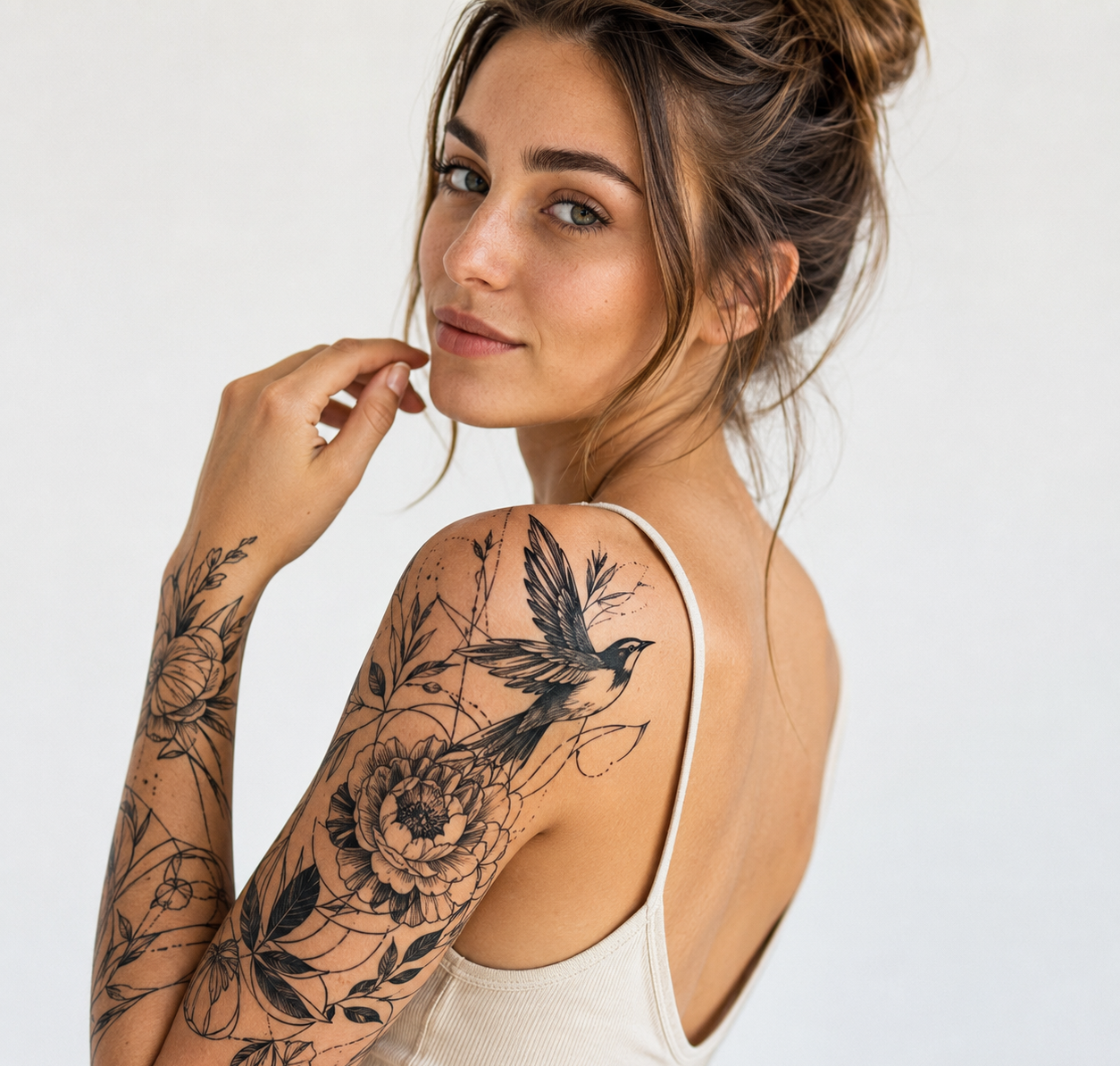
A graphic tattoo design is built around clear outlines and hatching.
Instead of soft, realistic shading, the artist may use parallel lines, cross-hatching, dots, or solid black areas. This gives the tattoo the appearance of a book illustration, an engraving, or an original drawing.
The goal is not always photographic accuracy. Shapes may be slightly exaggerated, simplified, or enhanced with decorative details.
Graphic tattoos are sometimes confused with minimalist designs. However, a graphic tattoo does not have to be small or simple. It can be large, layered, and highly detailed.
This is why graphic tattoos for women can take many different forms. Some designs focus on flowers and geometric lines, while others feature portraits, animals, mythological figures, engraving-inspired scenes, or abstract compositions.
Next, we will look at the most popular ideas and what makes each one distinctive.
Popular Graphic Tattoo Ideas for Women
Graphic tattooing can be adapted to many subjects and moods. Some designs use delicate lines and plenty of open space, while others rely on dense hatching and bold black details.
The following ideas show how differently this style can look depending on the subject, composition, and technique.
Flowers and Botanical Designs
Flowers can look expressive in a graphic style even without color.
Petal outlines, leaf veins, and shadows are created with lines of different lengths and densities.

A small botanical sprig can look light and delicate, while a larger composition featuring roses, peonies, or wildflowers can become a striking accent on the arm, thigh, or back.
Designs that combine realistic plants with geometric shapes, abstract brushstrokes, or intentionally unfinished lines can look especially creative.
Animals and Birds
Graphic techniques can effectively capture fur, feathers, scales, and the distinctive expression of an animal.
A wolf, fox, cat, snake, deer, or bird may look realistic while still retaining the appearance of a hand-drawn illustration.
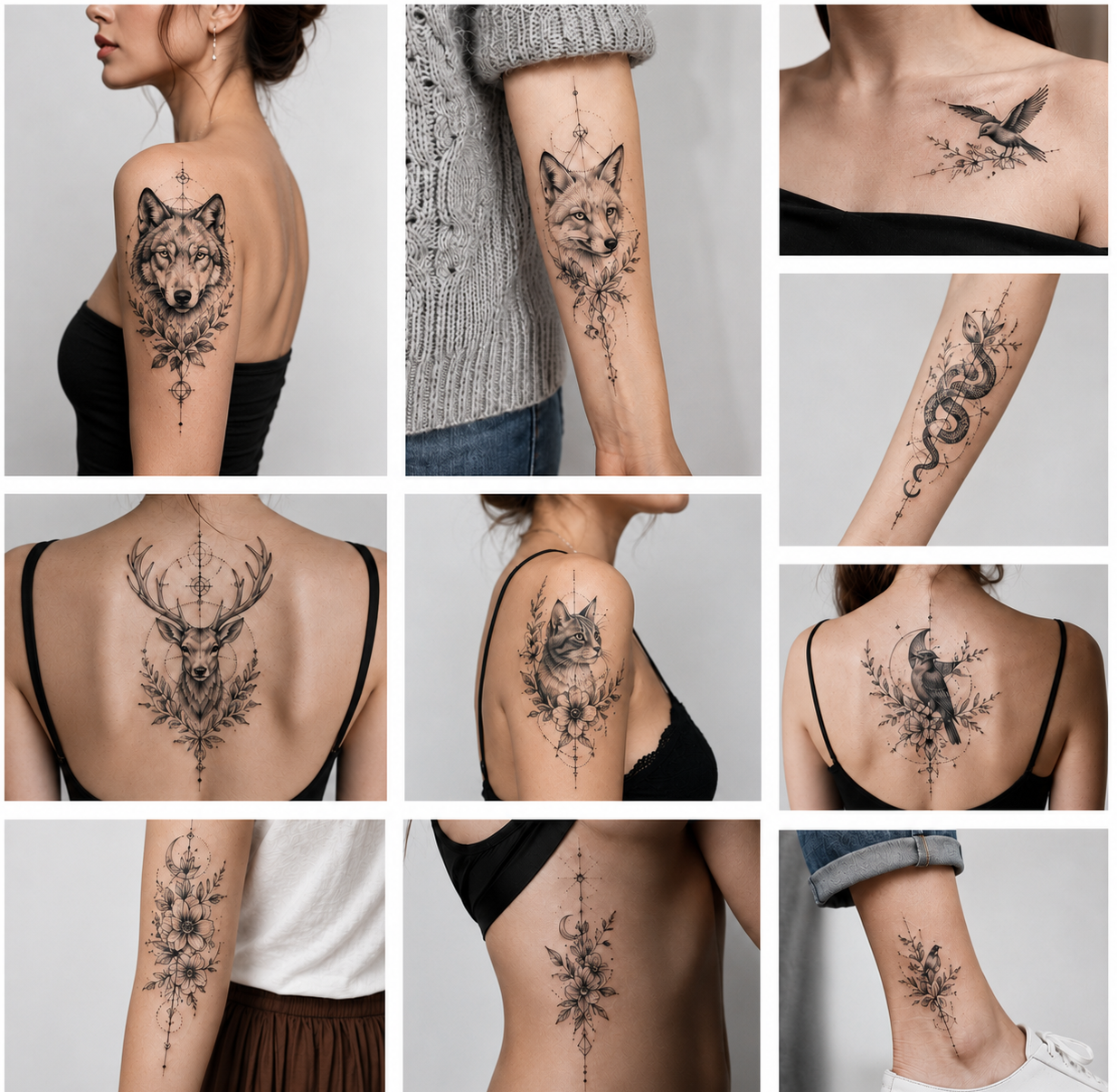
The animal does not have to be shown in full. Sometimes a head, silhouette, or single detail, such as a wing, eye, or feather, is enough. This can make the composition more compact without losing its visual impact.
Flowers, ornamental details, or nature-inspired elements can also be added, but they should support the main subject rather than overwhelm it.
Graphic Portrait Tattoos
A graphic portrait differs from traditional realism.
Instead of recreating every shadow as it appears in a photograph, the artist highlights the most recognizable facial features through outlines and hatching.
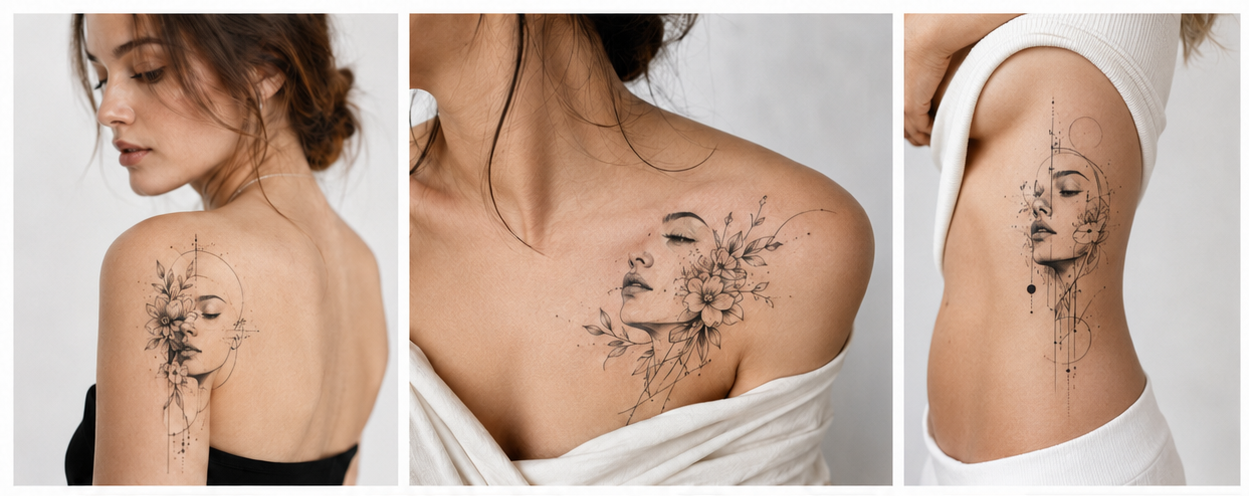
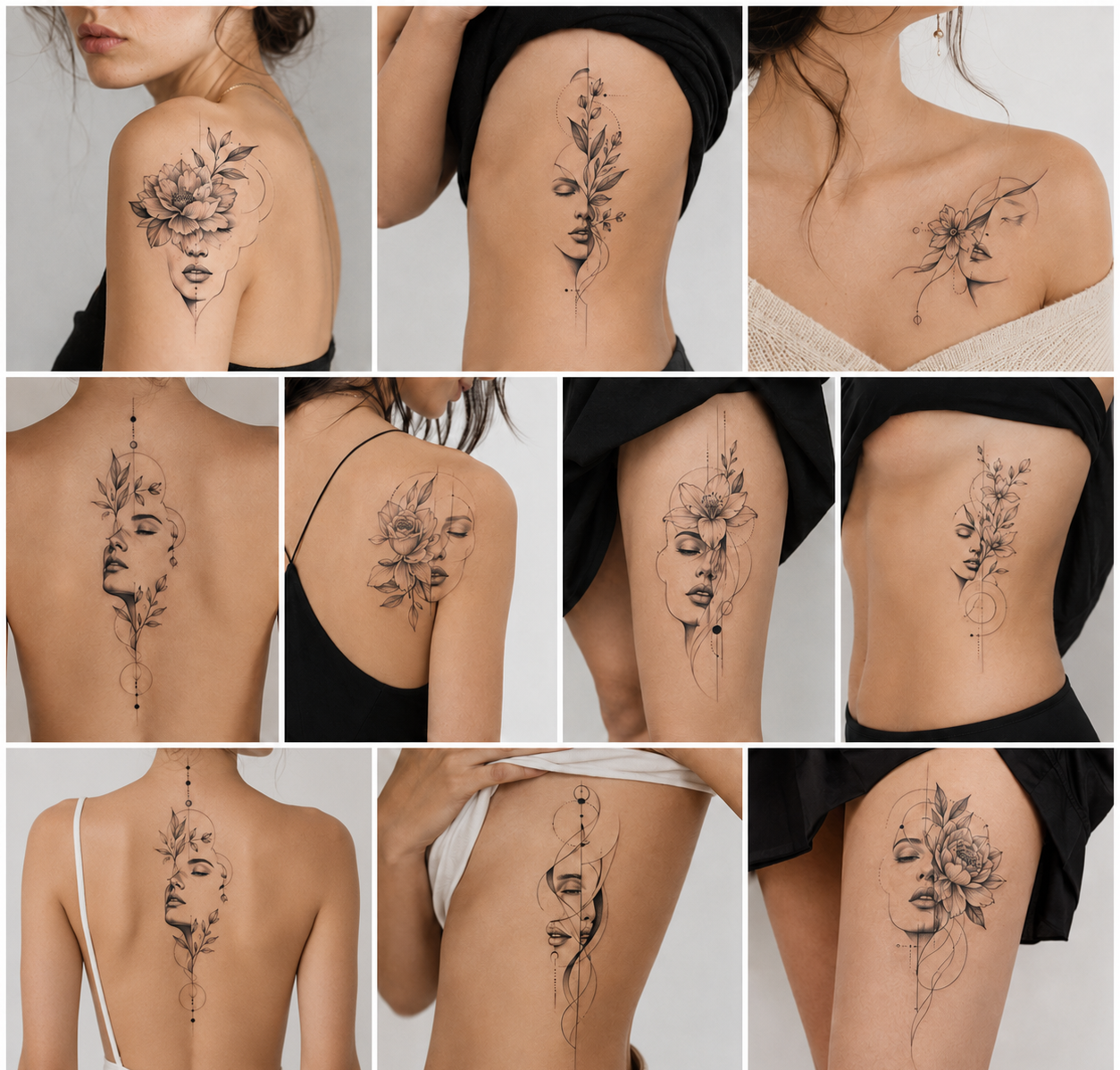
Part of the face may be left unfinished or blend into flowers, geometric shapes, or abstract lines. This makes the portrait feel like an artistic interpretation rather than a direct copy of a photograph.
A high-quality reference photo is still essential for this type of design. The proportions, expression, and distinctive facial features should all be clearly visible.
Engraving and Illustrative Designs
One branch of graphic tattooing resembles illustrations from old books and traditional engravings.
This approach is characterized by fine hatching, strong shadows, and a large number of delicate details.
Mythological figures, architecture, plants, animals, the moon, the sun, and complex narrative scenes can all work well in this technique.
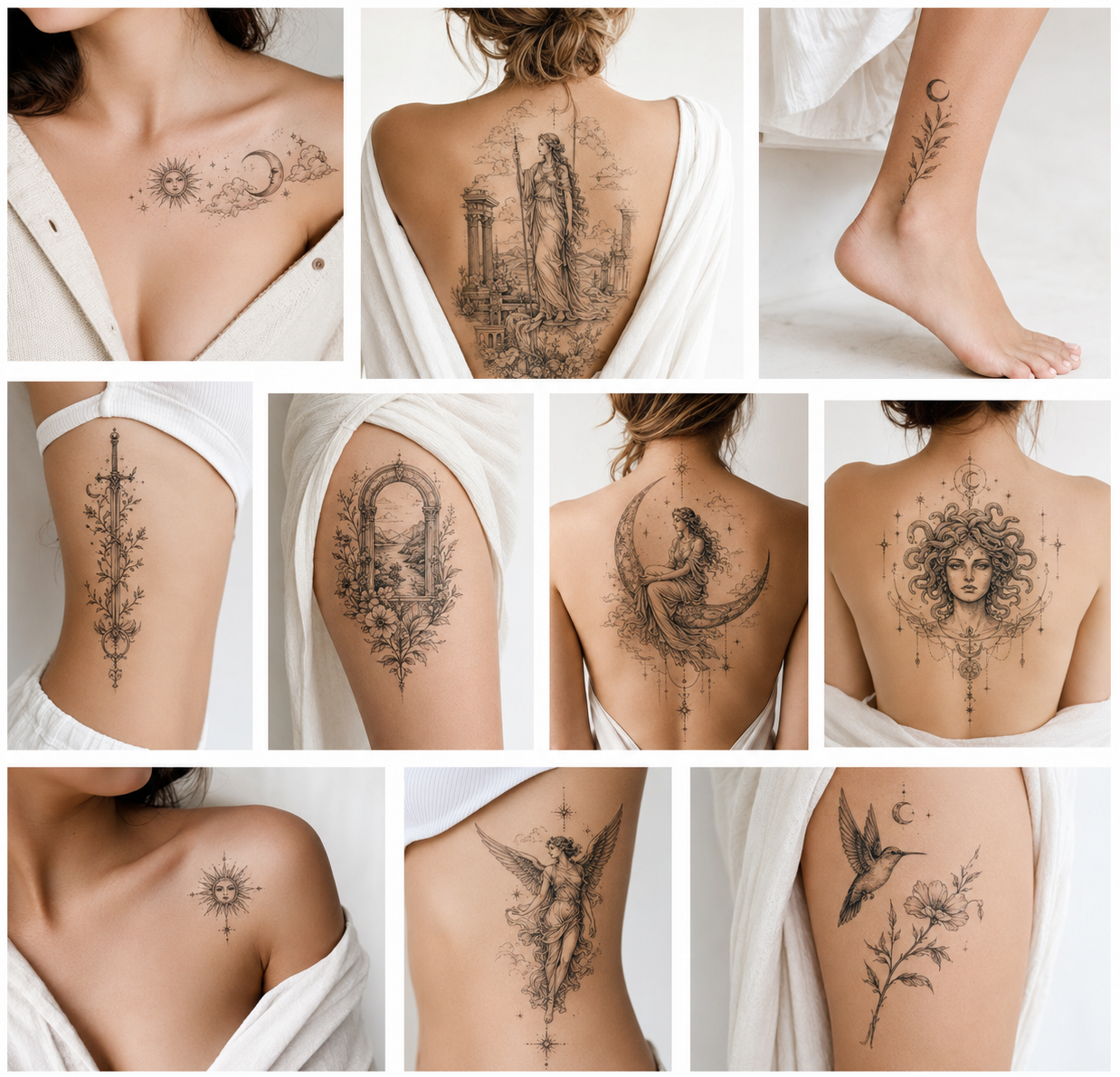
However, an engraving-inspired design should not be made too small. Fine lines need enough space between them so that the image remains clear and readable after healing.
Abstract Designs and Mixed Techniques
Graphic tattoos for women do not always need a clear or recognizable subject.
A design may combine lines, bold black brushstrokes, geometric shapes, and fragments of different images.
For example, half of a face may blend into the silhouette of a bird, a flower may dissolve into sketch-like lines, or an animal may merge with part of a landscape.
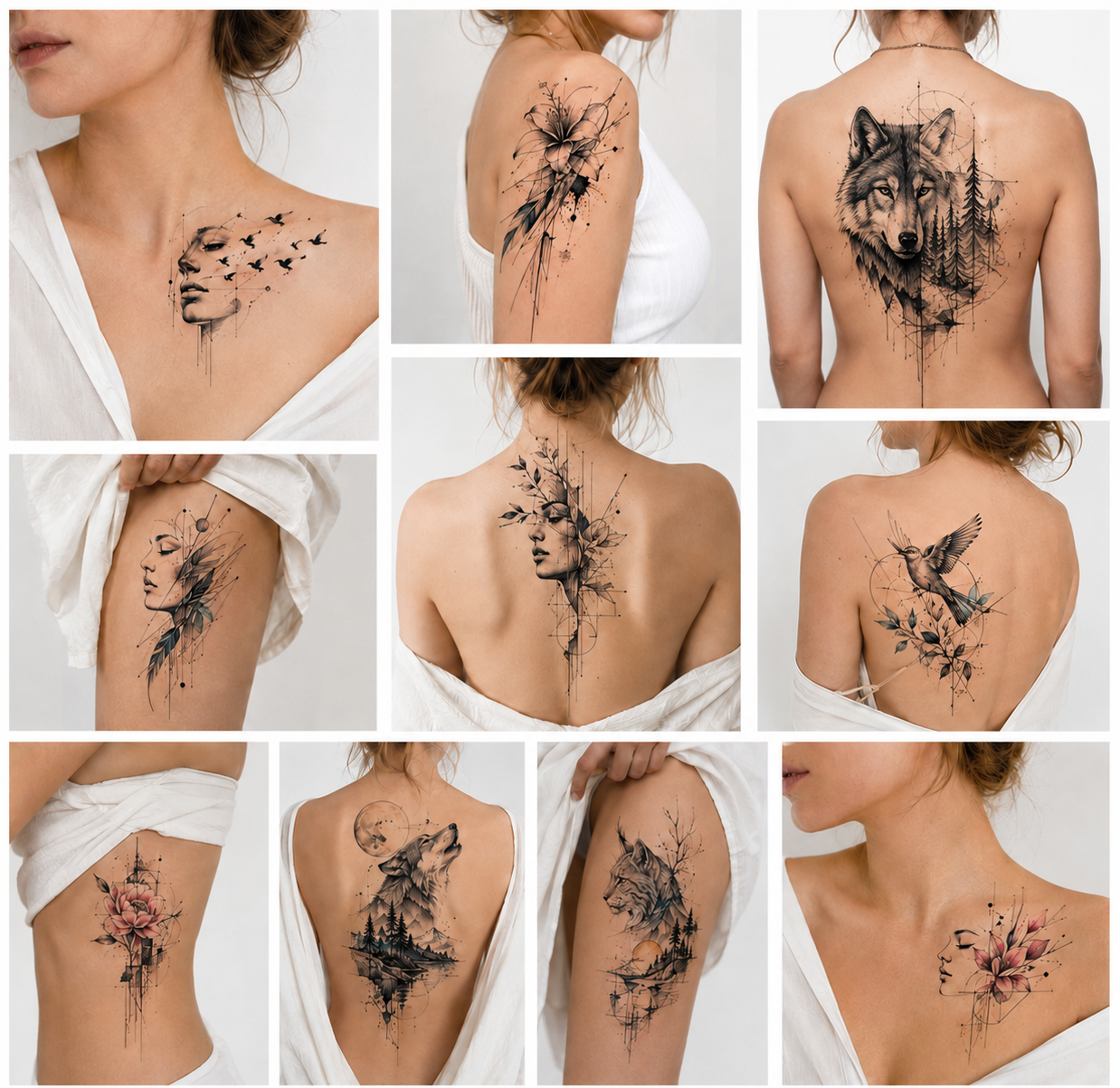
These designs look most successful when there is a clear visual connection between all the elements.
Graphic tattooing can also be combined with realism, ornamental details, dotwork, and small pops of color.
Why Contrast and Negative Space Matter
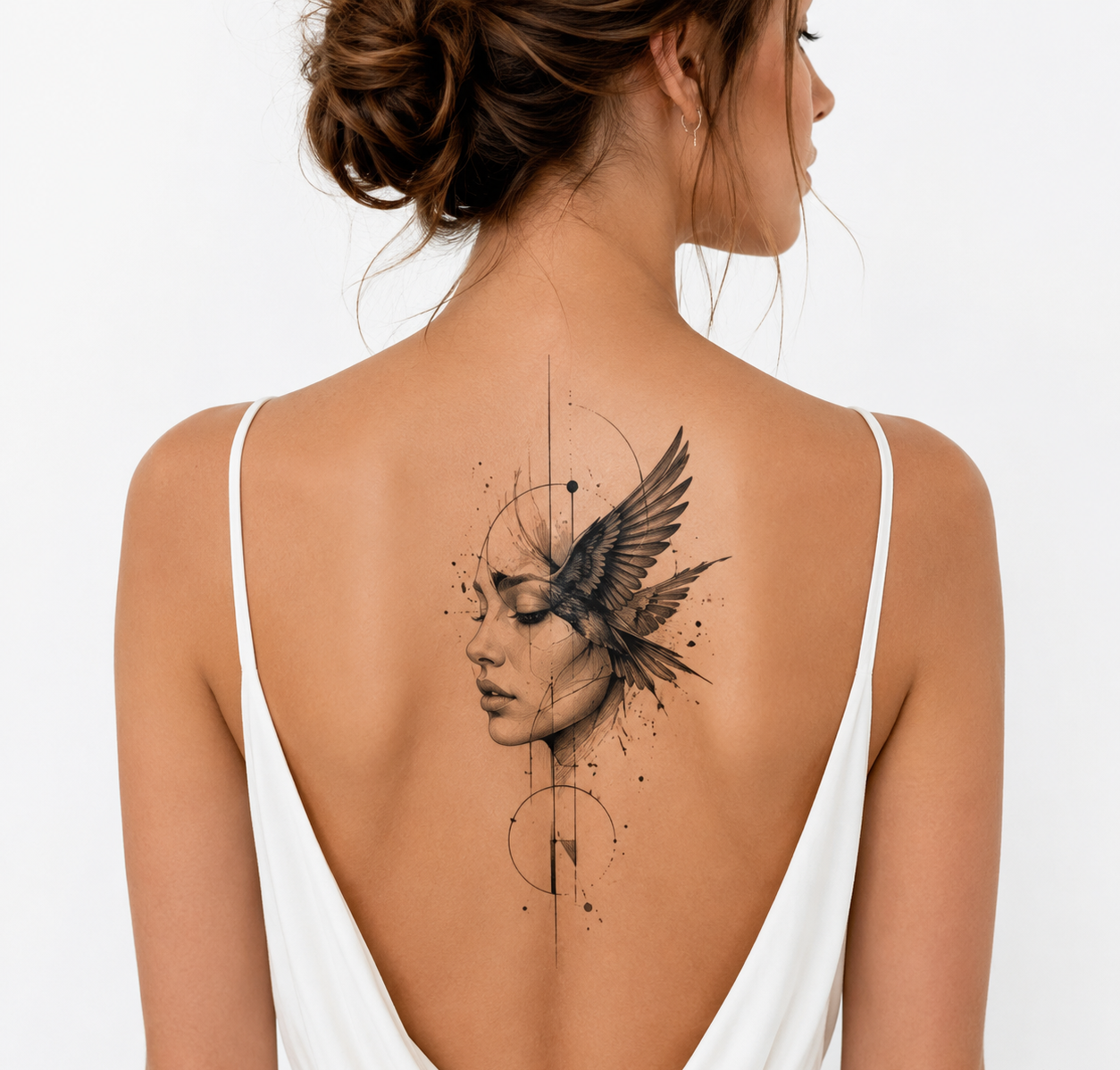
In graphic tattooing, the areas left uninked can be just as important as the parts filled with pigment.
Negative space creates light, separates individual details, and prevents the composition from turning into one dense, dark shape.
The same balance is important in black and gray tattoos for women, where shading and uninked areas work together to keep the design clear.
If a design contains too much fine hatching and too many solid black areas, it may look heavier after healing than it did on paper. The artist should therefore adjust the line weight and spacing to suit the size of the tattoo.
Well-balanced contrast makes the design stand out from a distance, while the finer details become visible when viewed up close.
Where to Place a Graphic Tattoo

Long, narrow designs work well on the forearm, upper arm, lower leg, or along the ribs.
Wider compositions with plenty of detail are better suited to the thigh, back, or upper arm. For a small tattoo, it is usually better to choose a simpler design with a clear silhouette.
When a complex engraving-inspired composition is reduced too much, the fine lines may end up too close together.
Placement also influences the shape of the design. The tattoo should follow the natural curves of the body and look balanced not only when the body is still but also during movement.
How to Choose a Design That Stays Clear Over Time

Avoid trying to fit too much hatching, shading, or too many small symbols into a tiny tattoo. The more complex the design, the more space it needs.
Show your artist examples of tattoos you like and explain what catches your attention most, such as clean lines, strong contrast, a sketch-like effect, or detailed engraving-inspired work.
This will help the artist create a custom composition that reflects your preferences while remaining clear and balanced.
A graphic tattoo looks most effective when the lines do more than fill the skin. They should follow the shape of the body and strengthen the character of the chosen subject.
Common Questions
What is a graphic tattoo?
A graphic tattoo is created mainly with outlines, hatching, solid black areas, and strong contrast. It can resemble an ink drawing, pencil sketch, or engraving.
What subjects work well for graphic tattoos?
Flowers, animals, birds, portraits, mythological figures, architecture, geometric elements, and abstract compositions all work well in this style.
How is a graphic tattoo different from realism?
Realism aims to recreate photographic details and smooth shading. Graphic tattooing uses defined lines, hatching, and deliberate contrast to shape the image.
Can a graphic tattoo be small?
Yes, but the design should be simple. Dense hatching and many fine details usually need more space to remain clear.
Does a graphic tattoo have to be black?
Black pigment is the most common choice because it emphasizes lines and contrast. However, small color accents can also be added.
Do fine lines change over time?
Yes. Every tattoo gradually changes along with the skin. The FDA notes that tattoos may fade and pigments can sometimes migrate beyond their original placement, which may create a blurred appearance. Choosing the right size and leaving enough space between fine lines can help the hatching remain readable.