

Black and Gray Tattoos for Women remain popular because they rely on shape, contrast, shading, and composition rather than bright color.
A design can be small and delicate or cover a larger area of the arm, back, or thigh. Black and gray ink works well for many ideas, from fine floral designs and meaningful symbols to geometric patterns and realistic portraits.
The final result depends on more than the subject itself. Line thickness, placement, negative space, and the artist’s technique all affect how the tattoo looks after healing and how clearly it may age.
This guide explores popular black and gray tattoo ideas for women, the techniques used to create them, and what to consider when choosing a design that feels personal rather than copied.
Table of Contents
Why Black and Gray Tattoos Never Go Out of Style

Black and gray tattoos are not tied to one particular trend. Depending on the design and technique, they can look delicate and understated, bold and graphic, or detailed enough to resemble a pencil drawing.
Black ink creates definition, while softer shading, solid areas, and negative space add depth and keep the composition from looking flat.
These tattoos can also work well alongside existing designs and may be expanded later if the placement and composition are planned carefully.
Still, black ink alone does not make a tattoo timeless. A well-balanced design, skilled application, and an idea that feels personal matter far more than following what is currently popular.
Next, we will look at some of the most popular black and gray tattoo ideas for women and what makes each one different.
Popular Black and Gray Tattoo Ideas for Women
Black and gray designs can be adapted to different styles, placements, and levels of detail. Here are some of the most popular ideas and what to consider before choosing one.
Flowers and Botanical Designs
Flowers can look delicate, realistic, or dramatic in black and gray. The final effect depends on the thickness of the lines, the amount of shading, and the size of the design.
A small botanical sprig can work well on the forearm, collarbone, ribs, or ankle. Larger peonies, roses, and wildflower arrangements need more space and can be placed on the shoulder, thigh, back, or along the side of the body.
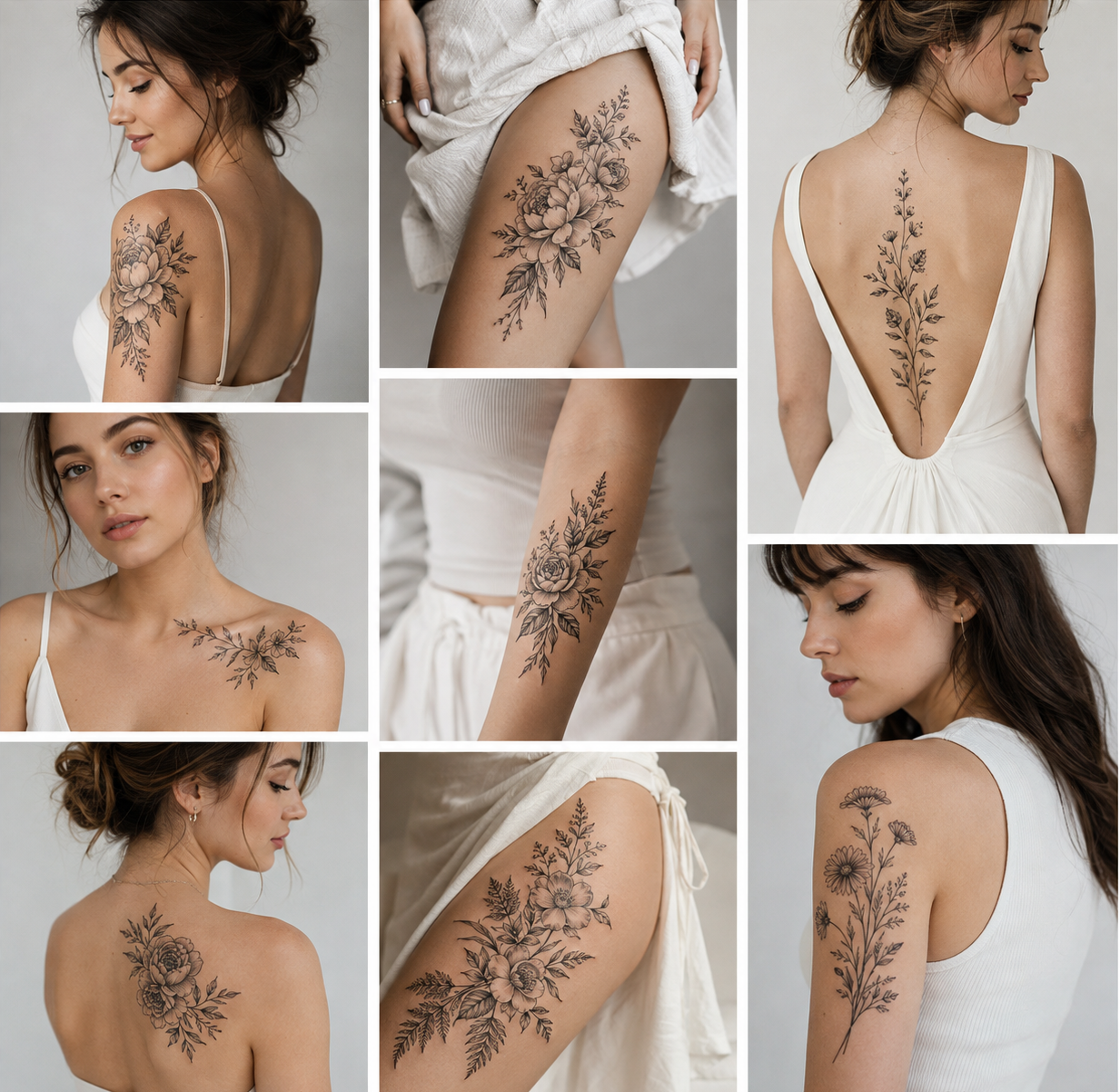
Floral designs can follow the natural curves of the body, which helps them look like part of the overall composition rather than a separate image placed on the skin.
A particular flower may also carry a personal meaning connected with a memory, a loved one, or an important period in your life.
Animals and Birds
Animals and birds are among the most expressive subjects for black and gray tattoos. A design may feature a realistic pet portrait, a bird in flight, a snake, a butterfly, a wolf, or a cat.
The style can be chosen to reflect a personal story, a certain mood, or simply an image you feel connected to.
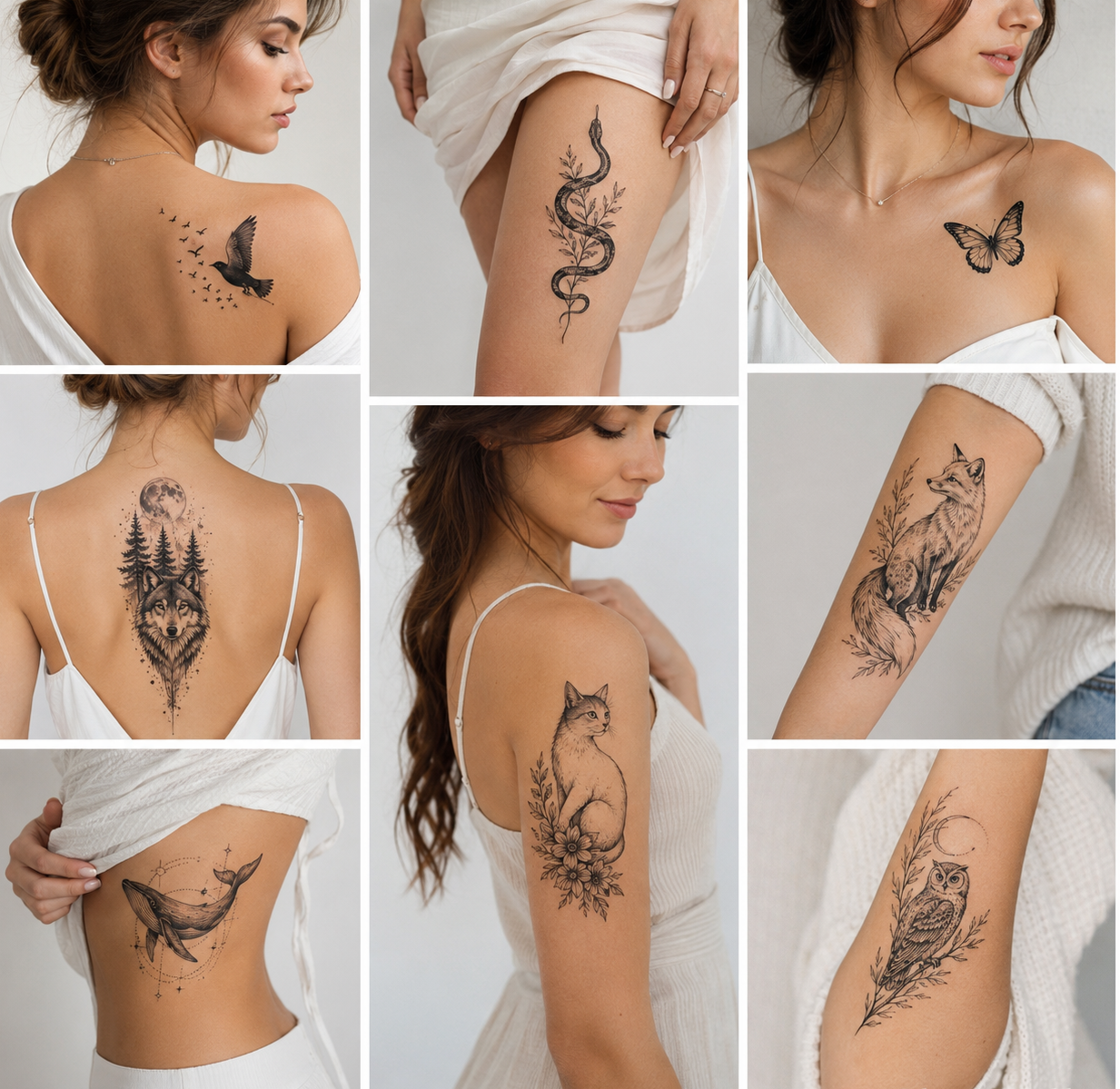
Black and gray shading can show details such as fur, feathers, movement, and facial expression. However, the design does not have to be realistic.
A graphic fox, an outlined butterfly, or a bird created with only a few lines can look just as striking. The right level of detail depends on the size and placement of the tattoo.
Geometric Tattoos and Ornamental Designs
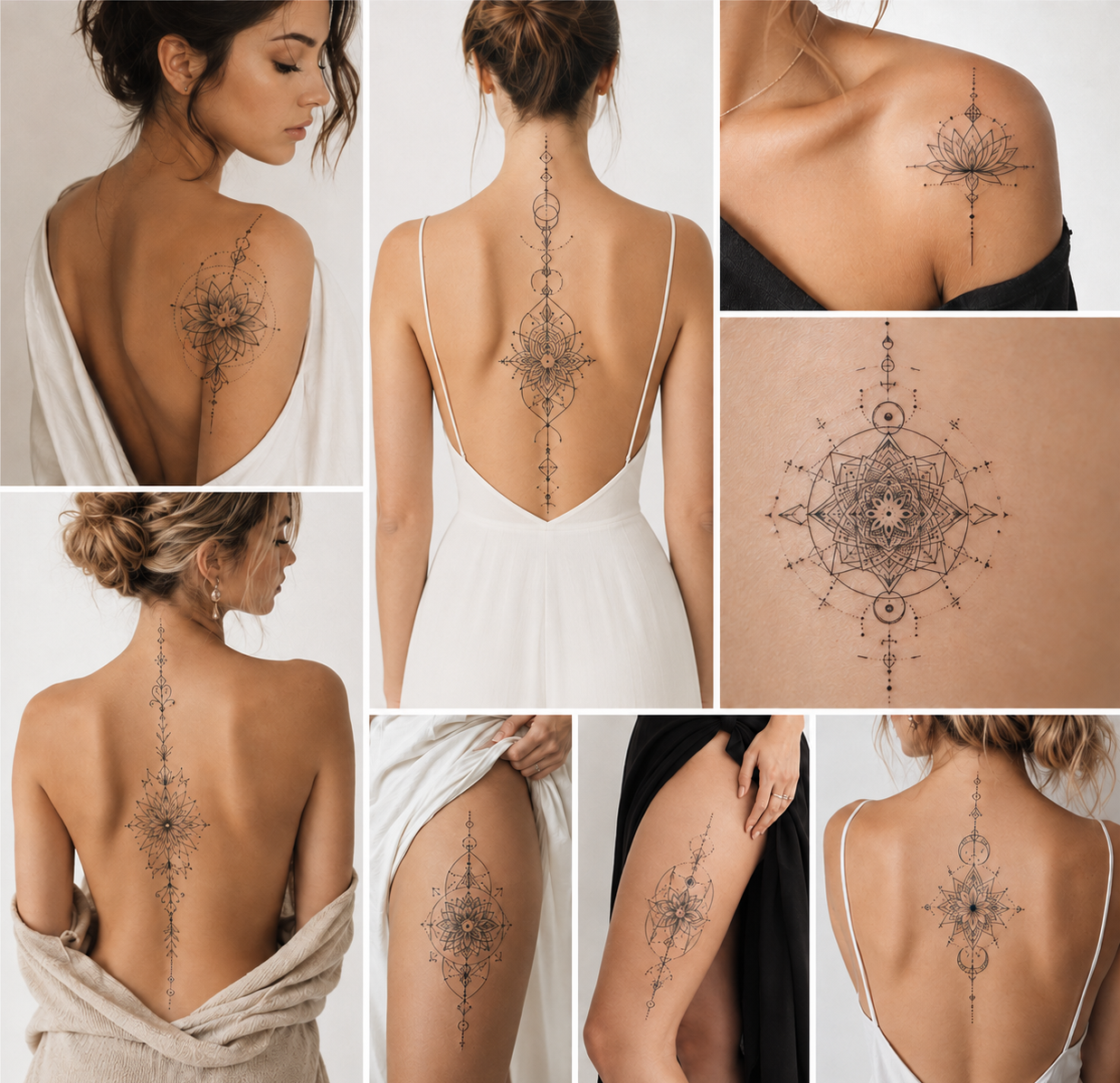
Geometric shapes, symmetrical patterns, and ornamental designs can look especially striking in black and gray.
Precision matters in this style. Uneven lines, poor symmetry, and incorrect proportions are often easy to notice, particularly in clean and minimal designs.
An ornamental tattoo can follow the shape of the shoulder, spine, thigh, or ribcage. Its size and direction should be adjusted to the natural lines of the body.
Before using a traditional, spiritual, or religious symbol, learn about its origin and meaning.
A pattern that looks decorative may carry cultural significance, so it is worth discussing the design with an artist who understands its background.
Portraits and Memorial Tattoos
Black and gray techniques are often used for portraits, memorial tattoos, and detailed scenes.
Careful shading can create depth and help the artist show facial features, fabric, light, and small details. These designs may include the portrait of a loved one or pet, an important date, a place, or another image connected with a personal memory.
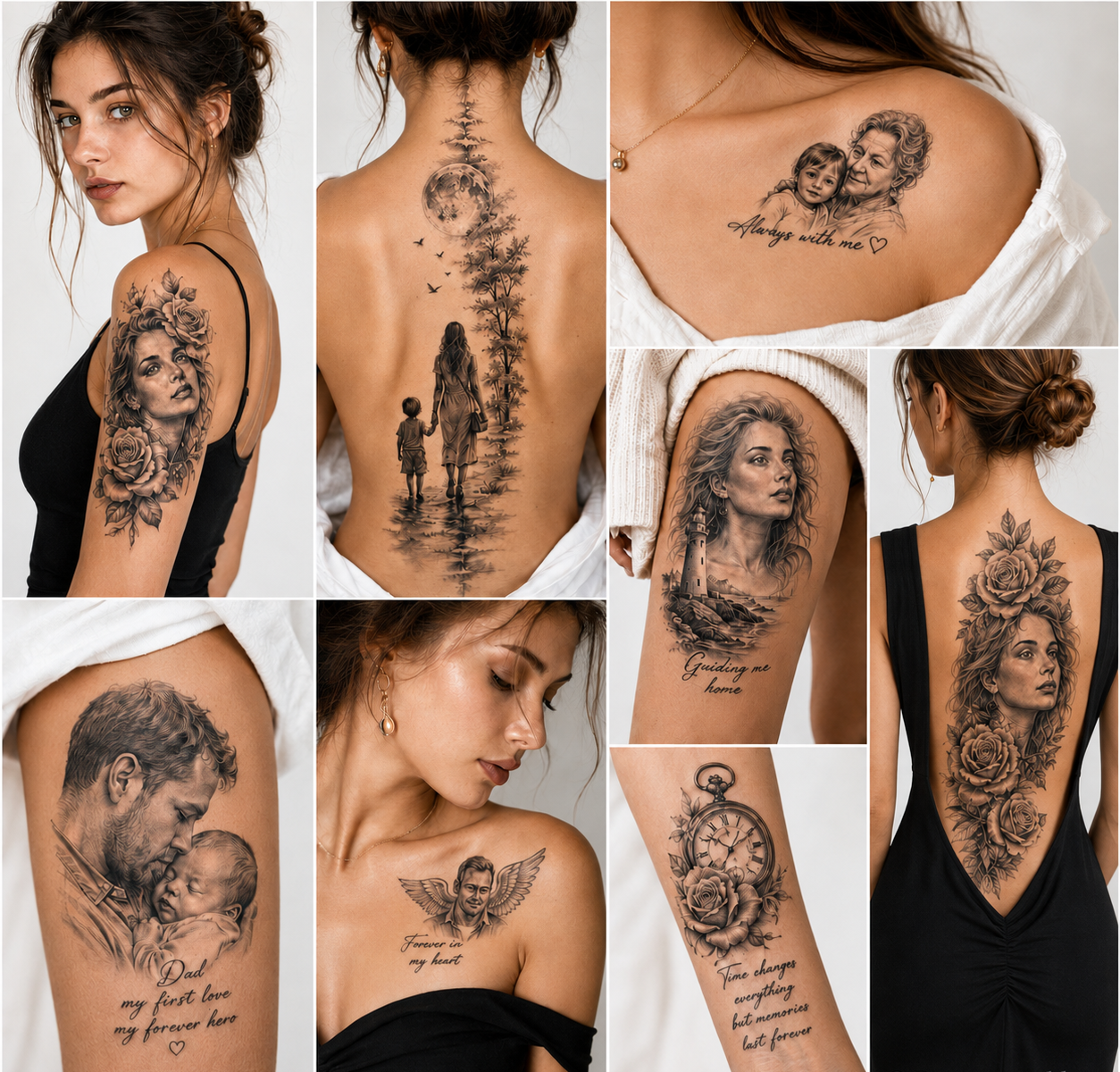
Portrait tattoos usually need enough space for the important details to remain clear. If the design is made too small, fine features may lose definition as the tattoo ages.
Before booking, look at both fresh and fully healed examples in the artist’s portfolio. Portrait work leaves little room for error, so choose an artist with proven experience in realism rather than relying only on a few attractive social media photos.
Lettering and Meaningful Symbols
Short quotes, names, dates, coordinates, and small symbols can work well as black and gray tattoos.
They may be worn as individual designs or included in a larger composition with flowers, geometric elements, or other meaningful details.
Lettering should not be made too small or placed too close together. A font that looks clear on paper may become difficult to read when reduced to tattoo size.

Before the appointment, carefully check every word, date, number, coordinate, and translation included in the design.
Correcting a mistake after the tattoo has been completed is much more difficult than reviewing the final stencil one more time before it is applied.
Can a Black and Gray Tattoo Include Color?

The term “black and gray tattoo” does not mean that the design uses only solid black ink.
Different shades of gray, soft transitions, and shadows can create depth without adding bright colors. The balance between dark areas, lighter shading, and untouched skin gives the tattoo its contrast and dimension.
Some black and gray designs include one small color accent, such as a red flower, a blue detail, or a muted background element. This can draw attention to a particular part of the tattoo without changing its overall style.
If you prefer a fuller and more varied palette, our guide to color tattoos for women explains how to choose colors, create contrast, and consider how the design may change over time.
How Different Black and Gray Tattoo Styles Change Over Time
How a tattoo looks several years later depends on more than the quality of the ink and your aftercare routine.
The technique, size of the design, line thickness, spacing between details, placement, and sun exposure can all affect how clearly the tattoo ages.
Fine lines, solid black areas, dotwork, and soft gray shading may change in different ways. Small details placed too close together can gradually become less defined, while larger designs usually give individual elements more room to remain readable.
The FDA’s tattoo safety information also notes that tattoos may fade and that pigment placed too deeply can spread beyond its original position, creating a blurred appearance.

Every tattoo can gradually become lighter, and its edges may look softer with time. This is a natural process influenced by the skin, placement, sun exposure, and individual healing.
A well-planned design takes these changes into account from the beginning. The artist should leave enough space between small details, choose an appropriate line thickness, and avoid fitting an overly complex composition into an area that is too small.
This does not mean that delicate tattoos cannot age well. It means that the design, size, and technique need to work together.
How to Choose a Tattoo Design You Will Still Love

When looking at black and gray tattoos for women, try not to choose a design only because it is currently popular.
A fashionable image can quickly lose its appeal if it has no connection to your taste, personality, or story.
Start by deciding deciding which style feels most natural to you. It may be clean graphic lines, delicate details, soft shading, bold blackwork, or realistic imagery.
Then think about placement and size. Consider whether you want the tattoo to be visible every day, easy to cover, or designed to follow a particular area of the body.
Bring your ideas and reference images to the consultation, but allow the artist to adapt the composition. A design that looks good on a screen may need different proportions, spacing, or details to work well on the skin.
Black ink alone does not make a tattoo timeless. What matters most is a thoughtful design, skilled application, and a result that feels personal to you.
Questions and Answers About Black and Gray Tattoos

Do black and gray tattoos hurt less than color tattoos?
Not necessarily. Pain depends more on the placement, size, duration of the session, technique, and your individual sensitivity than on the color of the ink.
Do black and gray tattoos take less time to complete?
A simple design may take less time, but detailed shading, realism, and large compositions can require several long sessions. The absence of bright color does not always make the process faster.
Do black and gray tattoos look the same on every skin tone?
No. Natural skin tone and undertone affect how much contrast and detail are visible. Ask to see fully healed work the artist has completed on skin similar to yours.
Can color be added to a black and gray tattoo later?
In many cases, yes. However, the artist needs to check the existing shading, available space, and condition of the skin before deciding which colors and details can be added.
Can a black and gray design cover an old tattoo?
Sometimes. The result depends on the size, darkness, color, and shape of the existing tattoo. A cover-up usually needs to be larger and carefully designed around the original pigment.