

Geometric tattoos for women stand out for their clean lines, symmetry, and thoughtful combinations of simple shapes.
A circle, triangle, or diamond can form the foundation of a small design or become part of a larger composition featuring flowers, animals, and decorative patterns.
Despite their structured appearance, geometric tattoos do not have to feel cold or rigid.
Fine outlines, negative space, and botanical details can make a design feel lighter, while solid black areas and contrasting shading add definition.
Table of Contents
What Makes the Geometric Style Unique
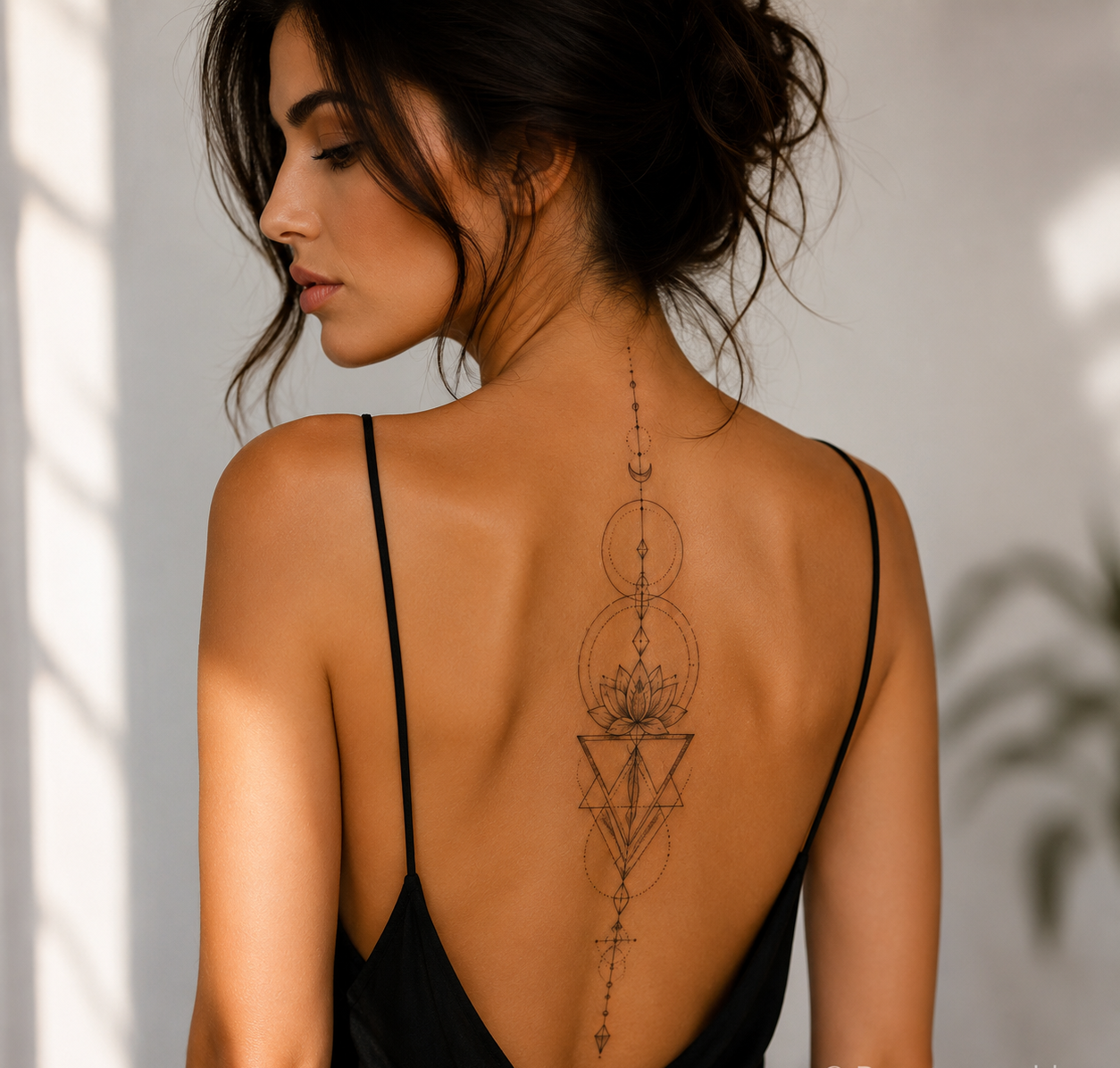
Straight lines, circles, curves, triangles, polygons, and symmetrical patterns form the foundation of this tattoo style.
Some designs consist of only a few minimalist shapes, while others resemble intricate diagrams or decorative ornaments.
Precision is especially noticeable in geometric tattoos.
An uneven circle, an off-center axis, or lines of different thicknesses can disrupt the entire composition.
That is why it is important to choose an artist who is confident working with symmetry and precise linework.
Next, we will explore what popular geometric shapes may represent and how they can be combined harmoniously in a tattoo design.
Popular Shapes and Ideas for Geometric Tattoos
Geometric tattoos can be built around a single shape or combine several elements in a more detailed composition.
Circles, triangles, diamonds, and straight lines each create a different visual rhythm, even before flowers, animals, or landscapes are added.
Some designs look light and minimalist, while others use symmetry, shading, and dotwork to create more depth and contrast.
Below, we explore the most popular shapes and combinations, what they may represent, and how they can influence the final design.
The Circle – Wholeness and Continuity
A circle has no beginning or end, which is why it is often associated with wholeness, cycles, and continuous movement.
It can be used as a small standalone tattoo or as a frame for another design.
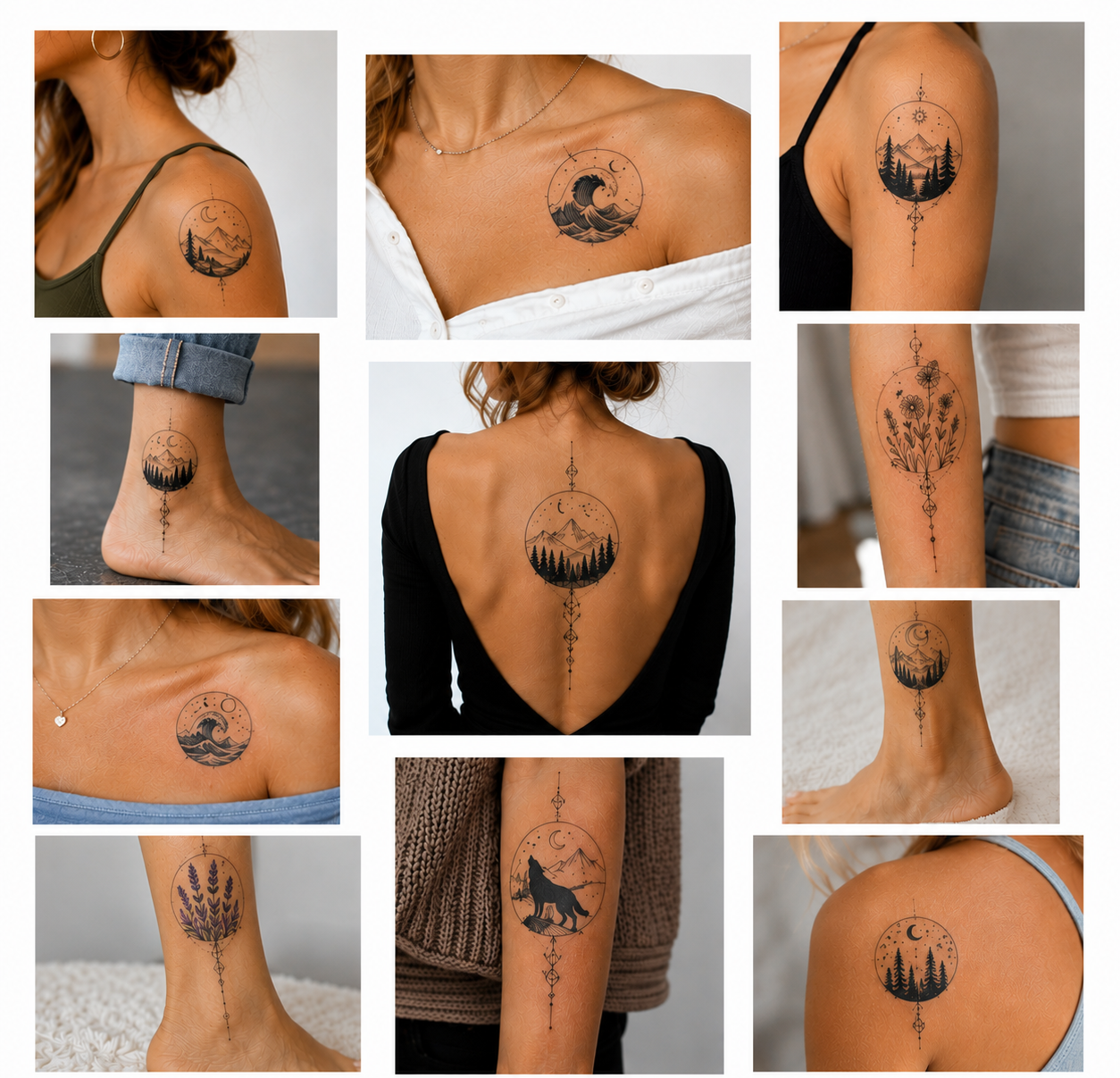
Mountains, forests, the moon, flowers, waves, or an animal silhouette can all be placed inside a circle.
Part of the outline can also be left open, giving the composition a lighter and more modern appearance.
The Triangle – Direction and Balance
The meaning of a triangle depends on its position, cultural context, and the details surrounding it.
In modern custom designs, it is often seen as a symbol of movement, stability, or the connection between three important parts of life.
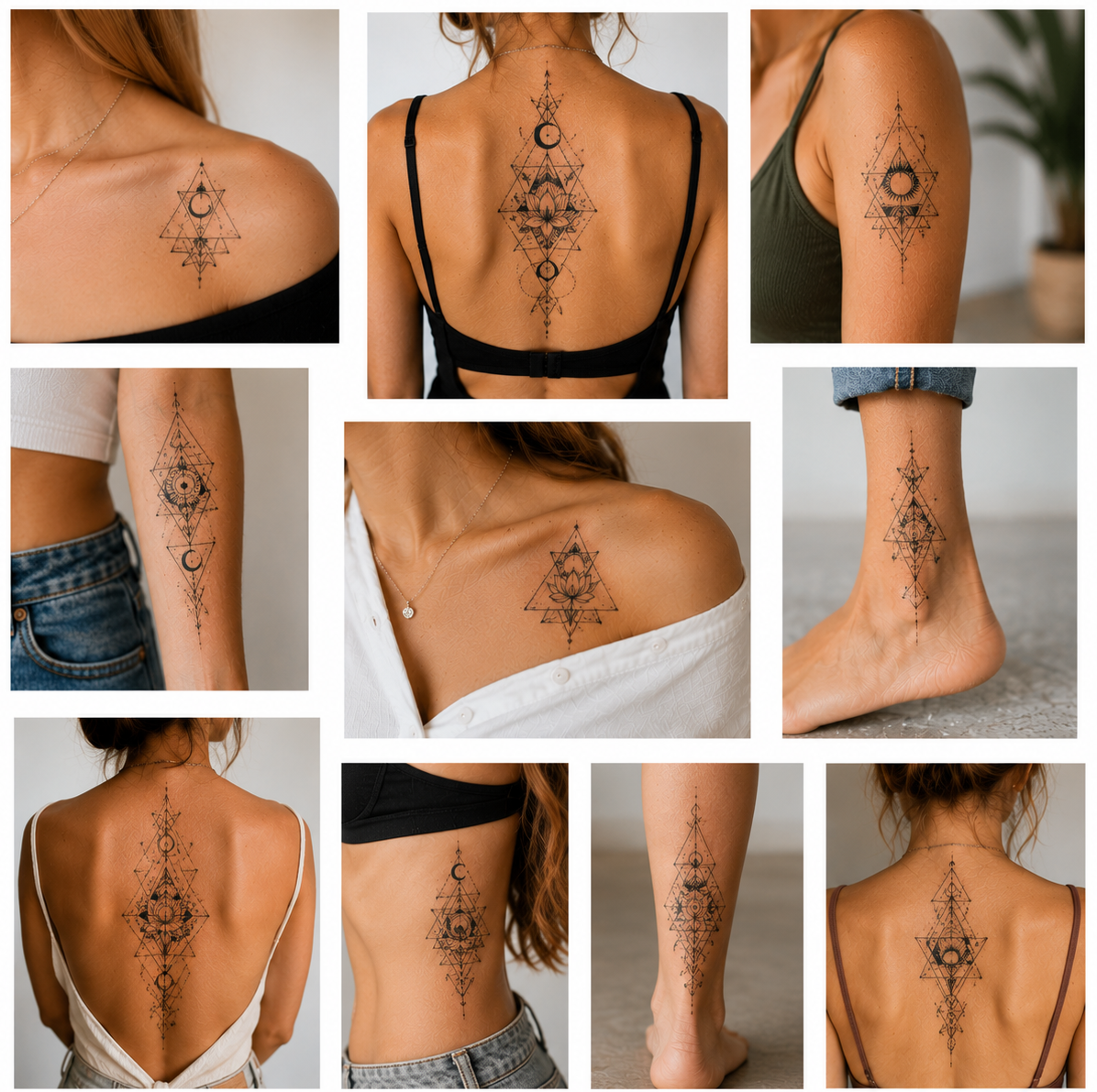
A single triangle looks simple and understated, while several shapes can form a more intricate pattern.
Triangles are often combined with flowers, mountains, waves, or celestial motifs.

Do not rely on random interpretations found online.
If a shape is connected to religious or historical symbolism, it is best to research its meaning before getting the tattoo.
Squares and Rectangles – Order and Stability
A square is often seen as a stable and balanced shape.
In tattoos, it can be associated with order, boundaries, stability, or a sense of inner strength.
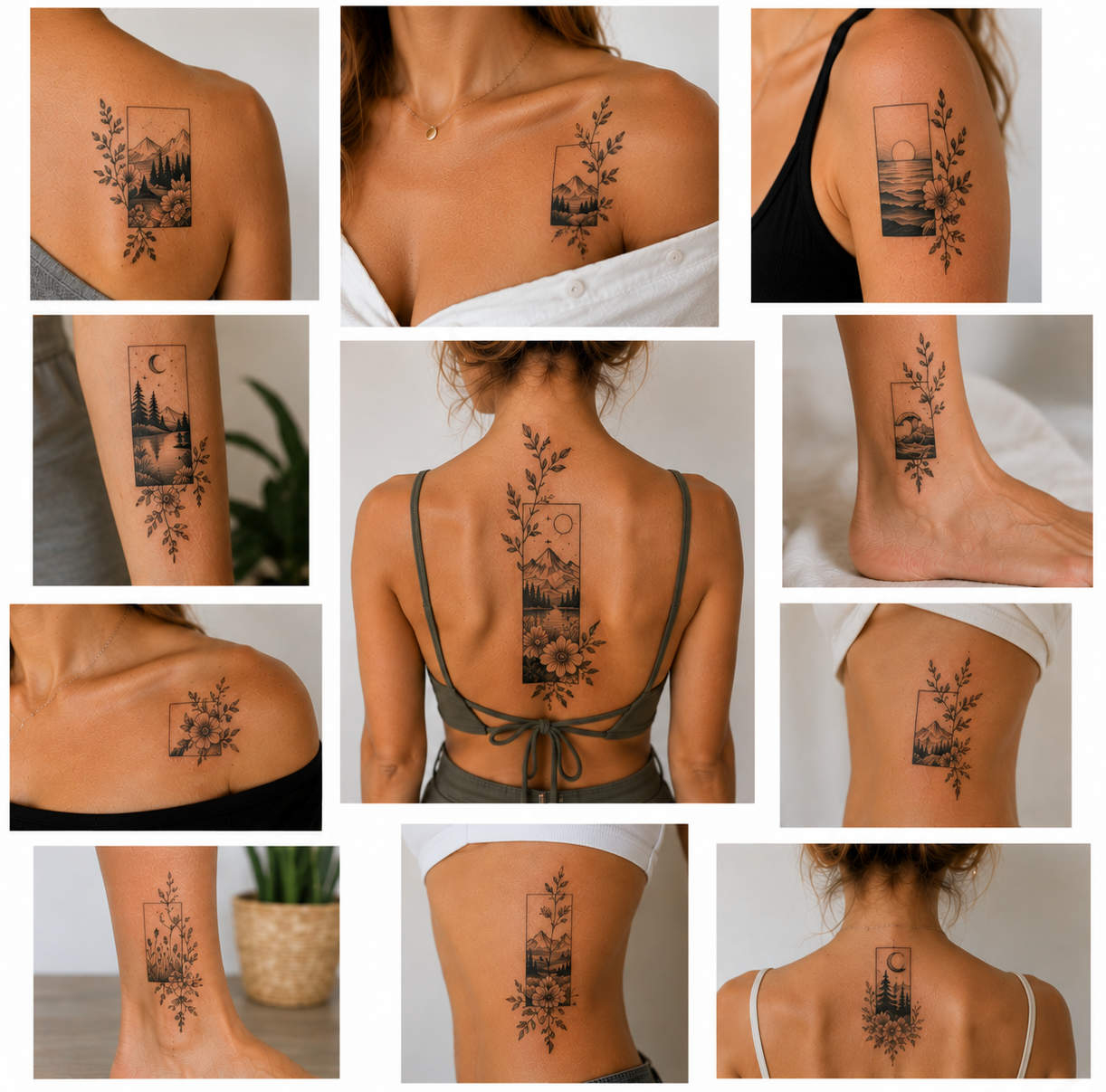
Rectangular frames work particularly well for small landscapes and botanical compositions.
Part of a flower or branch can extend beyond the frame, creating an interesting contrast between precise geometry and natural, organic shapes.
The Diamond – A Striking Focal Point
A diamond shape is often used as the foundation of a symmetrical pattern or as a frame for a flower, eye, moon, or another element.
Its elongated form works particularly well on the forearm, lower leg, along the spine, or in the center of the chest.

A diamond does not have one universal meaning on its own. Its symbolism depends on the elements included in the composition and the personal meaning behind the design.
Lines and Parallel Bands
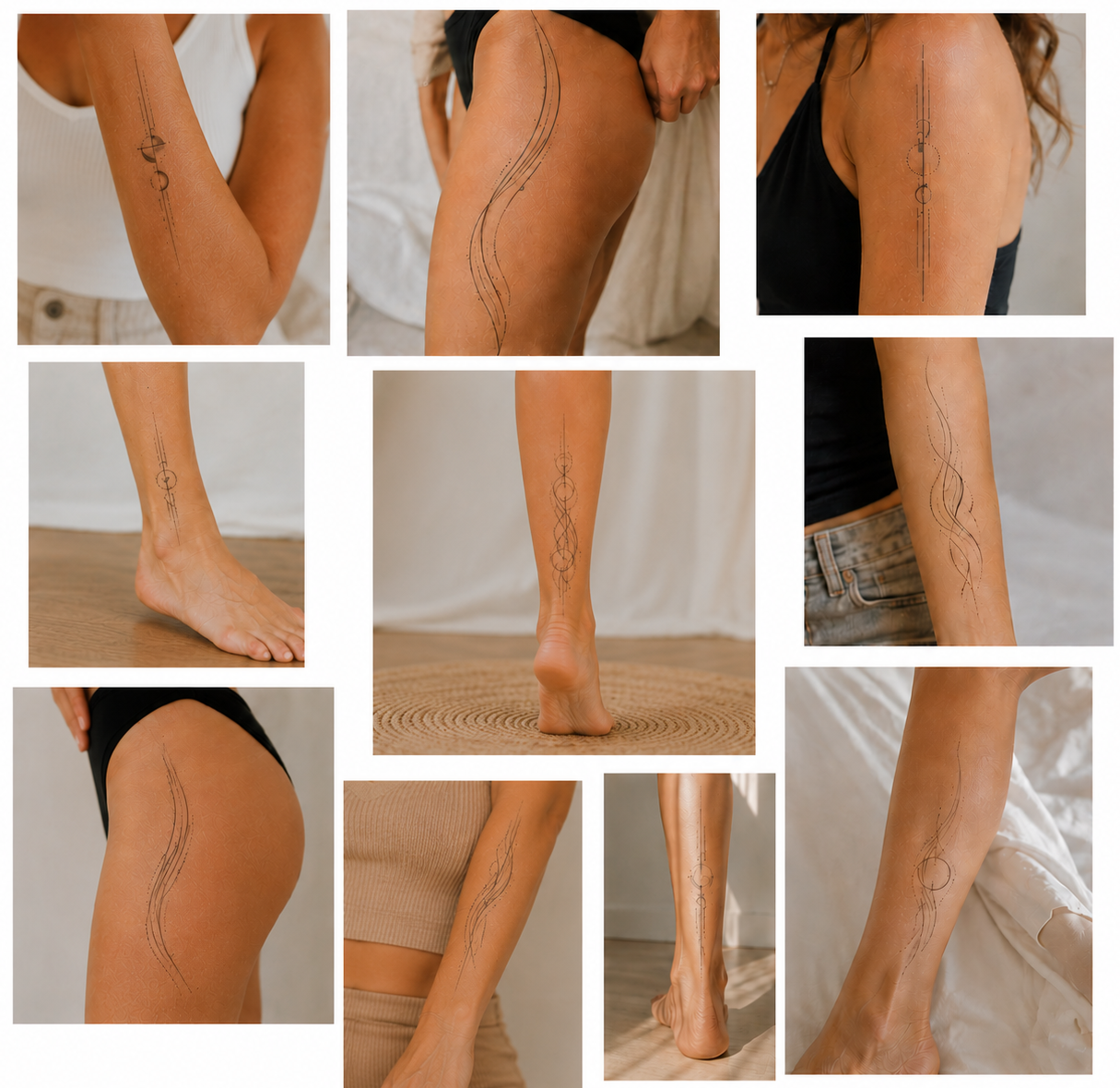
A single fine line can represent a path, a boundary, or an important change.
Several parallel bands create a sense of rhythm and movement, while curved lines can emphasize the natural contours of the body.
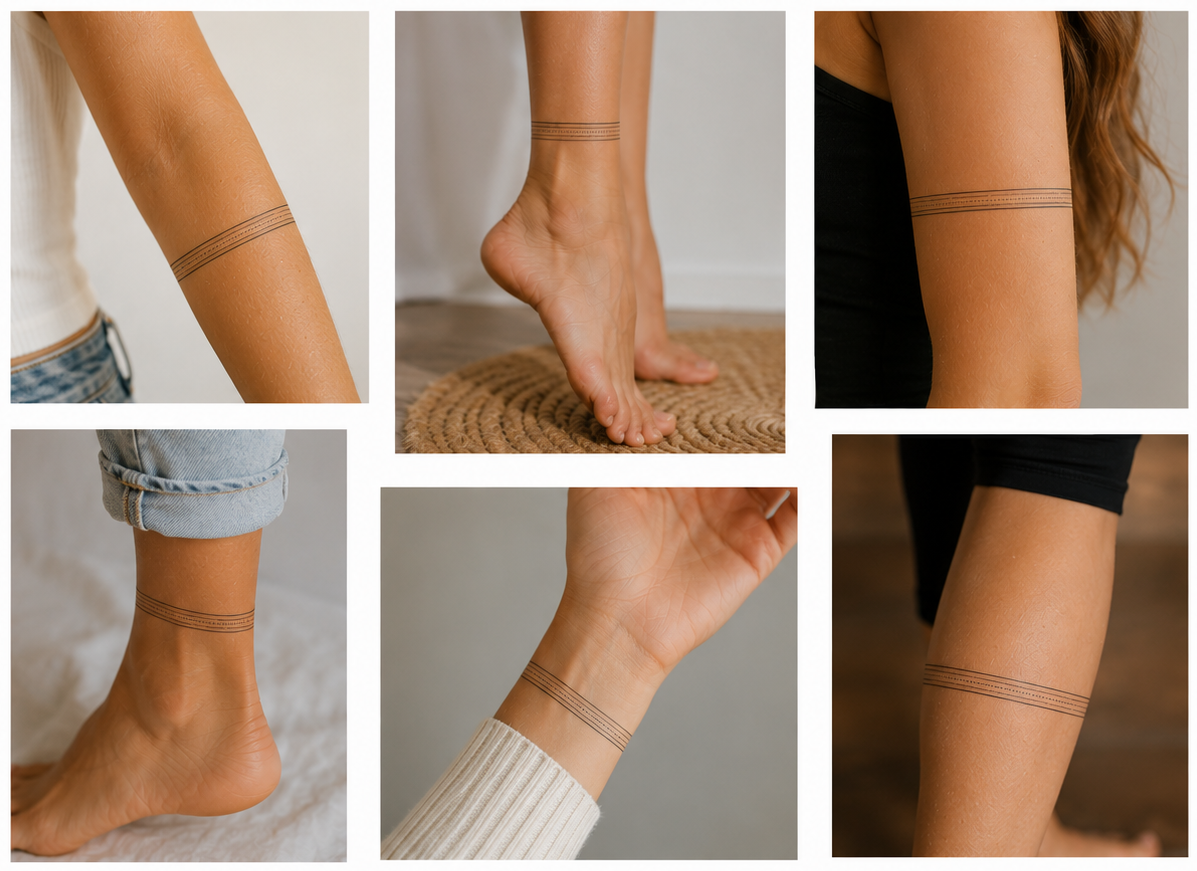
Extra care is needed when choosing a tattoo designed as a continuous band around the arm or leg.
Because of the natural shape of the limb, it can be difficult to connect the line so that it appears equally straight from every angle.
Symmetrical Compositions
Symmetry creates a sense of order and completeness.
These tattoos work particularly well along the spine, between the shoulder blades, under the breasts, or in the center of the forearm.
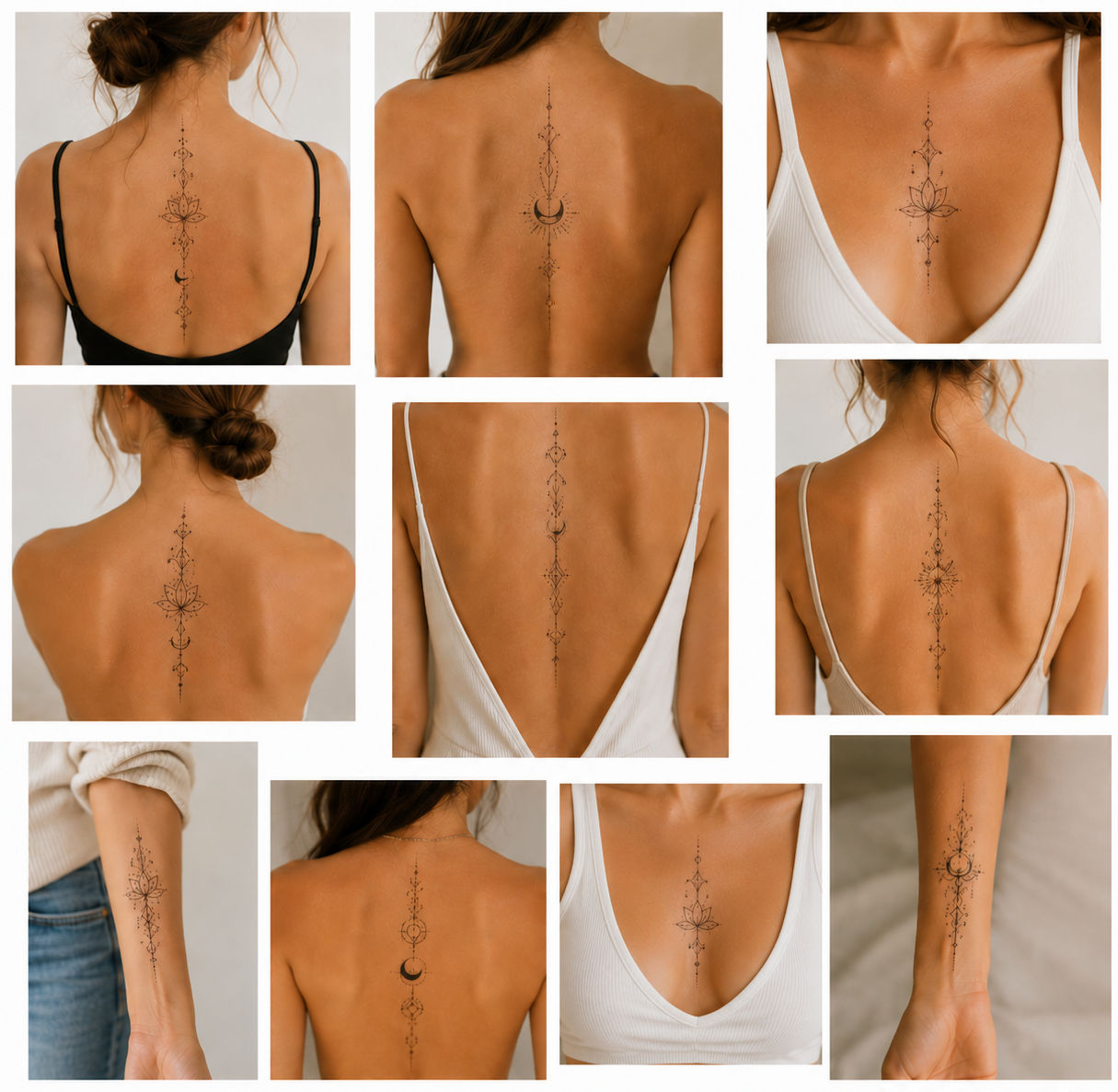
However, the human body is not perfectly symmetrical.
The artist needs to consider posture, movement, and the natural differences between the left and right sides of the body.
Sometimes, slightly adjusting the design can make the tattoo appear more visually balanced.
Geometric Tattoos with Flowers
The combination of precise shapes and botanical elements remains one of the most interesting design options.
A circle or diamond provides structure, while flowers and leaves soften the overall composition.
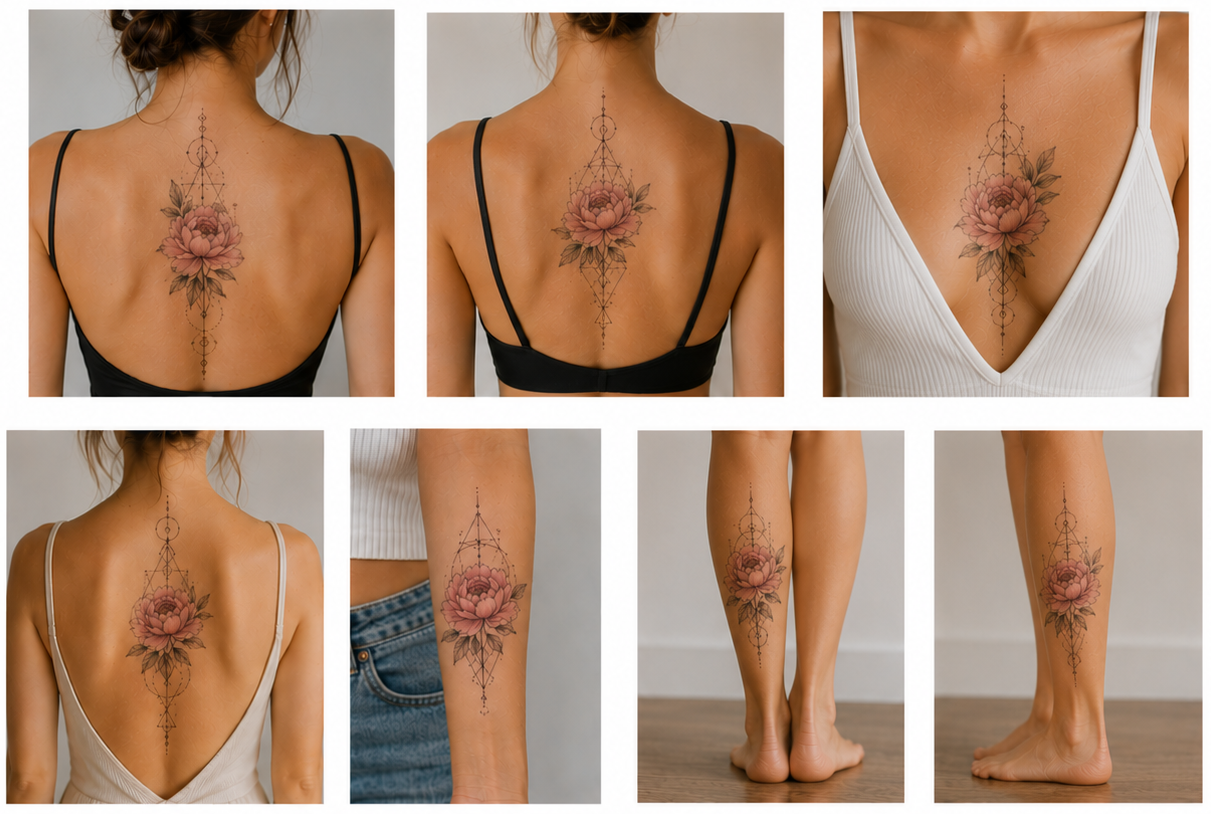
The botanical element can be placed entirely inside the shape or extend beyond its outline.

For example, a peony can overlap part of a triangle, while a delicate branch can pass through several circles.
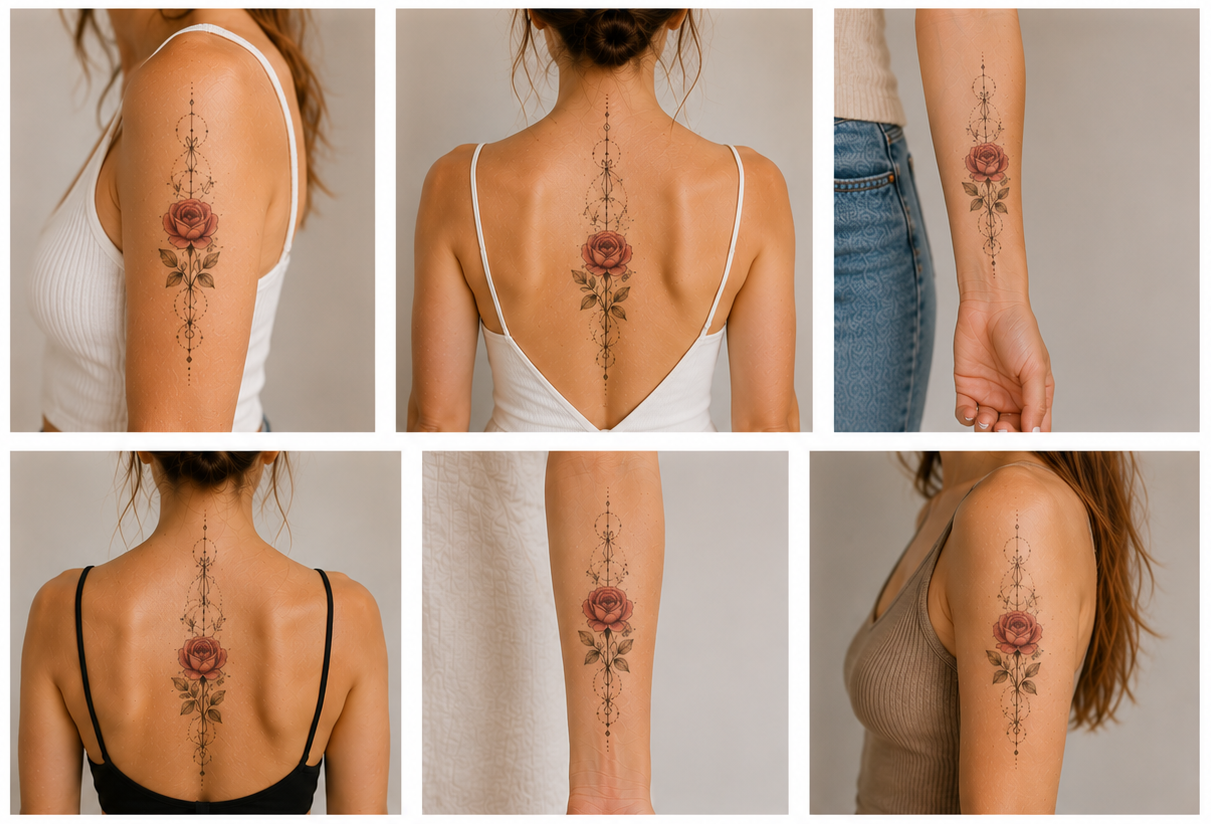
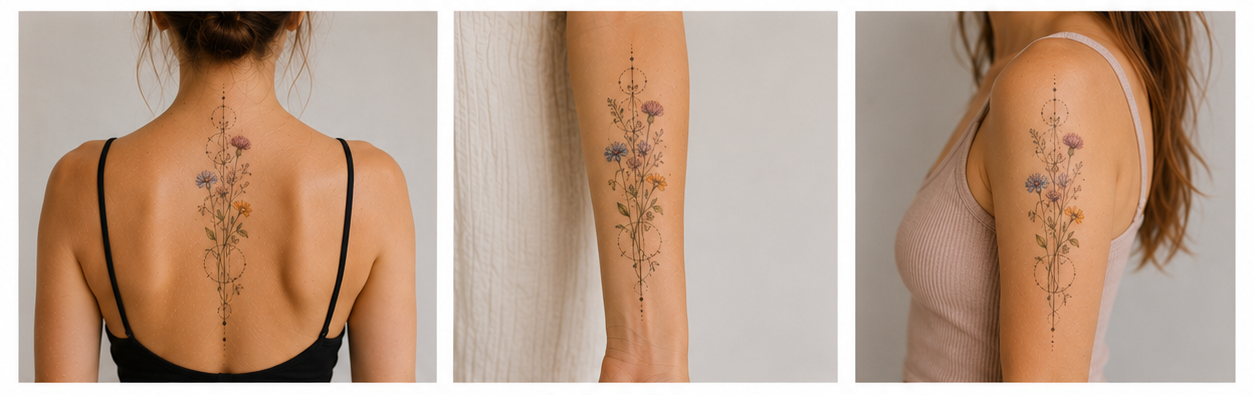
This type of design can easily be made more personal by choosing a flower connected to an important person or event.
Animals Made from Geometric Shapes
An animal can be created from polygons and straight lines. Another option is to combine one realistic half of the animal’s face with a geometric half.
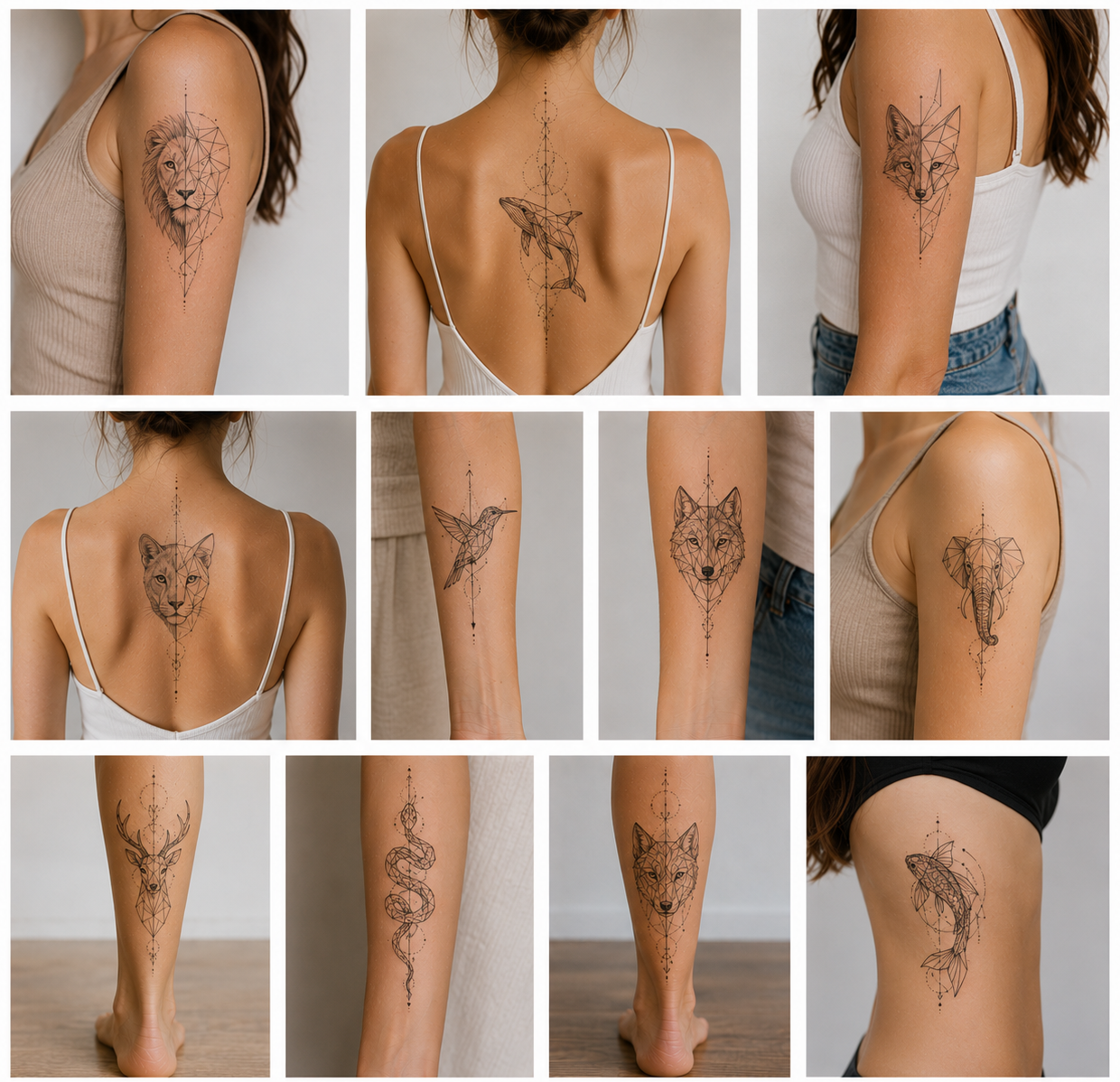
Wolves, lionesses, deer, foxes, birds, and pets can all be depicted in this style.
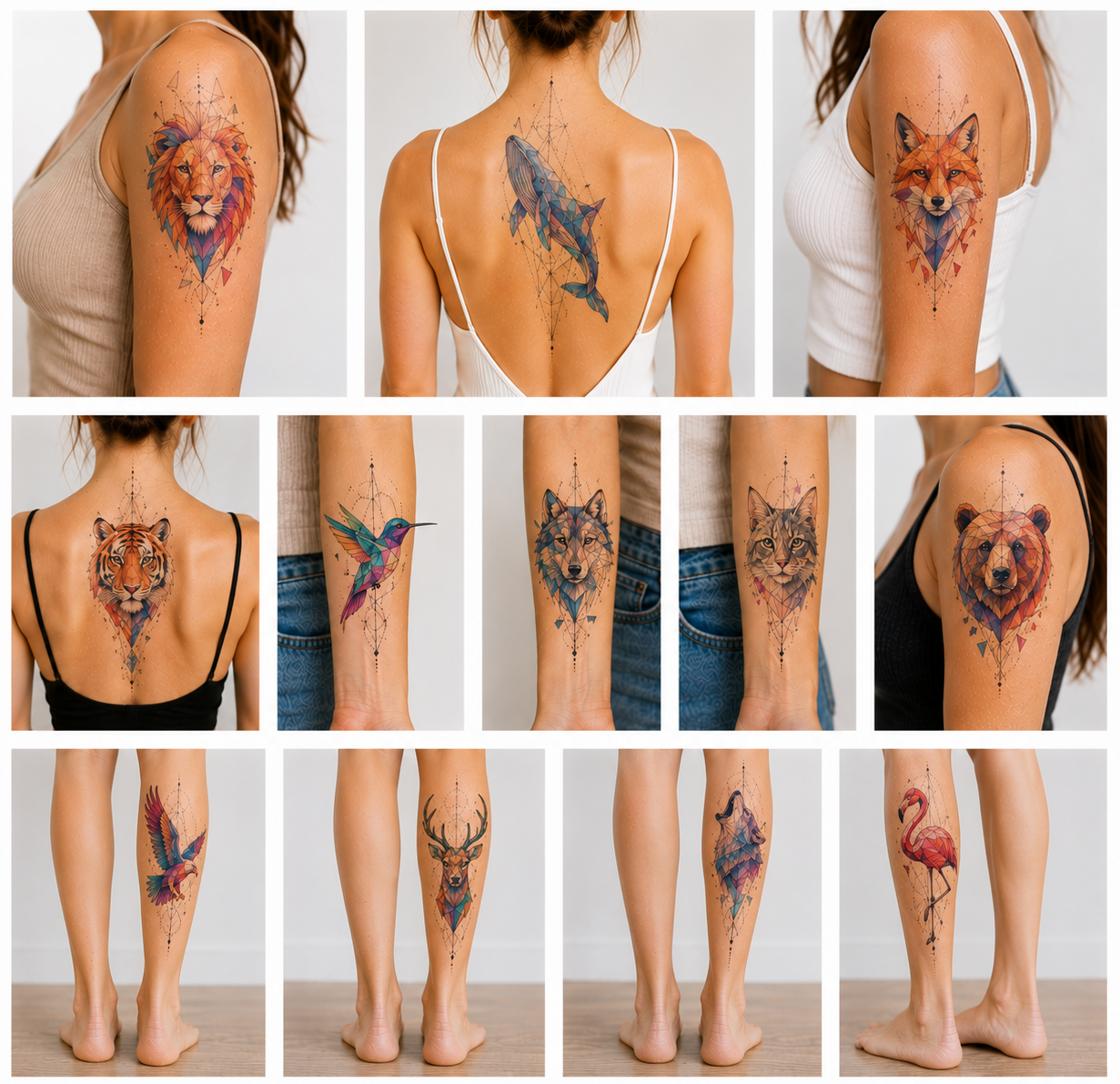
Geometric sections give a familiar animal image a modern look, but they should not distort its recognizable proportions.
Geometric Landscape Tattoos
Mountains, forests, the sea, or a night sky can be framed within a circle, triangle, or rectangle.

The frame helps turn a landscape into a compact composition while keeping only its most important details.
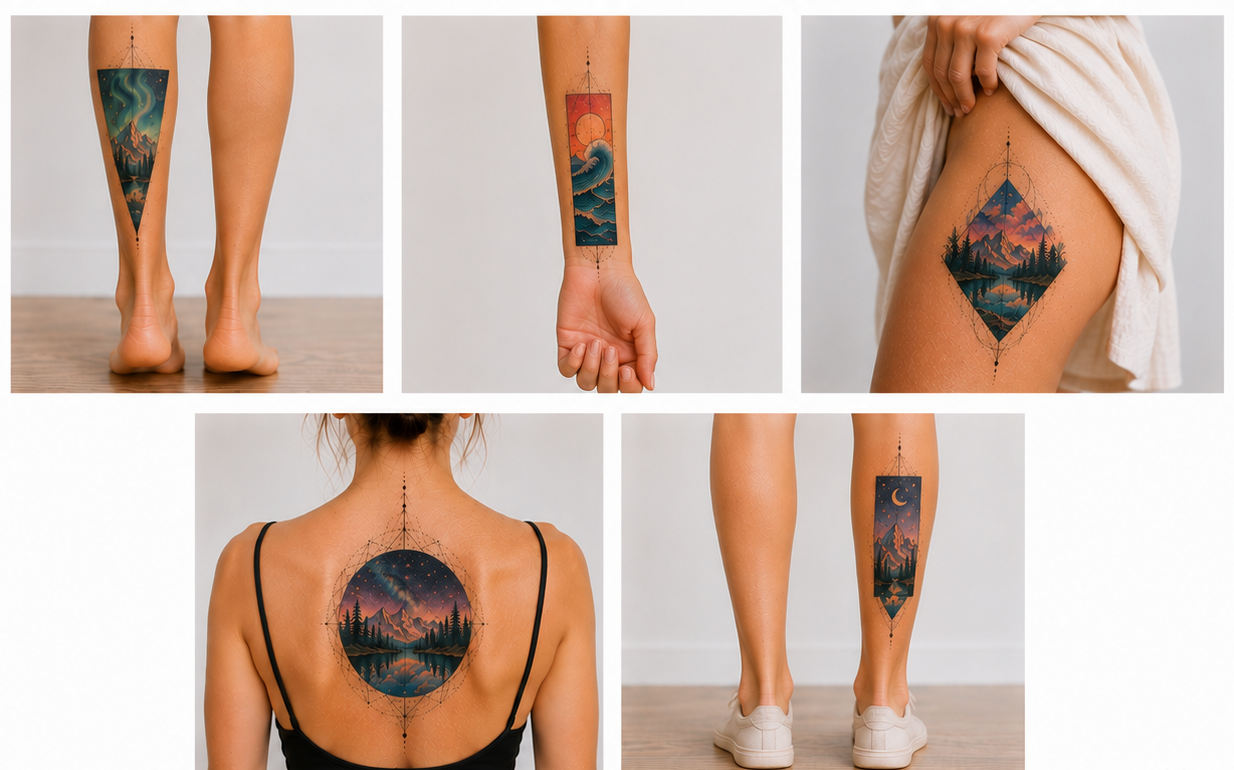
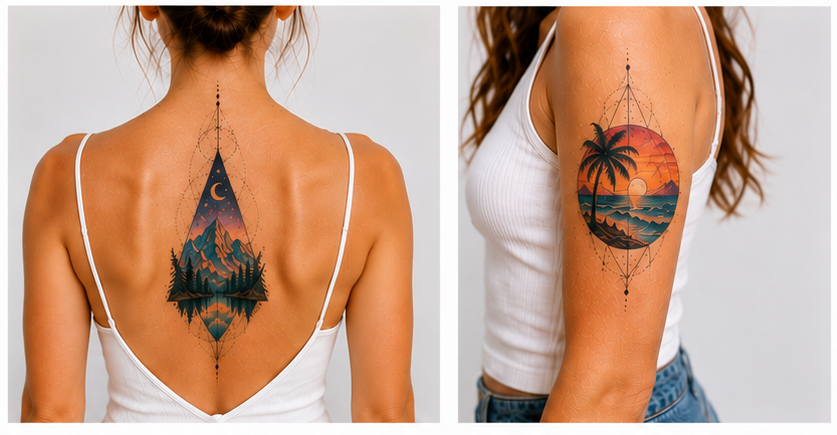
This type of design should not be made too small. If too many trees, waves, and mountain lines are placed inside a tiny shape, the details may lose their definition after healing.
Geometric Tattoos with Dotwork
Dots can be used to create shadows, smooth transitions, and a sense of depth.
They soften the sharp outlines of geometric shapes and can draw attention to the central part of the composition.

The density of the dots should suit the size of the design.
If they are placed too close together, some areas may begin to look like solid shading over time.
Where to Place a Geometric Tattoo
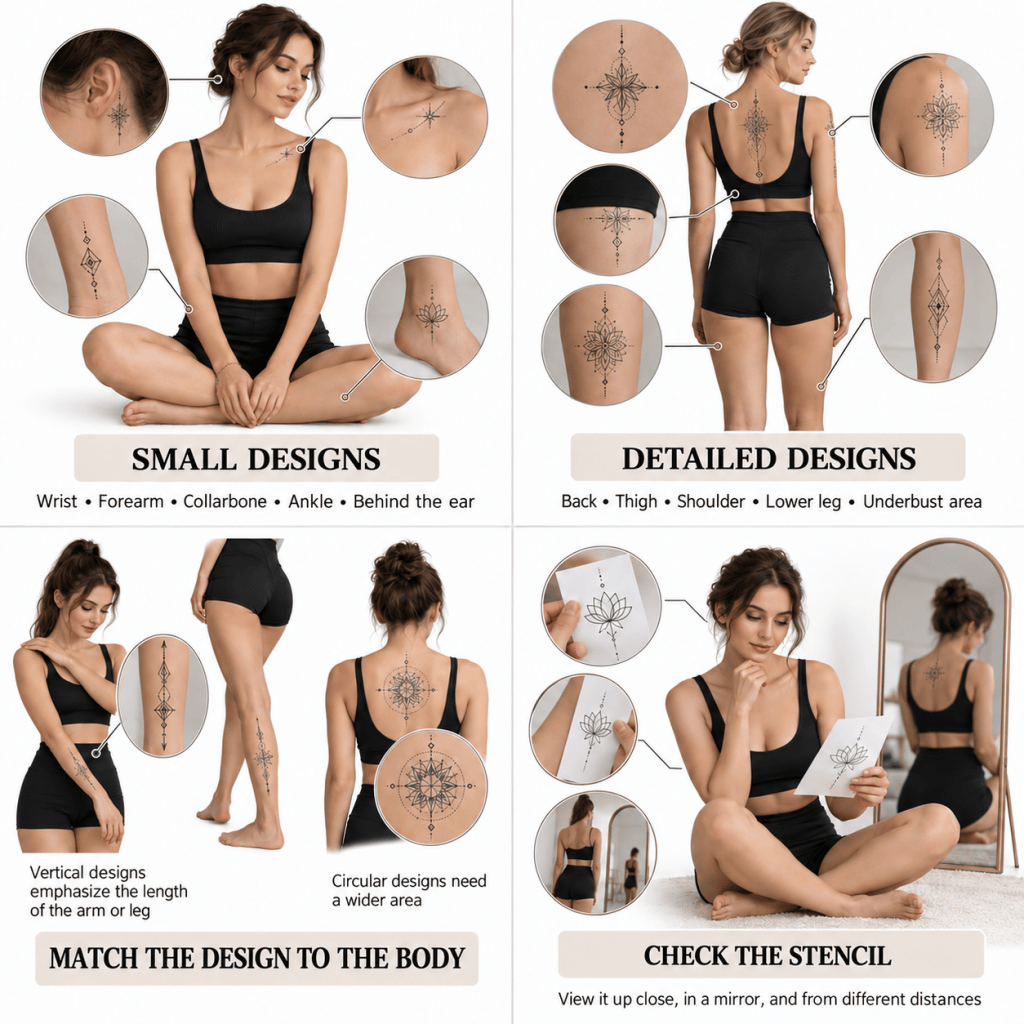
Small geometric shapes work well on the wrist, forearm, collarbone, ankle, or behind the ear.
For more intricate symmetrical compositions, the back, thigh, shoulder, lower leg, or underbust area usually provides more space.
The shape of the design should complement the body’s anatomy. Elongated diamonds and vertical patterns can emphasize the length of an arm or leg, while circular compositions need a wider area.
Before the tattoo is applied, examine the stencil not only up close but also in a mirror and from different distances.
How to Create a Tattoo with Personal Meaning
When exploring geometric tattoos for women, there is no need to search for a shape with one supposedly “correct” meaning. The symbolism of geometric forms can vary depending on the culture, time period, and details of a particular composition.
A more meaningful approach is to connect the shape with something personal: frame a landscape from an important place inside a circle, add a favorite flower to a triangle, or create a pattern using a number of elements that has special meaning to you.
This way, the tattoo becomes more than just an attractive geometric design – it becomes part of your personal story.
Common Questions
Do geometric tattoos take longer to create than other styles?
They can. Precise linework, repeated elements, and detailed patterns often require extra time because even small inaccuracies may be noticeable.
Can a geometric tattoo design be resized?
Yes, but it may need to be redrawn rather than simply scaled down. The artist may adjust the spacing, line thickness, or number of details to keep the design clear.
Are geometric tattoos always done in black ink?
No. Black ink is common because it emphasizes contrast and structure, but geometric designs can also include muted tones, bright colors, or watercolor-style elements.
Can an existing geometric tattoo be expanded later?
Often, yes. Additional shapes, lines, botanical details, or decorative patterns can be added if the original placement leaves enough space.
How long does a geometric tattoo session usually take?
It depends on the size, placement, level of detail, and amount of shading. A small minimalist design may be completed quickly, while a large symmetrical piece may require several sessions.
What should I bring to a consultation with the tattoo artist?
Bring several reference images and explain which shapes, details, and overall mood you like. It is also helpful to show where you want the tattoo and discuss the preferred size.
Can geometric tattoos include color without losing their clean appearance?
Yes. Color can be placed inside selected shapes or used as a controlled accent, while the outlines preserve the structure of the design.