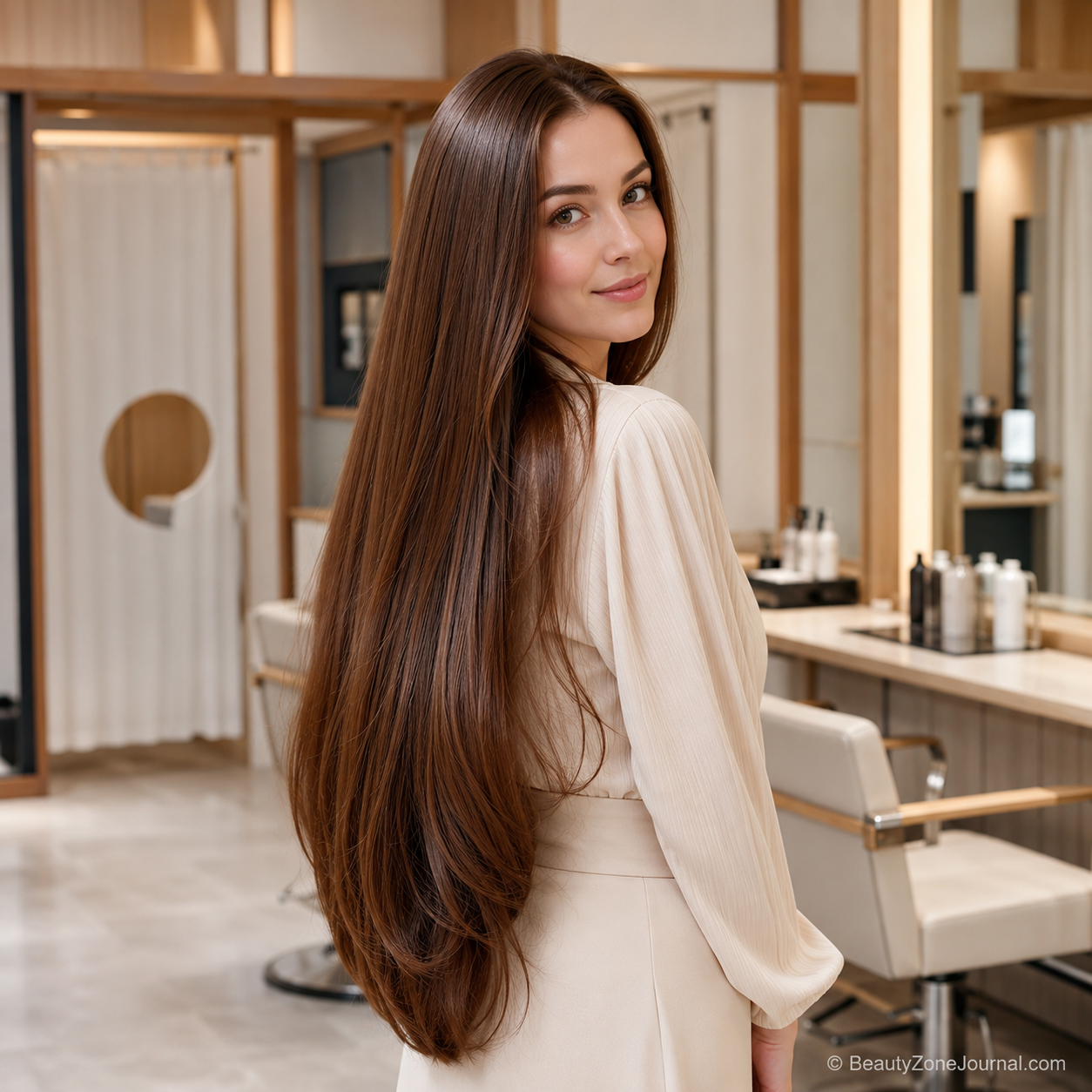
The Japanese hair treatment known as “Absolute Happiness” is a multi-step salon service most often chosen for dry, porous, bleached, or damaged hair.
During the treatment, several conditioning products are applied in sequence, including formulas with moisturizing, protein, and lipid-based ingredients.
Afterward, the hair may feel softer, smoother, shinier, and easier to detangle. However, no cosmetic treatment can fully return severely damaged hair to its original condition.

This is not a straightening treatment, nor does it rely on prolonged flat-ironing to seal products into the hair. Instead, the focus is on layering treatments through the lengths and, in some versions of the protocol, caring for the scalp as well.
During the appointment, the stylist may use:
- cleansing products;
- a moisturizing mousse;
- serums containing amino acids, proteins, and lipid-based ingredients;
- conditioning creams designed to soften the hair and improve its feel;
- a sealing gel;
- finishing concentrates or leave-in treatments.
These products are applied one at a time rather than all at once.
Each step builds on the one before it: one adds moisture, another improves softness or smoothness, while another helps protect the surface of the hair.
Table of Contents
How Japanese Hair Treatment Works
Bleaching, coloring, and frequent heat styling can leave the surface of the hair shaft rough and uneven.
As a result, strands may tangle more easily, lose their shine, break during brushing, and become more affected by humidity.

During a Japanese hair treatment, conditioning ingredients are applied in layers, followed by products designed to reduce surface roughness and friction between the strands.
This can leave the lengths feeling more flexible, smoother, and softer to the touch.
It is important to understand what “repair” means in this context.
The part of the hair that extends beyond the scalp is not living tissue and cannot biologically heal itself.
Instead, the treatment temporarily improves the hair’s cosmetic appearance and helps protect damaged lengths from further mechanical stress.
If your hair is more severely weakened, it may also be useful to understand how a hair reconstruction treatment works and what kind of damage it can realistically improve.
Who Is This Treatment Best Suited For?
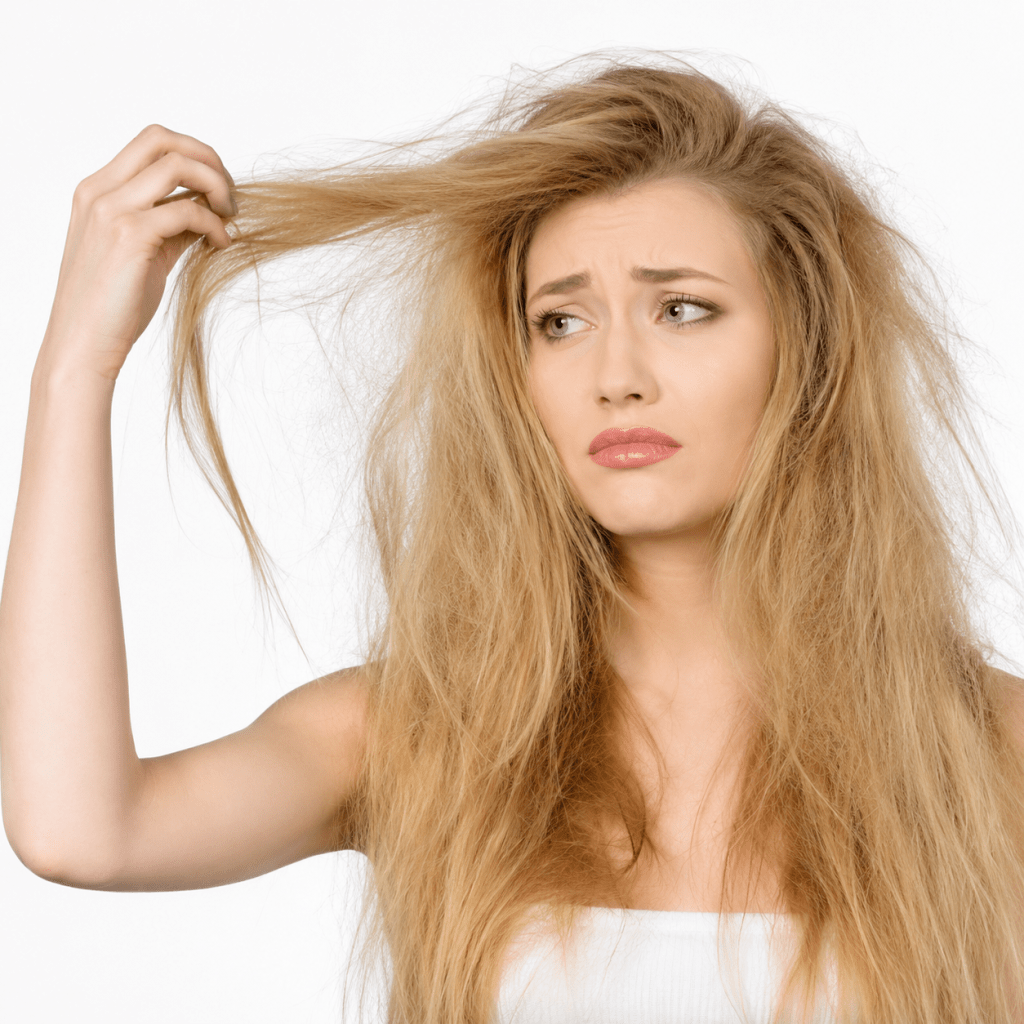
“Absolute Happiness” may be worth considering if your hair is:
- bleached or has been colored multiple times;
- dry and porous;
- prone to tangling after washing;
- breaking during brushing;
- rough and dull;
- lacking elasticity;
- regularly exposed to blow-drying and heat styling;
- in need of softness without significant straightening.
The treatment may also be suitable for wavy or curly hair.
It is not intended to completely alter the natural curl pattern, although the hair may look smoother and less frizzy after conditioning and styling.
When “Absolute Happiness” May Not Be the Best Choice
Healthy hair does not always need an intensive multi-step treatment.
On naturally fine and smooth hair, layering several products may reduce volume and leave the lengths feeling weighed down.
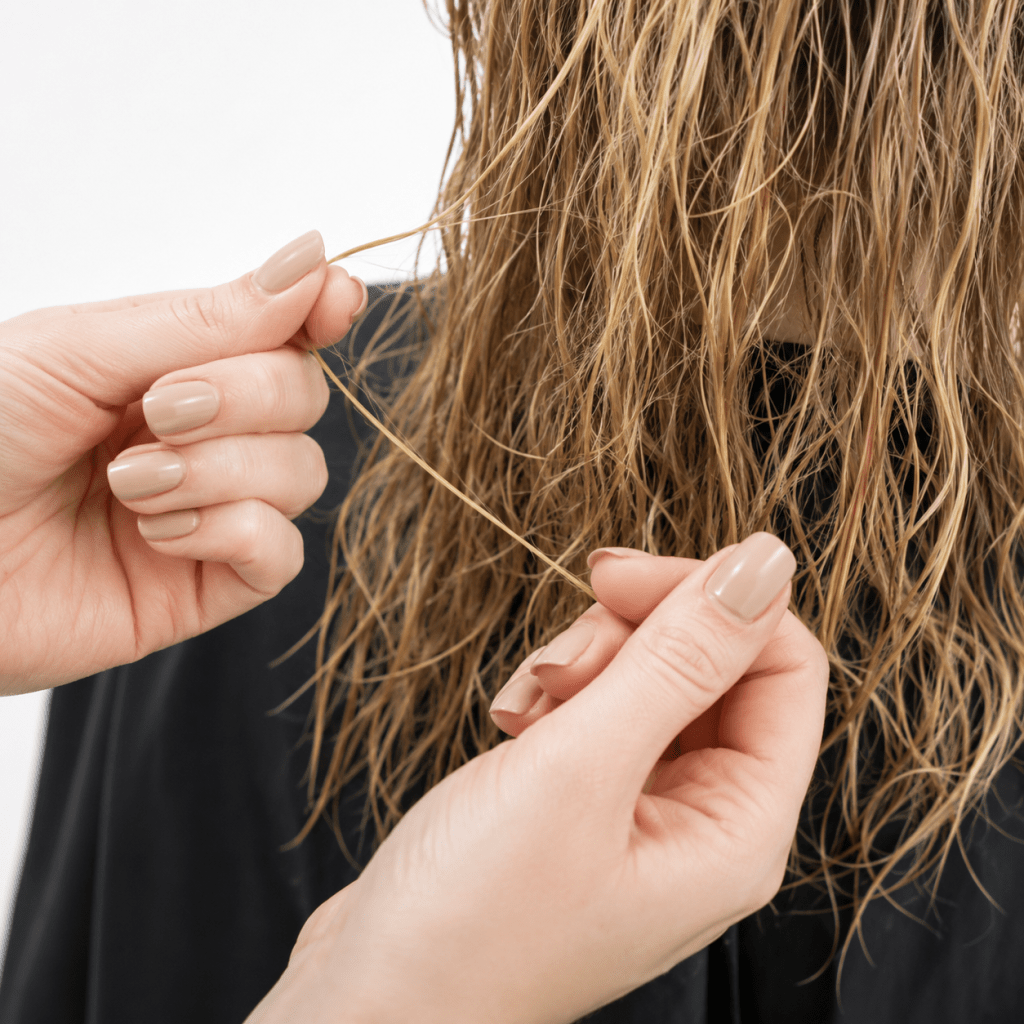
Extra caution may be needed if your hair:
- is very fine and becomes weighed down easily;
- already feels overloaded from masks, oils, and silicone-based serums;
- has become stiff after frequent protein-rich treatments;
- stretches excessively when wet;
- breaks even with gentle tension;
- has severely split or thinning ends.
If your hair is breaking off badly after bleaching, the treatment may improve its appearance and make it easier to detangle, but it cannot fully repair sections that are already severely damaged.
Some of the compromised length may still need to be trimmed gradually.
If your scalp has open sores, persistent itching, inflammation, or a flare-up of an existing scalp condition, it is better to postpone the treatment and consult a dermatologist.
Steps in the “Absolute Happiness” Hair Treatment
The exact protocol varies depending on the product system being used and the condition of your hair.
A salon may use five, seven, or even more products, adding targeted serums for damaged lengths when needed.

1. Hair Assessment
Before the treatment, the stylist should examine the lengths and assess the hair’s elasticity, porosity, and level of breakage.
It is especially important to tell them about:
- your most recent bleaching session;
- your coloring history;
- previous keratin treatments or nanoplasty;
- protein masks used at home;
- any breakage that occurred after earlier salon treatments.
The condition of your hair will determine how much product is used, which conditioning cream is selected, and whether the full protocol is appropriate.
2. Cleansing
The hair is washed with shampoo to remove excess oil, environmental residue, and styling-product buildup. Some salon protocols also include a cleansing mousse for the scalp.
The cleansing step should not be overly harsh, especially when the lengths are very dry or bleached.
3. Moisturizing Mousse
One of the distinctive steps in the system is the application of a moisturizing mousse prepared according to the instructions for the specific product.
The mousse may be distributed over both the scalp and hair, followed by a gentle massage, and then rinsed out with water.
4. Layering the Serums
In the extended protocol, several serums are applied to the lengths one after another.
Depending on the version of the system, these formulas may contain lipids, amino acids, and proteins.
The serums are not mixed together. Instead, the stylist works through fine sections of hair in a specific order, helping each product coat the strands evenly.
5. Treatment for Severely Damaged Lengths
In some versions of the treatment, an additional sealing or reconstructive formula is applied after the serums.
It may be left under a processing cap for several minutes, but the exact timing depends on the product instructions and the condition of the hair.
Do not extend the processing time on your own. Using more product or leaving it on for longer does not guarantee a better result.
6. Protein Activator
A protein-based activating serum may be applied as the next layer.
It is distributed through the lengths, with extra attention given to porous and damaged areas.
At this stage, it is important not to overload fine hair.
Too much protein-based care can sometimes have the opposite effect, leaving the hair stiff, dry, and more difficult to detangle.
7. Softening Creams
After the serum, the stylist applies a cream selected according to the condition of the hair. Some protocols use a more moisturizing formula, while others include a product designed to improve smoothness and make the hair feel fuller.
These creams help soften the lengths, reduce roughness, and leave the hair feeling smoother to the touch.
8. Sealing Gel
A sealing product is applied through the lengths, usually while keeping some distance from the roots.
Depending on the specific version of the system, finishing concentrates may be applied afterward.
9. Rinsing and Styling
Once all the steps are complete, the hair is rinsed thoroughly with water without being shampooed again.
A leave-in treatment is then applied, and the hair is blow-dried.
The mirror-like shine visible immediately after the treatment is partly influenced by professional styling. For a more realistic impression of the result, pay attention to how your hair looks and feels after washing it several times at home, not only while you are still in the salon chair.
The exact number and order of the steps may vary depending on the condition of the hair and the professional product system being used.
The stylist adjusts the formulas and processing times individually to avoid weighing down the hair while creating a smooth, soft, and glossy finish.
What Results Can You Expect?
The most noticeable change will depend on the starting condition of your hair. Some people see a smoother, shinier finish, while others notice that their hair feels softer, tangles less, and is easier to manage.
The gallery below shows how the visible results of a Japanese Hair Treatment can vary across different hair types and levels of damage.


After the treatment, your hair may feel or appear:
- softer;
- smoother;
- shinier;
- more elastic;
- less frizzy;
- more manageable during styling;
- easier to detangle;
- fuller through the lengths.
For highly porous hair, the most valuable result may not be extra shine but less tangling and breakage during everyday care.
A Japanese Hair Treatment should not straighten the hair to the same degree as keratin treatment or nanoplasty.
If the strands look perfectly straight immediately afterward, this may be the result of the salon blowout rather than a permanent change to the hair’s natural structure.
How Long Do the Results Last?

There is no single timeframe that applies to everyone. How long the results last depends on:
- the degree of hair damage;
- hair porosity;
- how often you wash your hair;
- the treatment protocol used;
- your at-home hair-care routine;
- any coloring or bleaching afterward;
- how often you use heated styling tools.
For some hair, the softness may last only a few washes; for others, it may remain noticeable for several weeks.
The treatment gradually washes out, and damaged hair may begin to feel dry and rough again over time.
For this reason, any exact timeframe given by a salon should be treated as an estimate rather than a guarantee.
Do You Need a Series of Treatments?
Salons often recommend booking “Absolute Happiness” as a series of treatments, but a fixed schedule will not suit everyone.
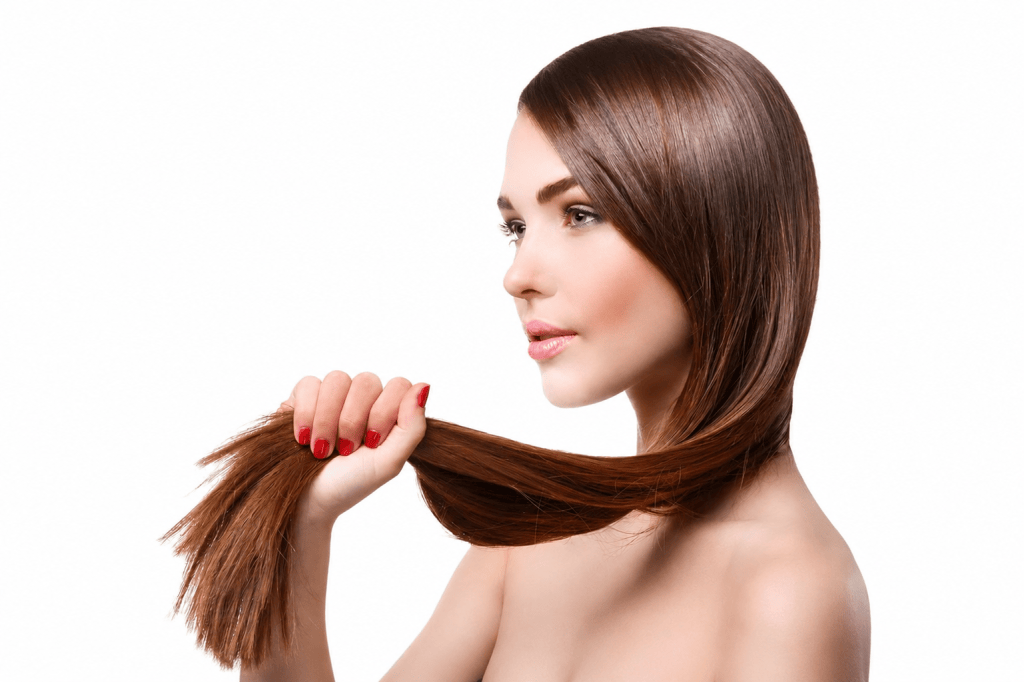
How often you repeat the treatment should depend on the condition of your hair and how it responded to the previous session.
Another appointment may be helpful if the lengths have become dry, rough, and prone to tangling again.
However, if your hair has lost volume, feels heavy, or becomes oily more quickly, it is better to take a break.
The treatment should not be repeated automatically simply because two or three weeks have passed. Before scheduling another session, the stylist should reassess the condition of the mid-lengths and ends.
How to Care for Your Hair After a Japanese Hair Treatment
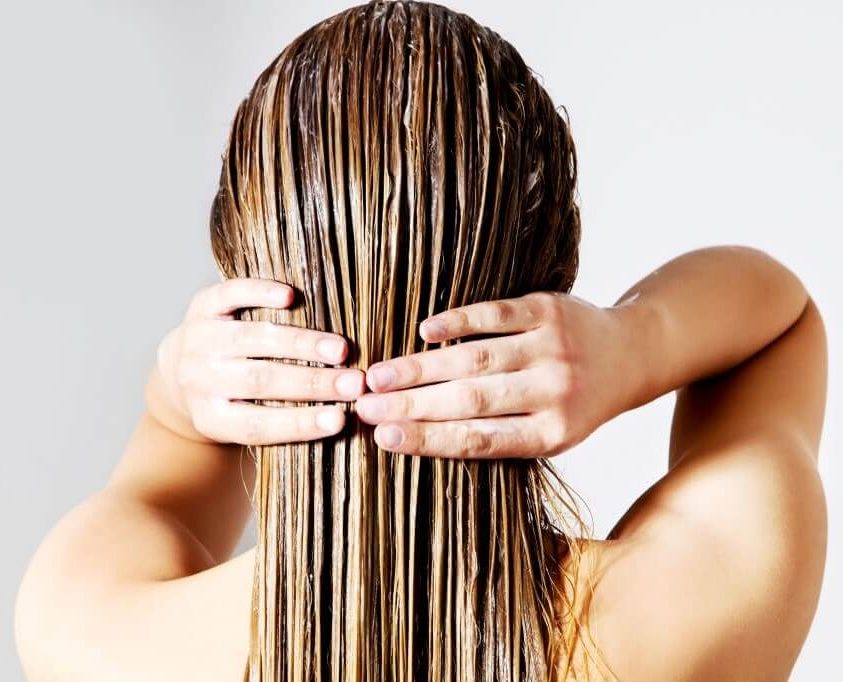
Choose a Shampoo Based on Your Scalp’s Needs
You do not need to switch to an extremely gentle shampoo if it does not cleanse your scalp effectively. The main thing is to avoid using a strong clarifying shampoo with every wash unless you genuinely need it.
Apply shampoo mainly to the scalp and roots. There is no need to scrub the mid-lengths and ends.
Use Conditioner After Every Wash
Even after a multi-step salon treatment, your hair still needs regular conditioning. Conditioner reduces friction, helps detangle the strands, and protects the lengths from mechanical damage.
If you are unsure when to use each product, our guide to Hair Mask vs. Conditioner explains the difference and how to choose what your hair needs.
Avoid Layering Too Many Protein Products
After a protein-rich salon treatment, avoid using a protein shampoo, mask, conditioner, and leave-in serum all at once.
If your hair begins to feel stiff, dry, or more difficult to detangle, switch to gentler moisturizing and conditioning products for a while.
Always Use Heat Protectant
The treatment cannot protect your hair from every type of future damage. A good heat protectant for hair is still important before using a blow-dryer, flat iron, or curling iron.
Only use a flat iron on completely dry hair, and avoid repeatedly passing it over the same section.
Be Gentle with Wet Hair
Do not rub your hair with a towel or twist it to remove water. Gently blot away excess moisture, apply a leave-in conditioner, and begin detangling from the ends.
The American Academy of Dermatology also recommends gently absorbing excess water, detangling from the ends upward, and protecting hair from excessive heat to help minimize unnecessary damage.
Can You Have the Treatment After Coloring Your Hair?
A Japanese Hair Treatment is often performed on colored or bleached hair, but the order of the services should always be discussed with your colorist.

If you are planning to lighten your hair, the stylist needs to assess the condition of the mid-lengths and ends both before and after the coloring service.
It is may not be a good idea to combine several time-consuming salon treatments in a single appointment, especially if the hair is already weakened.
After a fresh color service, it is also important to make sure that the treatment formulas will not alter the shade. This is particularly relevant for cool-toned blonde and highly porous hair.
Potential Benefits of a Japanese Hair Treatment

Possible benefits include:
- a comprehensive multi-step conditioning process;
- softer, smoother hair;
- easier detangling;
- reduced frizz;
- a more polished appearance through damaged lengths;
- improved manageability without altering the hair’s natural texture;
- a customizable protocol based on the condition of the hair.
If you are comparing this treatment with other salon options, our guide to popular salon hair treatments explains how different services work and what each one is best suited for.
Limitations and Important Considerations

A Japanese Hair Treatment also has some limitations:
- the results are temporary;
- the full treatment can be time-consuming;
- it often costs more than a standard salon conditioning service;
- fine hair may lose volume or feel weighed down;
- too much protein may leave the strands feeling stiff;
- the result depends greatly on the stylist and the protocol used;
- the treatment cannot repair split ends;
- it does not treat hair loss or scalp conditions.
Be cautious of claims that the treatment can “repair hair at the molecular level forever.”
A cosmetic treatment can improve the appearance and feel of the lengths, but it cannot turn a damaged hair fiber into new, undamaged hair.
Is the “Absolute Happiness” Hair Treatment Worth It?
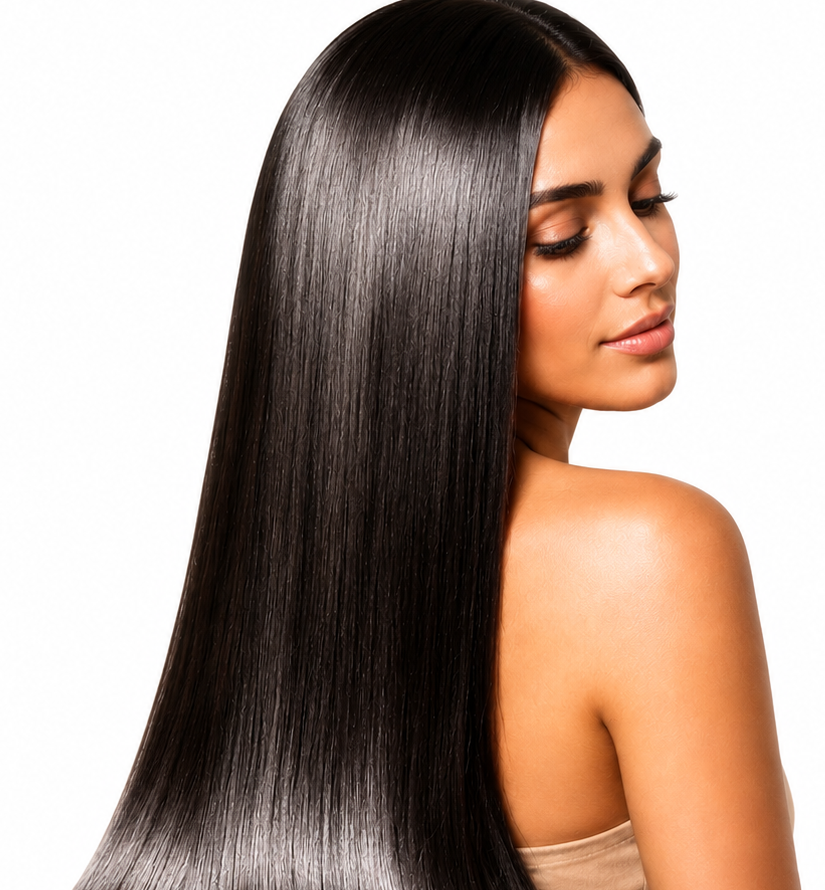
The “Absolute Happiness” treatment may be worth considering if your hair is dry, porous, damaged, prone to tangling, or difficult to comb.
With a carefully customized protocol, the strands may feel softer, smoother, and easier to manage.
However, the treatment does not replace regular at-home care, heat protectant, or trimming severely damaged ends.
The best results are usually achieved when the stylist selects the products according to the condition of your hair instead of applying the same set of formulas to every client.