
Hair glaze treatment is designed for hair that has lost its shine, feels rough or dull, or looks frizzy through the lengths.
Unlike keratin hair treatment or nanoplasty, it does not significantly alter the hair’s structure.
Its main purpose is to smooth the surface of the hair, refresh the tone if needed, and give the strands a more polished appearance.
After the treatment, hair may feel softer and smoother and reflect light more evenly.
However, hair glaze does not repair damaged hair or permanently mend split ends.
The results gradually wash out, so it is important to have realistic expectations from the start.
Table of Contents
How Hair Glaze Treatment Works
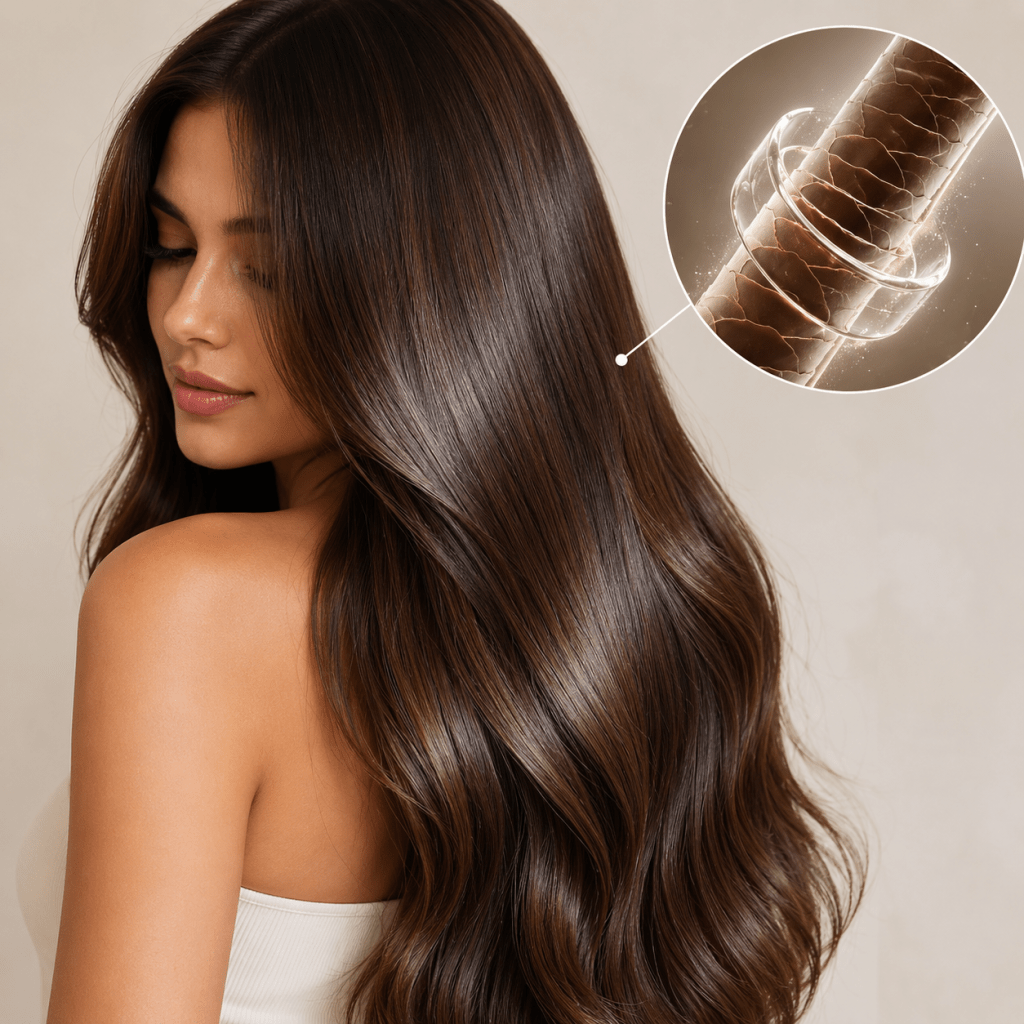
During the treatment, a special formula is applied to the hair, creating a thin cosmetic coating over its surface.
This coating helps smooth uneven areas of the cuticle, reduce roughness, and give the strands more shine.
Hair glaze treatments may be:
- clear — to enhance shine, smoothness, and softness;
- tinted — to gently refresh the shade, neutralize unwanted tones, or make the existing color appear more vibrant.
The names of salon treatments are not always standardized.
At one salon, a hair glaze may refer to a lightweight surface treatment, while another may use the same term for a toning service with semi-permanent color.
Before booking an appointment, ask about more than the name of the service. Find out what the formula contains, how it works, and what kind of result you can realistically expect.
What Hair Glaze Does to the Hair Cuticle
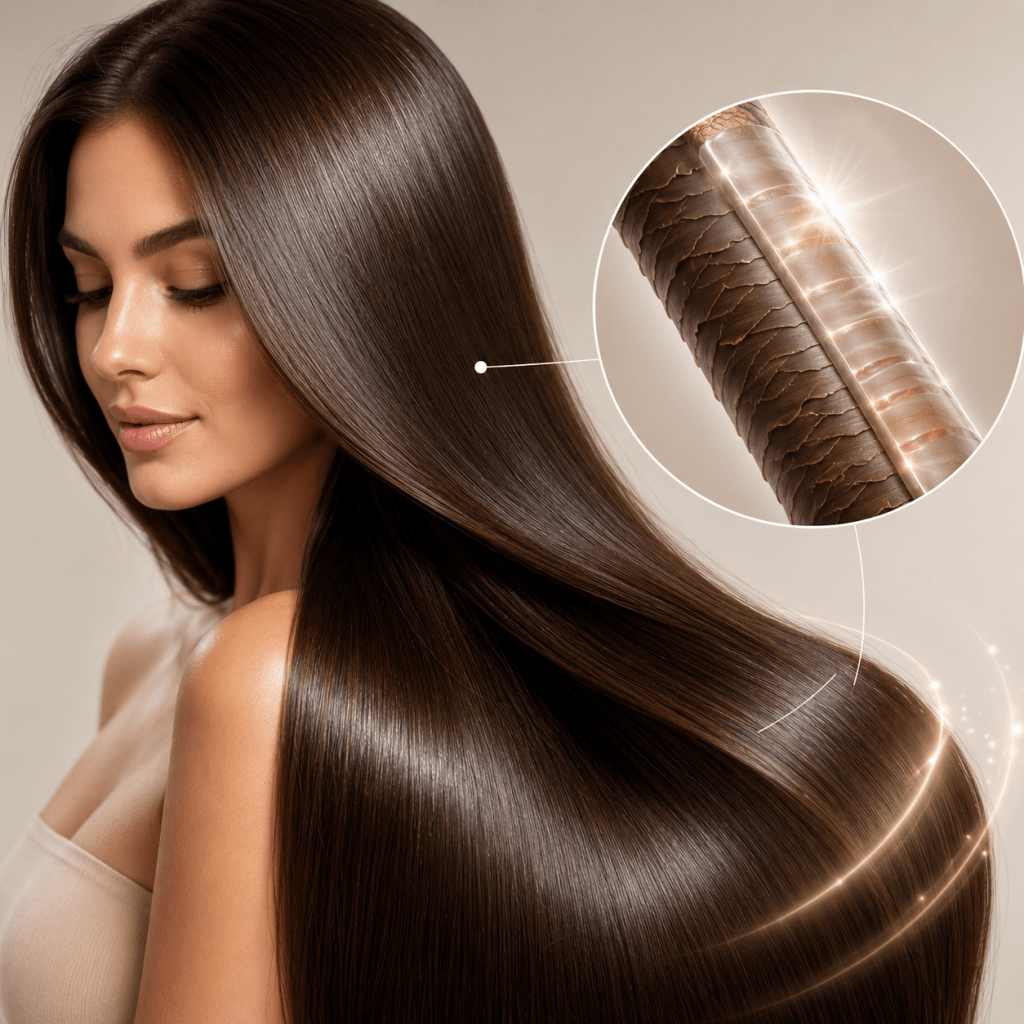
The cuticle is the outermost layer of the hair shaft. When its scales lie flatter, the hair looks smoother and reflects more light.
On porous, bleached, or damaged hair, the surface is often uneven. As a result, light reflects less evenly, making the hair appear dull.
A hair glaze works mainly on the surface of the hair shaft.
It temporarily smooths the cuticle, reduces friction between strands, and makes the hair easier to detangle.
This more even surface is what gives the hair extra shine and a more polished appearance.
A clear glaze should not noticeably change the hair color.
A tinted glaze can slightly deepen or refresh the shade, but it is generally not intended to lighten the hair significantly or provide full gray coverage.
What Results Can You Expect?

After a properly performed treatment, the hair may look:
- shinier;
- smoother;
- softer to the touch;
- less frizzy;
- more polished through the lengths;
- visually fuller;
- easier to detangle and style.
A tinted hair glaze can also refresh color that has faded between salon appointments.
It may make the shade appear deeper or help neutralize unwanted warmth, but the final result depends on the starting color and the pigments in the formula.
Severely damaged hair may look noticeably shinier immediately after the treatment, but this does not mean that the hair shaft has been repaired from within.
Hair glaze treatment can temporarily disguise some visible signs of damage, but it does not address their underlying cause.
Hair Glaze vs. Hair Lamination: What’s the Difference?
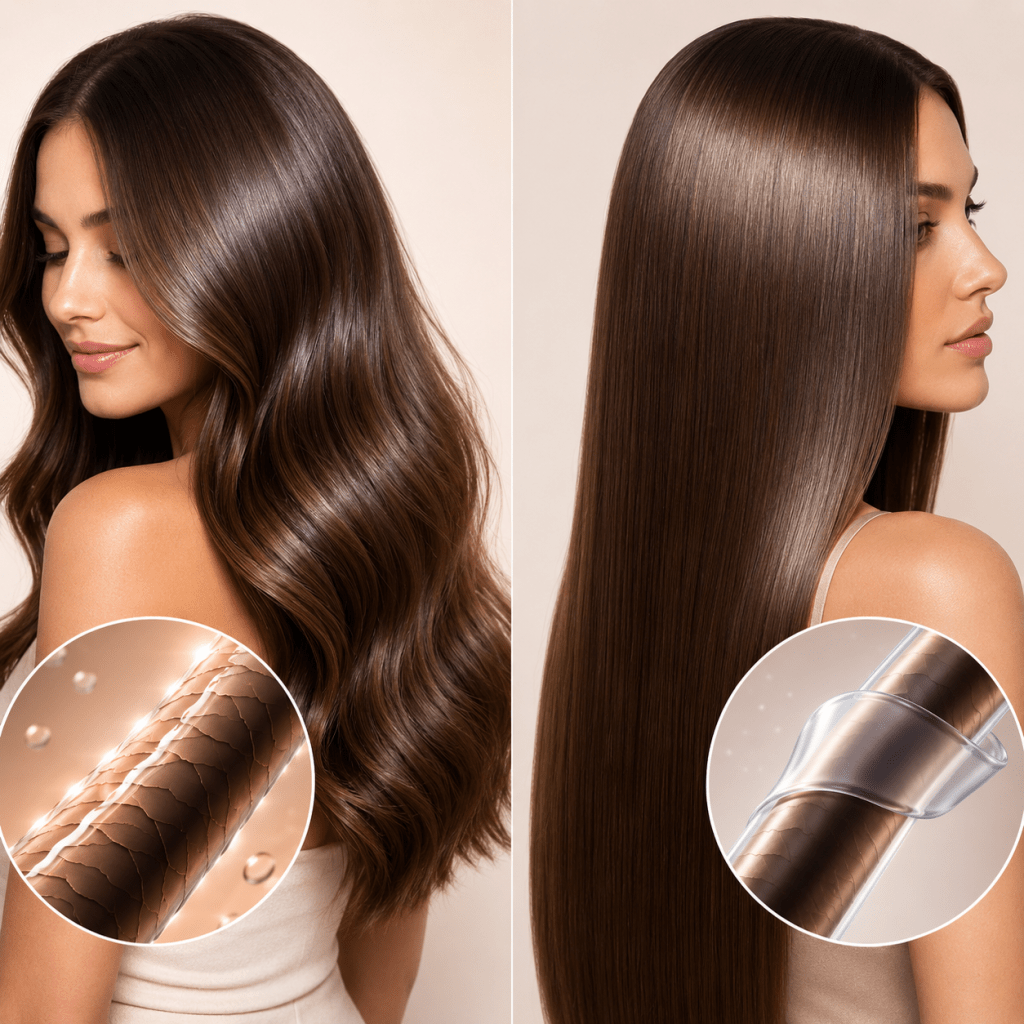
These treatments are similar because both work primarily on the surface of the hair shaft and enhance shine.
The main difference often comes down to the thickness of the coating and whether the treatment can add or refresh color.
Hair glaze typically creates a lighter, more natural-looking result.
It is most often used to add shine and gently refresh the hair color.
Hair lamination may create a more noticeable coating, make the hair appear fuller, and provide stronger frizz control.
However, there is no universally accepted distinction between the two treatments.
Salons and manufacturers may use different names for products that produce similar results.
Before choosing a treatment, ask your stylist:
- whether the formula contains pigment;
- how noticeable or lightweight the coating will be;
- whether heat is used during the process;
- approximately how long the results should last;
- whether the treatment is suitable for bleached hair.
Who Is Hair Glaze Treatment Best For?
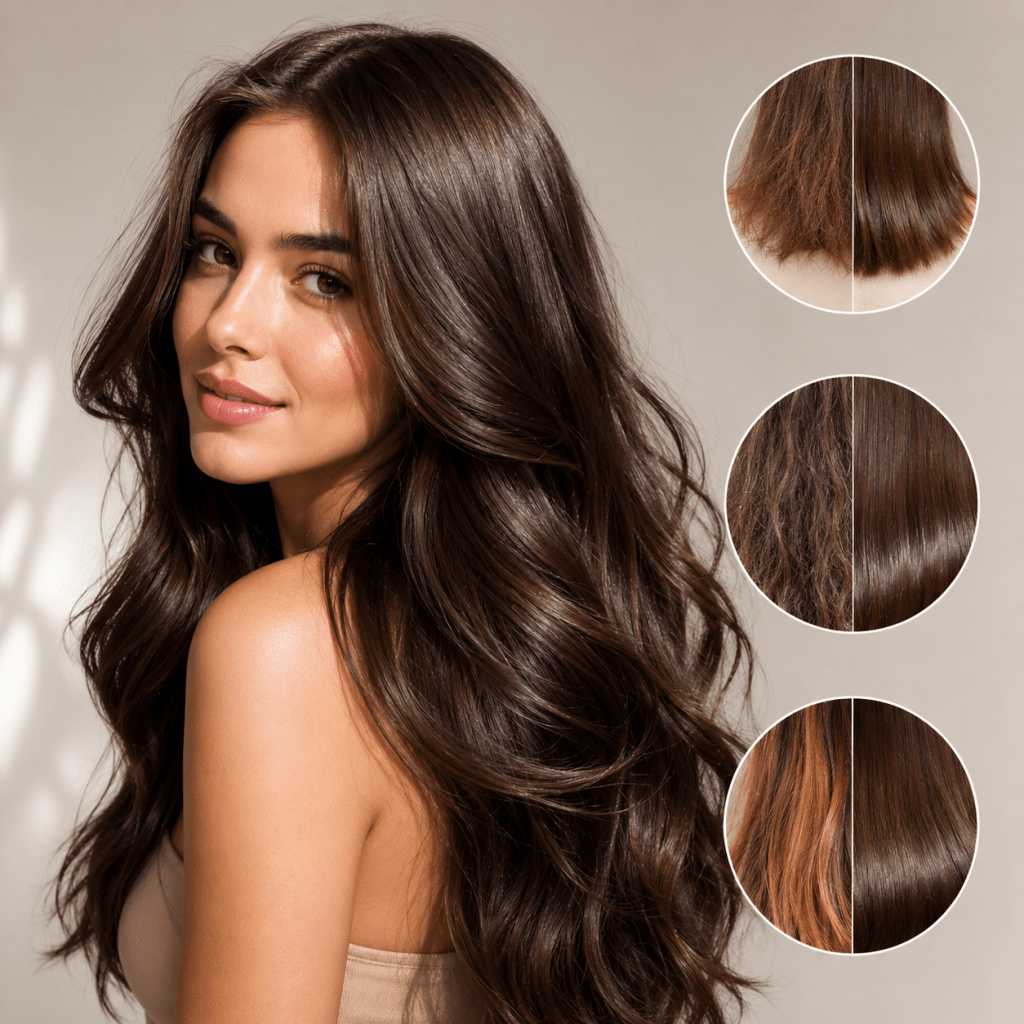
The treatment may be a good option if your hair:
- looks dull;
- has lost its softness;
- becomes frizzy through the lengths;
- tangles after washing;
- has a porous surface;
- looks dry, but the ends do not yet require a significant trim;
- has lost color vibrancy after dyeing;
- needs a quick cosmetic refresh before a special event.
The results of a hair glaze are often especially noticeable on dark, straight hair because a smooth surface reflects light more effectively.
The treatment can also create a beautiful result on blonde hair. However, the shade must be selected carefully to avoid unwanted ashiness, yellow tones, or darkening.
Who May Not Be a Good Candidate?

Hair glaze treatment may not be the best choice for very fine hair that already lacks volume.
Even a lightweight coating can sometimes weigh the strands down, causing them to lie flatter against the scalp.
Extra caution may be needed if your hair:
- breaks easily;
- has become overly stretchy after bleaching;
- has been damaged by repeated coloring;
- becomes oily quickly;
- is already overloaded with silicones and leave-in products;
- lost volume after previous salon treatments.
Hair glazing should also be avoided if the scalp is irritated or has open sores, severe itching, or an active skin condition. In this situation, it is better to identify and address the cause before booking the treatment.
How Is a Hair Glaze Treatment Done?
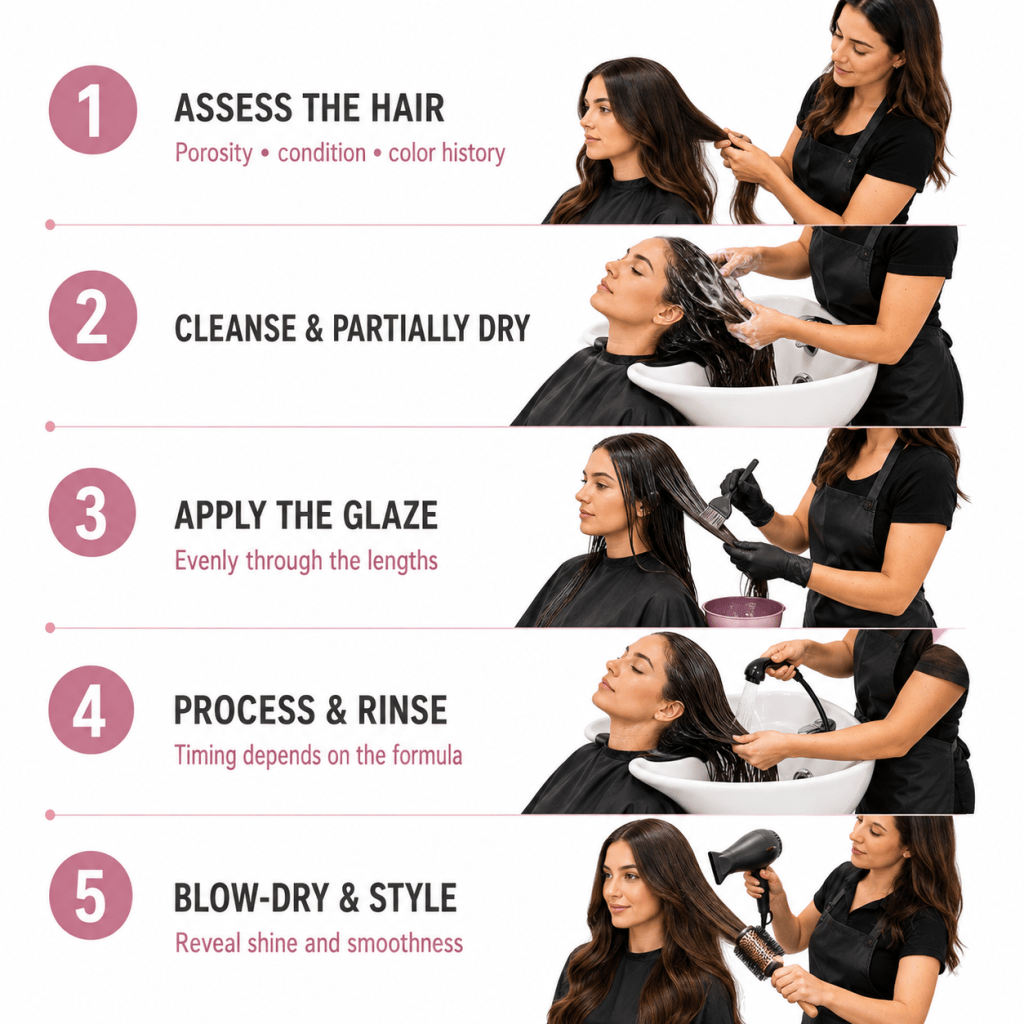
First, the stylist assesses the condition of the hair, its porosity, and its color history.
The hair is then cleansed and partially dried before the glaze formula is applied evenly through the lengths.
The product is left on for the recommended processing time and then rinsed out. The treatment is usually finished with blow-drying and styling to reveal the final shine and smoothness.
The exact steps and processing time may vary depending on the formula and the manufacturer’s instructions.
How Long Does a Hair Glaze Treatment Last?


How long the results last depends largely on the formula used.
The term “hair glaze” may refer to anything from a lightweight conditioning coating to a longer-lasting toning formula.
A light glaze may begin to fade after just a few washes, although the added shine can sometimes remain noticeable for one to two weeks.
Professional toning glosses often last longer, usually for several weeks.
Professional brands may also distinguish between a short-lasting surface glaze and a more durable gloss treatment designed to enhance shine and adjust the hair tone.
The results may fade faster if you:
- wash your hair every day;
- use clarifying shampoos;
- wash your hair with very hot water;
- swim in chlorinated pools frequently;
- regularly use scalp exfoliating treatments;
- use a flat iron or curling iron every day;
- have highly porous hair.
For a more accurate estimate, ask about the specific product being used rather than relying only on the general name of the treatment.
How to Care for Your Hair After a Glaze Treatment

The right at-home routine can help preserve the shine for longer without weighing down the hair.
Use a Gentle Shampoo
Choose your shampoo primarily according to the needs of your scalp.
Apply it mainly to the roots rather than rubbing it into the lengths. The lather that runs through the hair as you rinse is usually enough to cleanse the strands.
Use clarifying shampoos only when necessary, as they may cause the cosmetic coating and any deposited pigment to fade more quickly.
Don’t Skip Conditioner
A hair glaze does not replace a regular hair care routine.
If you are unsure which product your hair needs after washing, our guide to Hair Mask vs. Conditioner explains when to use each one and how they differ.
For fine hair, use a small amount of a lightweight formula to avoid losing volume.
Use a Heat Protectant
Apply a heat protectant before blow-drying or using hot styling tools.
Use a flat iron or curling iron only on completely dry hair and choose the lowest temperature that still allows you to achieve the desired style.
Whenever possible, reduce the frequency of heat styling and avoid unnecessarily high temperatures.
Avoid Product Overload
After a glaze treatment, the hair already has a cosmetic coating on its surface.
Applying heavy oils, silicone-rich serums, and thick masks every day may quickly leave it looking flat or greasy.
For many hair types, a conditioner, a lightweight leave-in product, and heat protection are enough.
Detangle Wet Hair Gently
Do not rub the hair with a towel or twist it to remove water.
Gently blot away excess moisture, apply a detangling product, and begin combing from the ends, gradually working your way upward.
Can You Get a Hair Glaze on Color-Treated Hair?
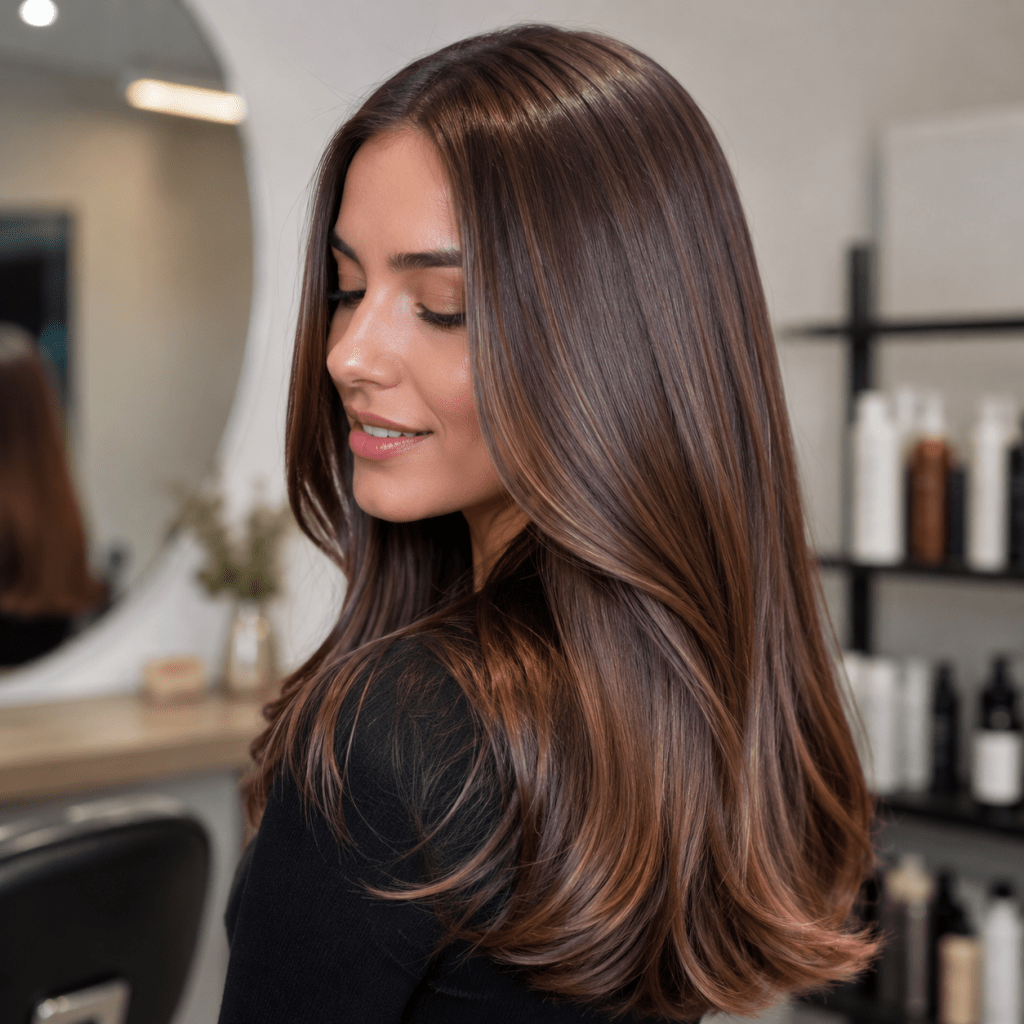
Yes. Hair glaze treatments are often used on color-treated hair.
A clear formula can enhance shine, while a tinted glaze can refresh the shade between full coloring appointments.
However, there are several important things to consider:
- highly porous areas may absorb more pigment;
- blonde hair may become darker or cooler than expected;
- unwanted warm tones may not be fully neutralized with a single glaze treatment;
- a glaze cannot replace lightening or correct significant patches of uneven color;
- the final result depends on the starting shade, previous coloring, and the formula used.
If you are considering a tinted formula, follow the product instructions and complete any recommended allergy test, even if you have used hair color before without a reaction. The FDA’s hair dye safety guidance explains that sensitivity can develop over time.
For bleached or unevenly porous hair, it is best to perform a strand test before applying the product to the entire length.
Benefits of a Hair Glaze Treatment

The main benefits of a hair glaze treatment may include:
- a quick boost of shine;
- a smoother, more polished appearance;
- easier detangling;
- less frizz;
- the ability to refresh the color without changing it dramatically;
- gradual fading of a tinted formula;
- no visible regrowth line with a clear glaze;
- a lighter, more natural-looking finish than some other salon hair treatments.
A hair glaze can be a convenient option between coloring appointments or before a special event when you want to refresh the appearance of your hair quickly.
Drawbacks and Important Precautions

The treatment also has several potential drawbacks:
- the results are temporary;
- it does not repair damaged hair from within;
- fine hair may lose volume;
- a tinted glaze may deposit unevenly on porous lengths;
- the final shade may not look exactly like the color swatch;
- repeating the treatment too frequently may weigh down the hair;
- it cannot repair split ends;
- the cost may not always feel justified by how long the results last.
Avoid using a hair glaze immediately after several intensive chemical treatments simply to disguise the damage.
If the hair breaks easily, feels overly stretchy when wet, or has become noticeably thinner, reduce chemical processing and heat exposure before considering another salon treatment.
How Often Can You Get a Hair Glaze?
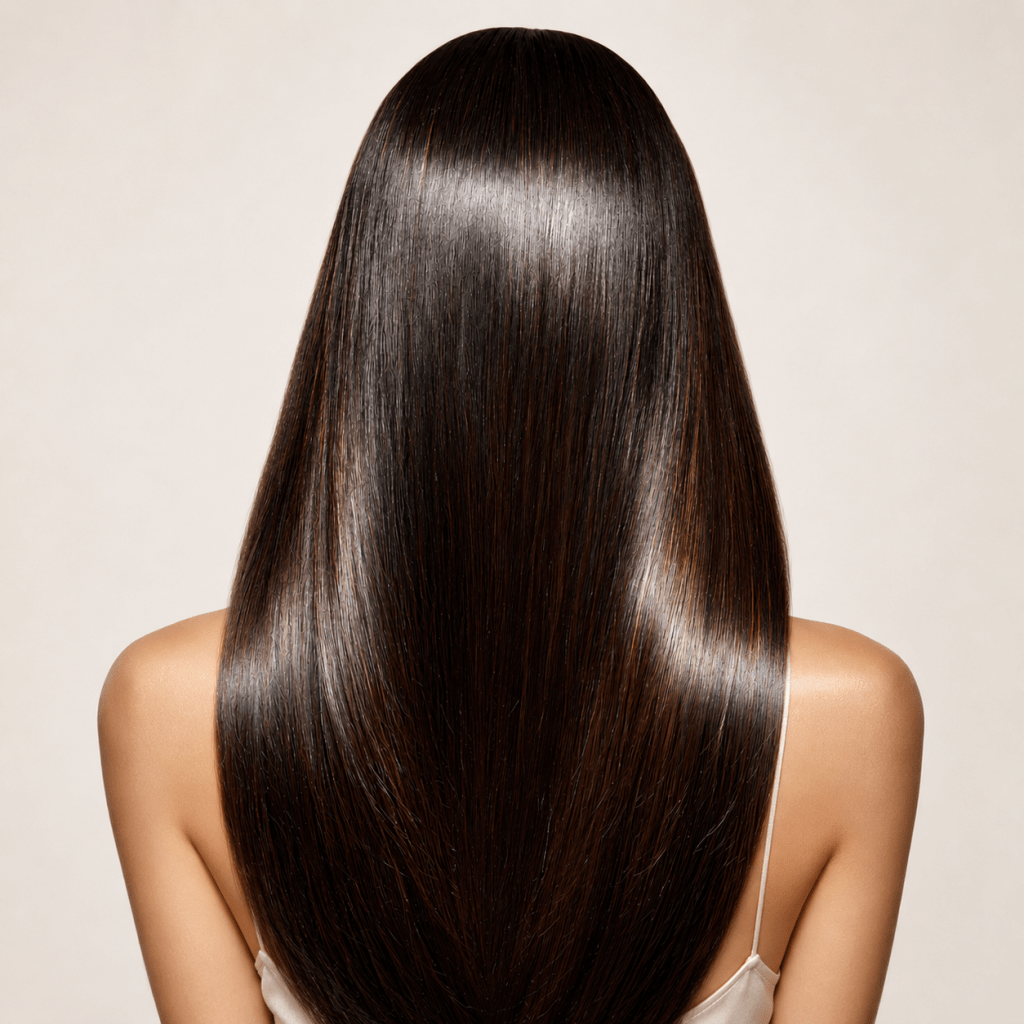
How often you can repeat the treatment depends on the formula and the condition of your hair.
A lightweight clear glaze can usually be repeated once the previous result has mostly faded.
A tinted formula should be reapplied according to how much pigment remains through the lengths.
Avoid repeating the treatment too frequently if your hair:
- feels heavy;
- becomes greasy more quickly;
- has lost volume;
- looks dull because of product buildup;
- has become difficult to style.
If you notice these changes, take a break from the treatment and reassess your at-home hair care routine.
The Bottom Line
A hair glaze treatment is best viewed as a quick way to give the strands more shine, smoothness, and a polished appearance.
It can refresh the color between appointments, slightly reduce frizz, and make the hair easier to style.
The treatment works best when the formula is suited to your hair and your expectations remain realistic.
A hair glaze cannot replace trimming damaged ends, using conditioner regularly, or protecting the hair from excessive heat.
However, as a lightweight cosmetic treatment for dull or color-treated hair, it can deliver a noticeable yet natural-looking result.
Common Questions About Hair Glaze Treatment
Can you get a hair glaze on curly hair?
Yes. A lightweight glaze can add shine and make curls look more polished, but the formula should not be so heavy that it affects their definition or volume.
How soon can you wash your hair after a glaze treatment?
This depends on the formula used. Follow the product instructions or your stylist’s advice, as some glazes require different aftercare than longer-lasting gloss treatments.
Can you use a hair glaze at home?
Yes, at-home clear and tinted glazes are available. However, tinted formulas may deposit unevenly on bleached or highly porous hair, so performing a strand test first is a sensible precaution.