

A hair reconstruction treatment is a professional salon service designed to make damaged lengths look and feel fuller, smoother, and less prone to breakage.
The treatment is often chosen after bleaching, frequent coloring, repeated heat styling, or an unsuitable at-home hair care routine.
However, it is important to understand that no formula can fully return severely damaged hair to its original condition.
Hair reconstruction can temporarily improve the way hair looks and behaves, but it cannot replace trimming split ends or treating the lengths gently.
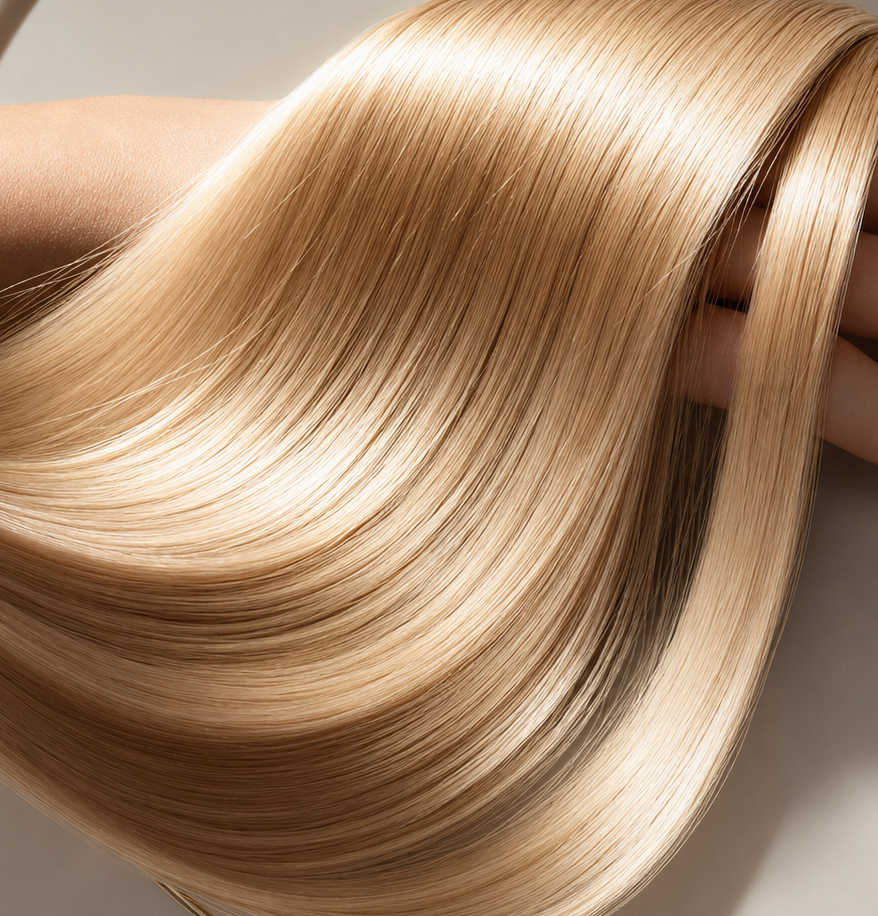
Services described as “hair reconstruction” can vary considerably between salons.
They usually involve a multistep treatment with proteins, amino acids, lipids, and moisturizing ingredients.
The main goal is to reduce roughness, make the hair easier to detangle, and give the lengths a more polished appearance.
Some formulas work mainly on the surface, while certain ingredients may interact with more porous areas of the hair fiber.
A hair reconstruction treatment is not a straightening procedure.
It should not alter the natural pattern of curls or waves in the same way as keratin smoothing or nanoplasty.
How Does a Hair Reconstruction Treatment Work?
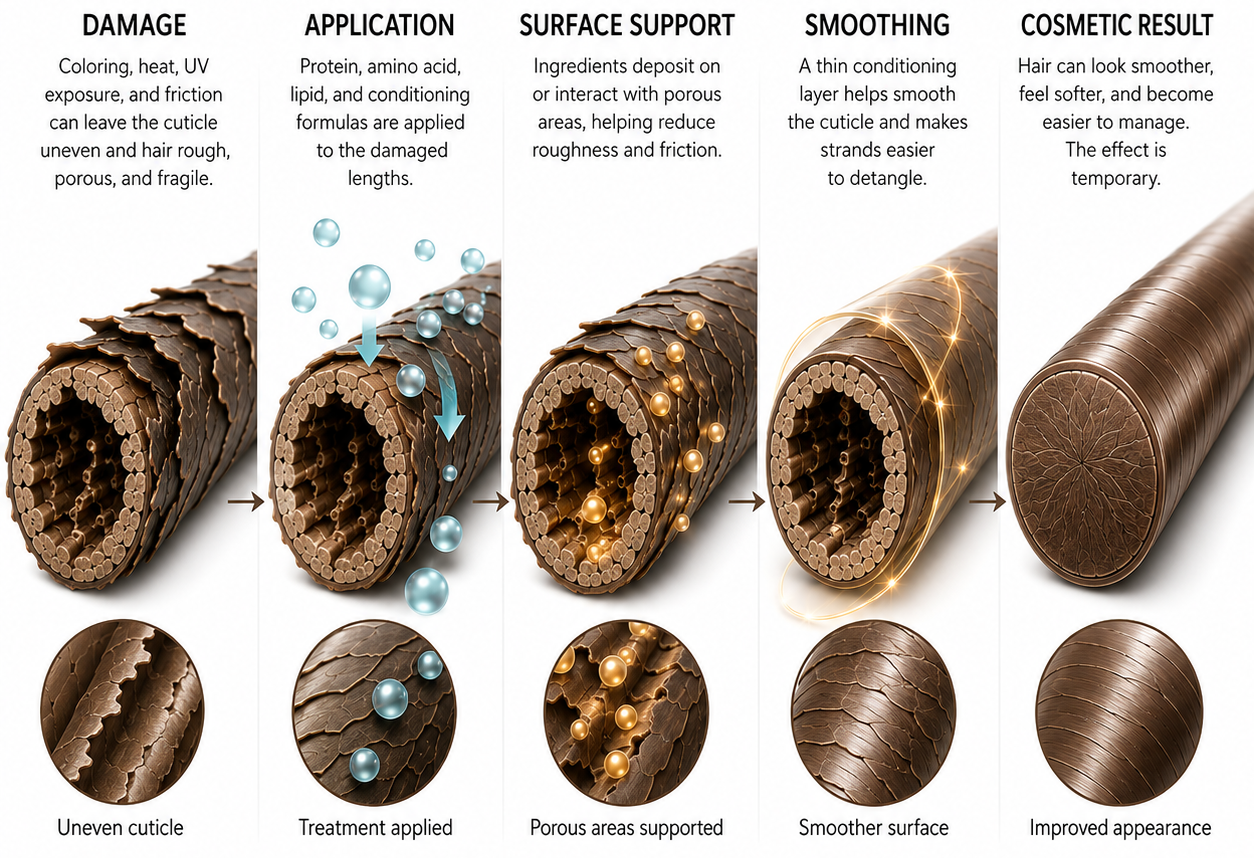
Damaged hair often has an uneven surface, loses moisture more quickly, tangles easily, and becomes more likely to break during brushing.
This is especially noticeable after repeated bleaching, when the lengths can become porous, dry, and less flexible.
If you’ve recently lightened your hair, timing is everything to prevent stripping your fresh toner or causing unnecessary stress to the hair shaft. Before booking a service, review our guide to post-bleach hair care to learn the exact timeline for safe reconstruction.
During a hair reconstruction treatment, products are applied that may help:
- smooth uneven areas on the hair’s surface;
- reduce friction between strands;
- improve flexibility;
- temporarily condition porous areas;
- soften the hair;
- make detangling and styling easier.
The result depends largely on the formula used.
If a product contains a high concentration of proteins, the hair may feel fuller and stronger. However, excessive use can leave it feeling stiff and dry.
When the formula focuses more on lipids and conditioning ingredients, the strands are more likely to feel softer and smoother.
If you are looking for a more conditioning-focused salon service, a Japanese hair treatment uses a different multi-step approach centered on softness, smoothness, and manageability.
Who Is a Hair Reconstruction Treatment Best For?

The treatment may be helpful if your hair:
- has been lightened or bleached;
- is frequently color-treated;
- breaks along the lengths;
- tangles after washing;
- has become porous and rough;
- has lost its shine;
- is regularly exposed to heat styling;
- looks thin and weakened at the ends.
The most noticeable results are usually seen on hair that is damaged but has not yet reached a critically weakened condition.
If the strands stretch excessively when wet, snap with very little tension, or appear to crumble at the ends, one salon treatment may not be enough.
When a Hair Reconstruction Treatment May Not Be Suitable

Hair reconstruction is not always necessary for healthy hair.
If the lengths are smooth, flexible, and not prone to breakage, a formula containing a high concentration of proteins may leave the hair feeling stiff.
Extra caution may be needed if your hair:
- is very fine and easily weighed down;
- is already overloaded with masks and leave-in products;
- has become dry after frequent use of protein-based treatments;
- loses volume quickly;
- has many split ends;
- is experiencing active shedding related to a scalp condition or an underlying health issue.
A hair reconstruction treatment works only on the lengths.
It does not treat hair loss, affect the function of the hair follicles, or address scalp conditions.
What Happens During a Hair Reconstruction Treatment?
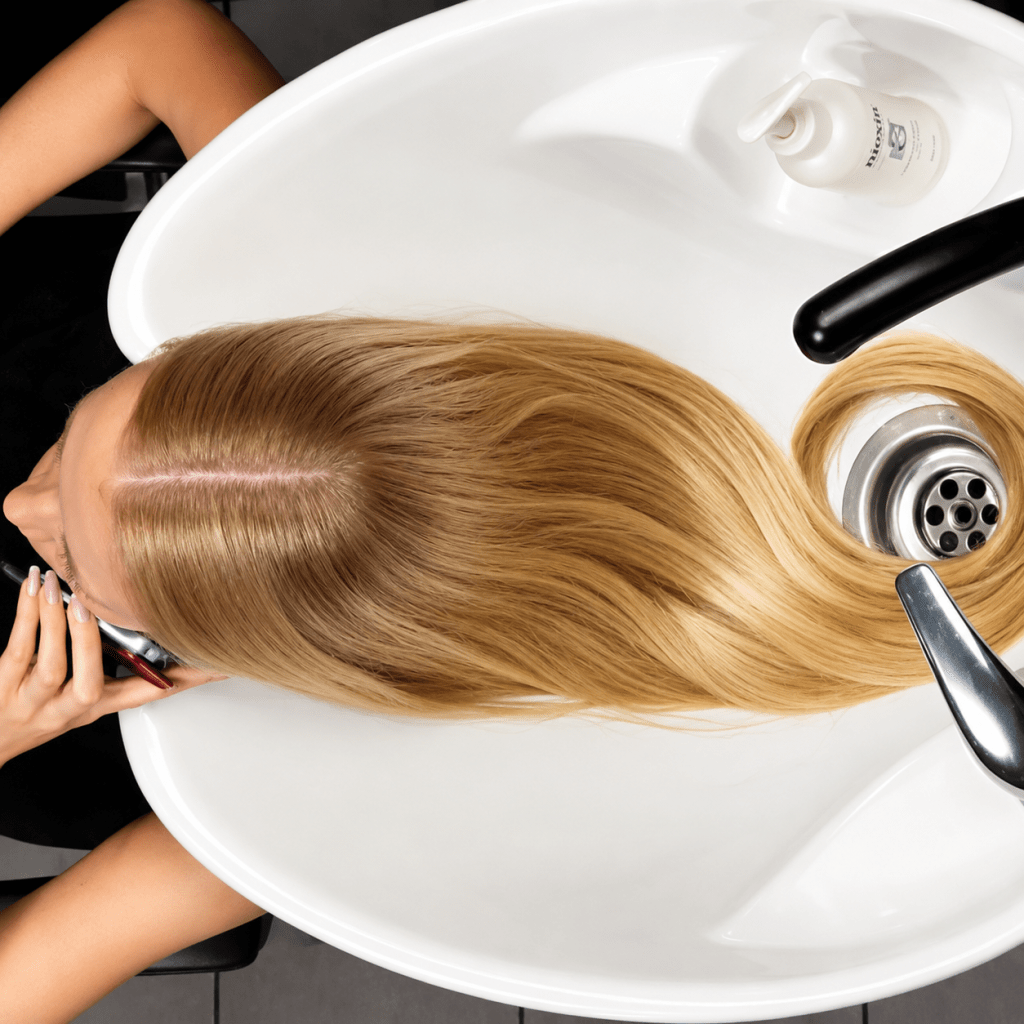
The exact steps depend on the professional system being used, but a hair reconstruction treatment usually includes several stages.
1. Assessing the Hair
Before the treatment, the stylist should check the hair’s porosity, flexibility, level of breakage, and the condition of the ends.
Previous bleaching, coloring, and at-home care should also be taken into account.
Without this assessment, it is difficult to determine whether the hair needs more proteins, lipids, moisture, or simply gentle conditioning.
2. Cleansing
The hair is washed with shampoo. A clarifying shampoo may sometimes be used, but severely damaged lengths should be cleansed gently to avoid increasing dryness.
3. Applying the Reconstruction Formula
One or more products are applied to the lengths. These may include protein concentrates, amino acid serums, lipid-rich masks, or conditioning emulsions.
4. Processing Time
The formula is left on the hair for a specified amount of time. Some professional systems use gentle heat to help the ingredients distribute more evenly across the hair.
5. Finishing Care
After the reconstruction stage, a hair mask or conditioner is usually applied to soften the hair and smooth its surface.
6. Drying
The hair is blow-dried. If the lengths are severely weakened, it is better to avoid high temperatures and repeated passes with a hair straightener.
What Results Can You Expect?


After a well-chosen treatment, the hair may feel or appear:
- smoother;
- softer;
- fuller to the touch;
- less likely to break during brushing;
- shinier;
- easier to manage;
- less frizzy;
- neater and more even at the ends.
However, the result does not always look like a dramatic transformation.
On severely damaged hair, the most meaningful change may not be mirror-like shine. Instead, the strands may tangle less and tolerate brushing more easily.
Do not expect a hair reconstruction treatment to permanently “seal” split ends.
Once an end has physically split, trimming the damaged section remains the most reliable solution.
How Long Do the Results Last?
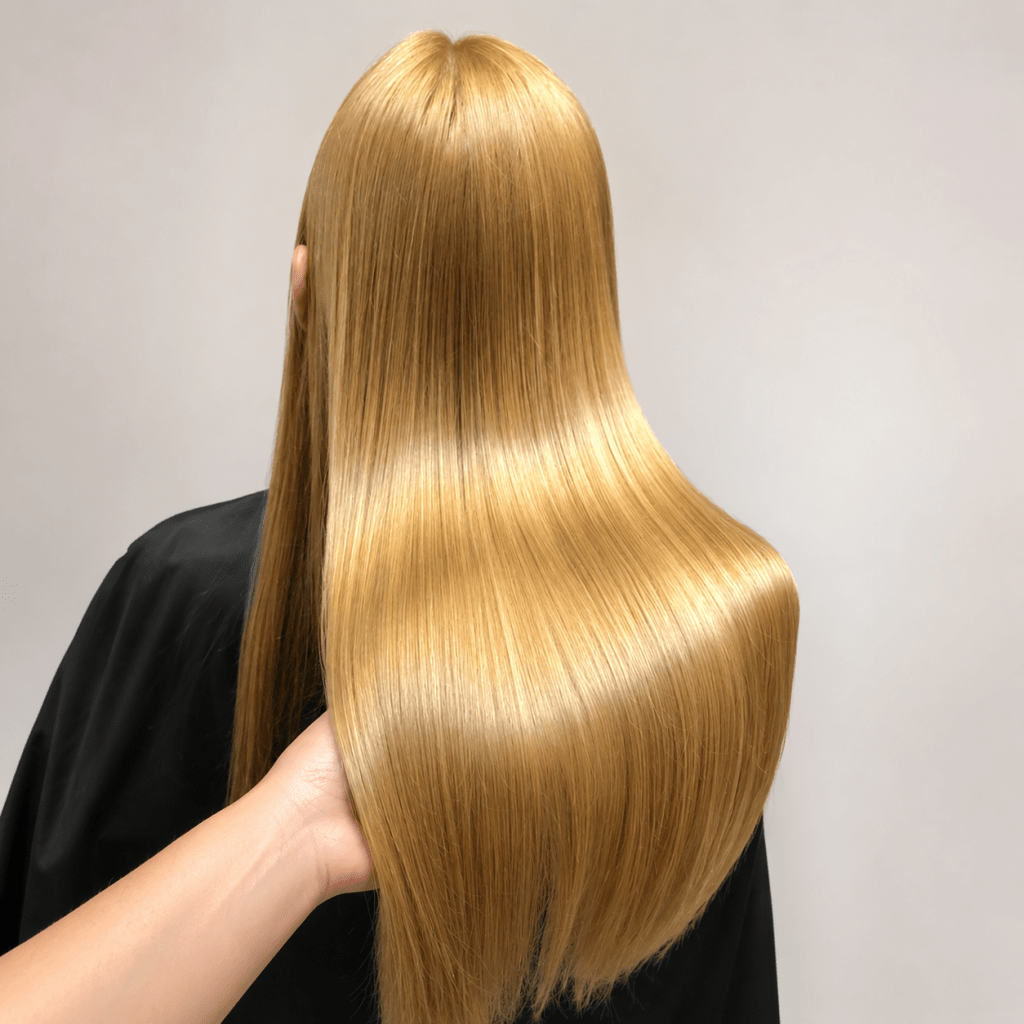
How long the results last depends on the condition of your hair, the formula used, and your at-home care routine.
On porous hair, the effects may remain noticeable for anywhere from a few washes to several weeks.
The results may fade faster if you:
- wash your hair every day;
- use harsh cleansing products;
- frequently use a flat iron;
- regularly bleach your hair;
- skip conditioner;
- brush wet hair too roughly;
- avoid trimming damaged ends.
Any cumulative effect comes from ongoing cosmetic care rather than permanent repair.
This does not mean that every additional treatment will continue making your hair healthier without limits.
Overloading the hair with certain ingredients may also leave it looking worse.
Benefits of Hair Reconstruction
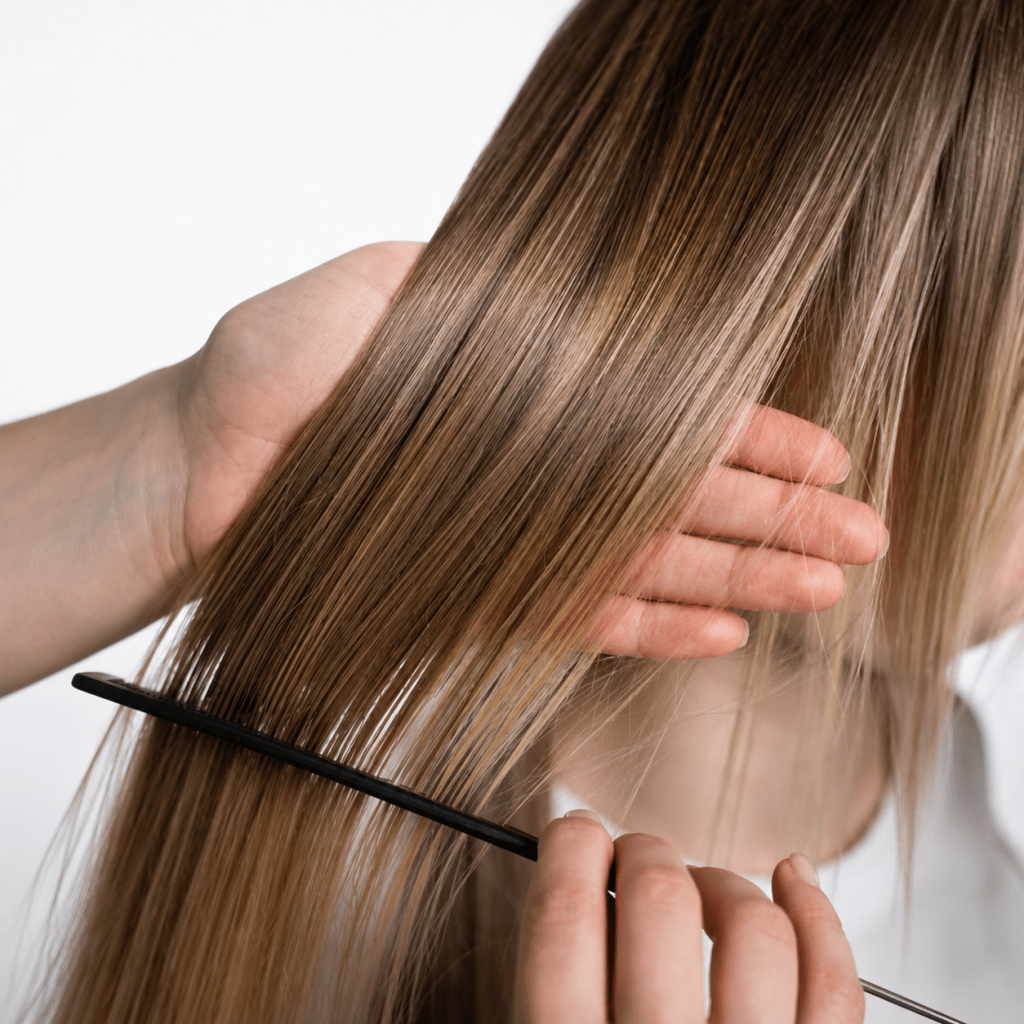
The main benefits of the treatment may include:
- improving the appearance of damaged lengths;
- reducing roughness;
- making the hair easier to detangle;
- improving softness and flexibility;
- reducing breakage during styling;
- choosing a formula suited to your hair’s specific condition;
- improving the hair’s appearance without changing its natural texture.
Reconstruction can be a helpful option before or after coloring, but the order of the treatments should be determined by your stylist based on the specific products being used.
If you are still comparing your options, our guide to popular salon hair treatments explains how reconstruction differs from other professional services.
Drawbacks and Important Precautions
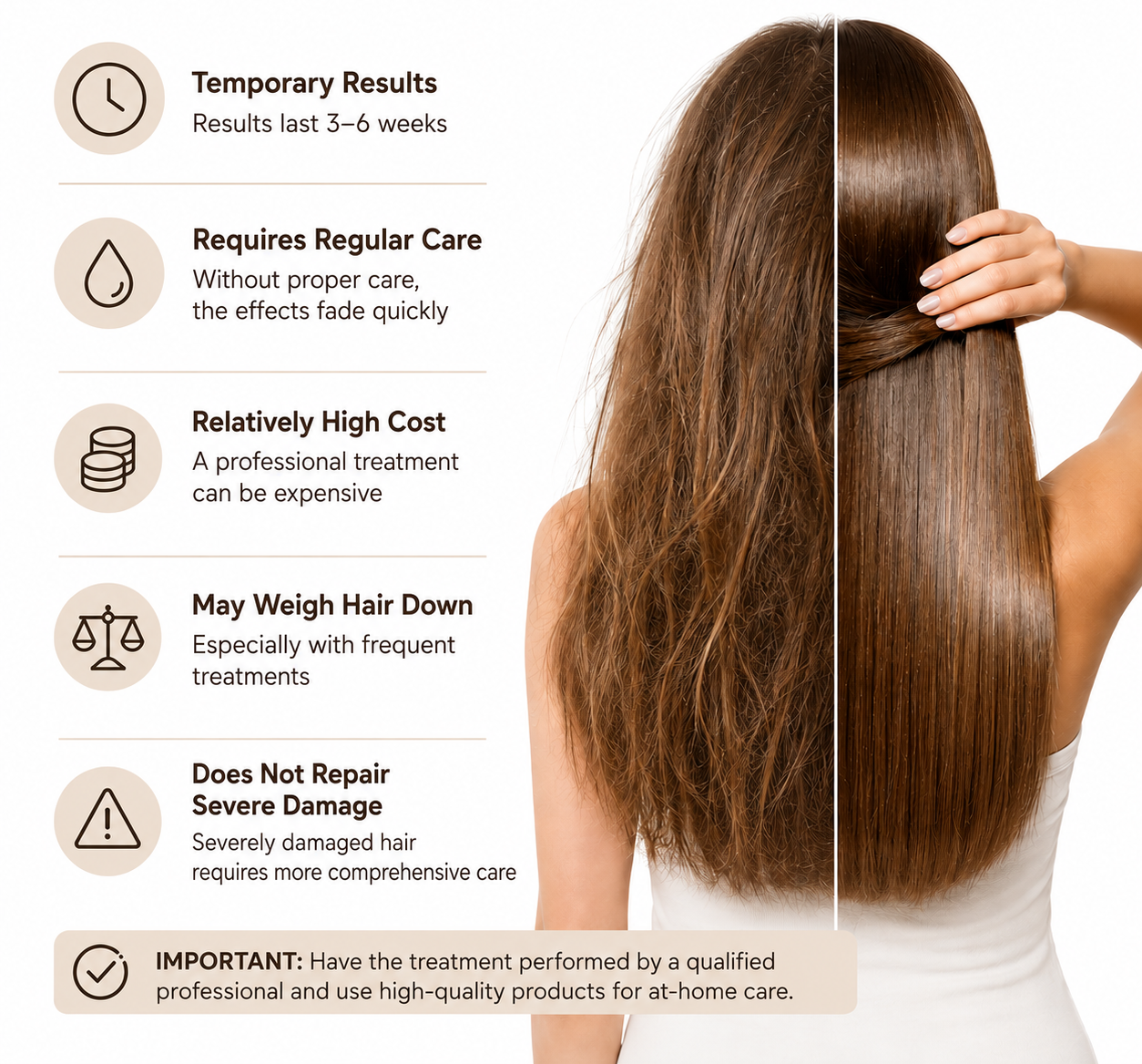
The treatment also has some potential drawbacks:
- the results are temporary;
- severely split ends still need to be trimmed;
- too much protein may leave the hair feeling stiff;
- heavier formulas can reduce volume;
- the results depend on the quality of the products and whether the formula is right for your hair;
- the treatment does not prevent hair loss;
- reconstruction does not replace a consistent at-home care routine.
Layering protein-heavy formulas on already compromised hair can lead to brittleness and severe breakage. If your strands feel stiff or snap under slight tension, read our breakdown on protein overload in hair to identify the signs and learn how to safely reset your routine.
Extra care is needed when working with hair that has been bleached multiple times.
If the stylist uses excessive heat or pulls too aggressively on the strands while drying, the hair may become even more prone to breakage.
How to Care for Your Hair After Reconstruction
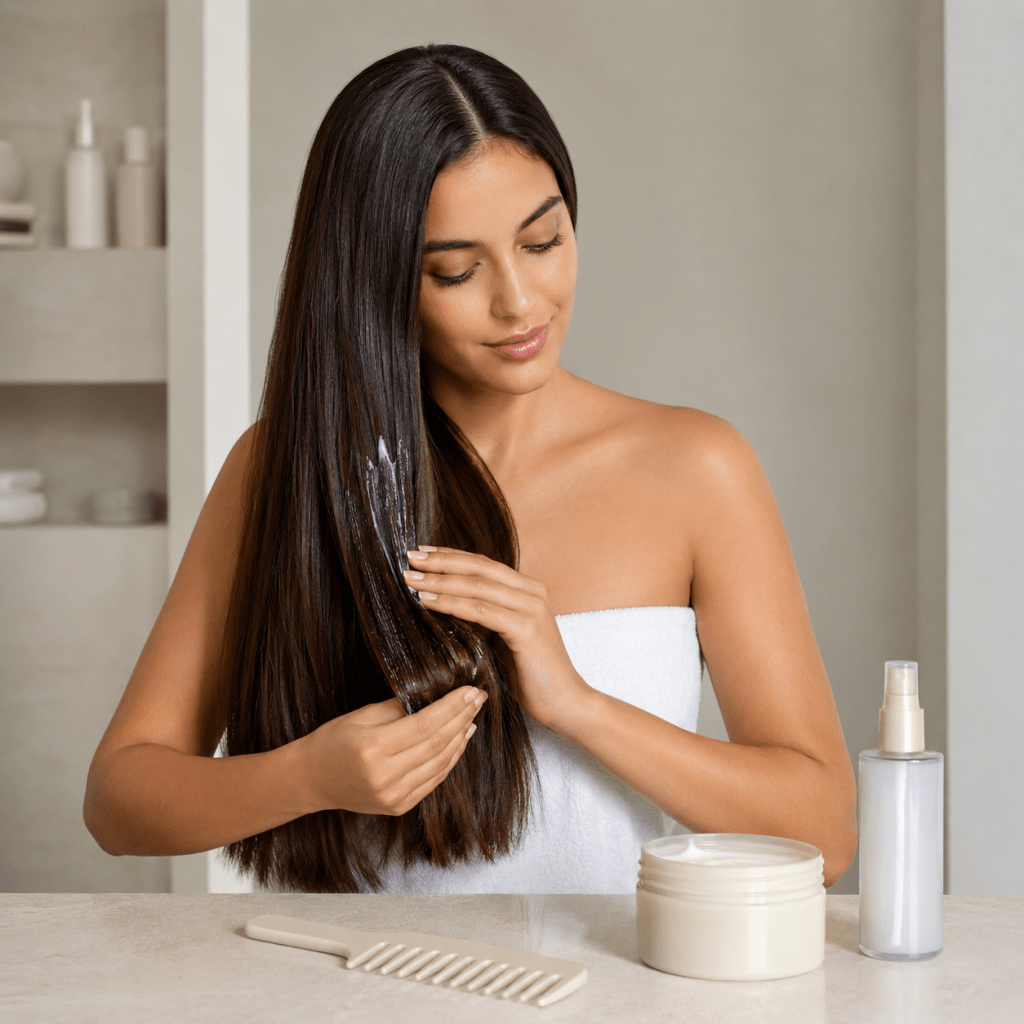
You don’t need a long list of products after the treatment. What matters more is keeping your routine consistent and well-balanced.
Use Conditioner After Every Wash
Conditioner helps reduce friction and makes the hair easier to detangle. Apply it from the mid-lengths to the ends, avoiding the roots.
Alternate Between Protein-Rich and Moisturizing Products
If your at-home hair mask contains keratin, amino acids, or hydrolyzed proteins, you don’t need to use it every time you wash your hair.
If your hair begins to feel stiff, dry, or more prone to tangling, take a break from protein-based products and switch to more moisturizing formulas.
Always Use a Heat Protectant
Apply a heat protectant before using a blow-dryer, flat iron, or curling iron. Reconstruction does not make your hair immune to heat damage.
Be Gentle When Detangling Wet Hair
Gently blot your hair with a towel, apply a leave-in conditioner, and begin detangling at the ends before gradually working your way up.
Trim the Ends Regularly
Even the best hair care cannot permanently repair an end that has already split. Regular trims can help the ends look fuller, healthier, and more polished.
How Often Can You Get Hair Reconstruction?
There is no single schedule that works for everyone. How often you may need the treatment depends on the condition of your hair and the type of formula used.
If your hair begins to feel porous again, tangles easily, or loses its softness, the treatment may be repeated after the condition of the lengths has been assessed. However, there is no reason to have reconstruction done every week unless your hair genuinely needs it.
Signs that your hair may need a break include:
- stiffness;
- dryness;
- a heavy, coated feeling;
- loss of volume;
- hair that becomes greasy more quickly;
- difficulty styling the hair;
- ends that feel more brittle after using protein-based products.
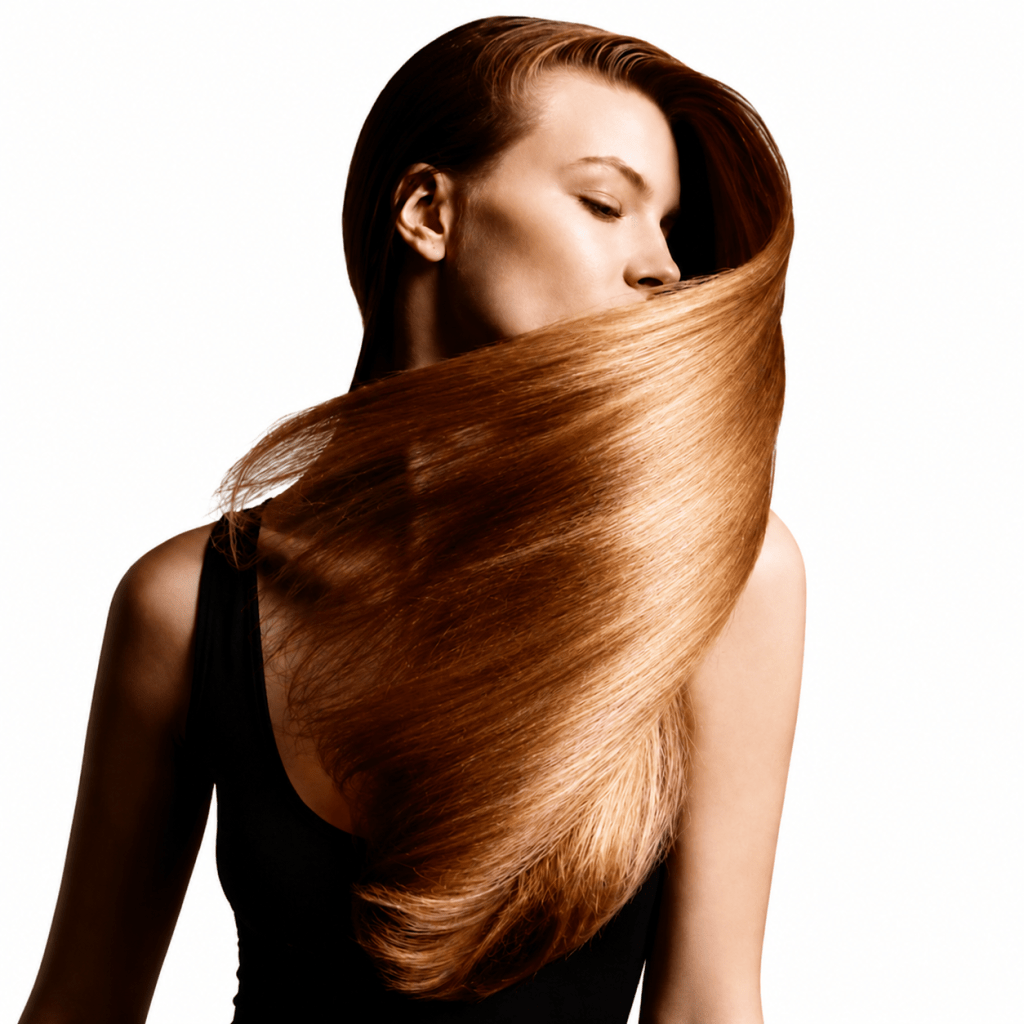
Hair reconstruction can be a helpful option for damaged, bleached, or porous lengths.
It can make the hair feel smoother and softer while helping reduce breakage during everyday care.
However, the treatment should not be viewed as a complete cure for hair damage.
The best results come from combining the right salon treatment with moderate heat styling, regular conditioner use, and timely trims to remove damaged ends.