
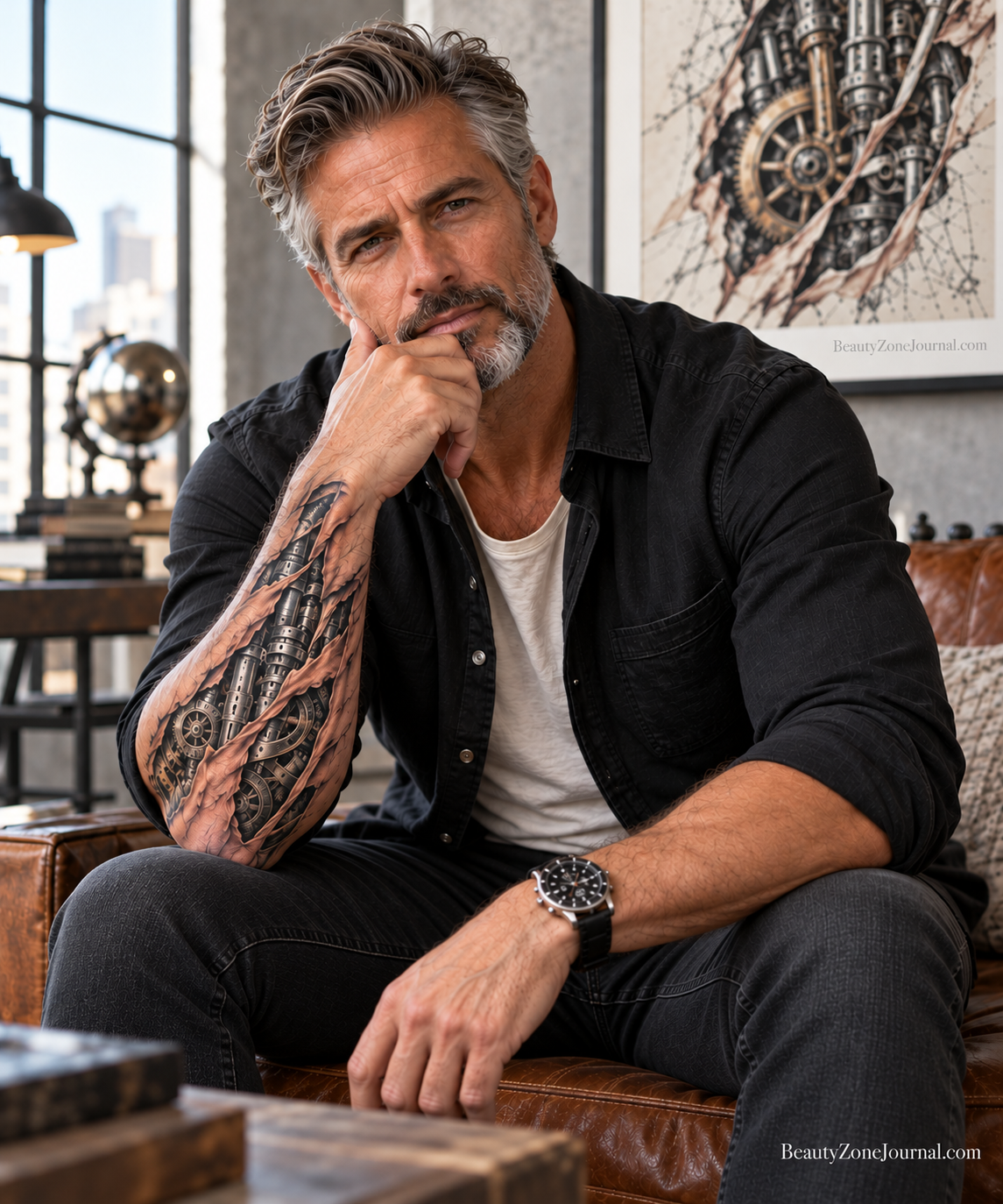
A scar may have healed years ago and no longer hurt, yet still stand out. This is especially true when it runs across the forearm, shoulder, chest, or another visible part of the body.
Tattoos over scars for men do not always have to cover the entire scar with a dark design. Sometimes the better option is to work around part of it, shift the main design slightly to one side, or use the scar itself as part of the composition.
The design should not be the first decision, though.
First, you need to know whether the scar is ready to be tattooed and what a tattoo can realistically change.
Table of Contents:
Can you tattoo over a scar?
Sometimes, yes. But not every scar is ready for tattooing, especially soon after surgery or an injury.
What matters most is how the scar looks and feels now. If it is still red, painful, itchy, getting thicker, or changing shape, it is better to wait.

Scars can keep changing for many months even after the original wound has closed.
That is why the simple rule of “one year has passed, so it is safe” does not work for everyone.
The scar should be settled and stable.
If it developed after major surgery, a serious burn, trauma, or a skin graft, make sure the tissue itself no longer needs treatment before planning a tattoo.
Scar type and tattoo suitability
Not all scars behave the same way.
For tattooing, the size of the scar matters, but so do its texture and color.
| Scar type | What it may mean for a tattoo |
|---|---|
| Flat and pale | Usually offers more freedom when planning the design |
| Indented | The color can be changed, but the depression will still remain |
| Raised and firm | Needs extra caution |
| Wide or uneven | Often works better as part of the design rather than being completely covered |
| Red, painful, or still changing | It is better to wait |
Keloid scars need special attention.
A keloid can grow beyond the original injured area. If you have developed keloids before, another injury to the skin from a tattoo needle may also cause an unwanted reaction.
In that situation, rushing into a tattoo is not a good idea.
What a tattoo can hide – and what it can’t
This is worth understanding before choosing a design.
A tattoo can change the color of the area, make a scar less noticeable, and shift attention toward the artwork.
What it cannot do is make scar tissue flat.

If the scar is raised above the surrounding skin or sinks below it, that texture may still show through even under a dark tattoo.
So simply filling the whole area with black ink is not always the best solution.
If the main issue is the texture rather than the color, it makes more sense to deal with the scar itself first.
This is especially true if it pulls on the skin or limits normal movement.
How to adapt a tattoo design to the shape of a scar
One common mistake is assuming that the tattoo has to match the exact size of the scar and cover every part of it.
A strong design often works differently.
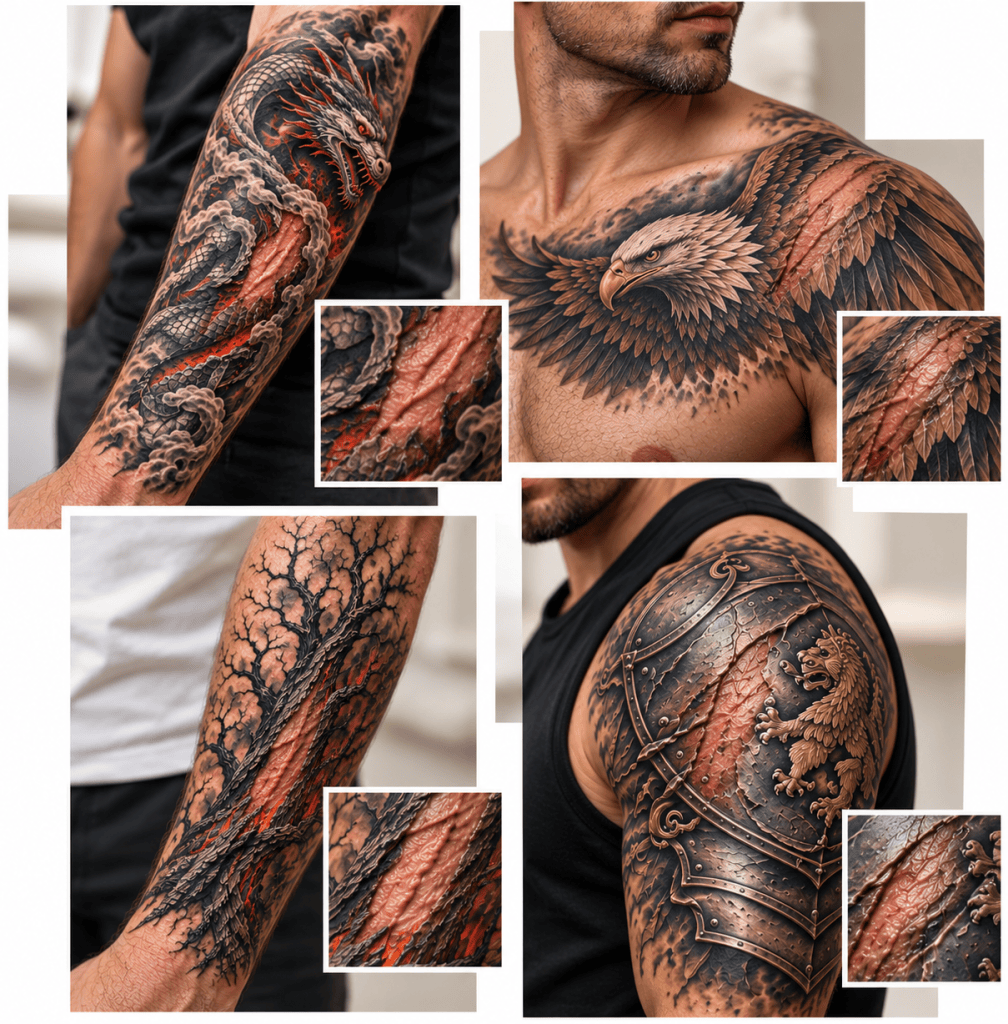
A long scar already has its own line, and that line can become part of the artwork.
For example, the scar could be worked into:
- a crack;
- a cliff or rock formation;
- a wave;
- a mechanical detail;
- a geometric design;
- the texture of wood.
Sometimes part of the scar is left visible while the main design sits next to it.
This can draw the eye toward the tattoo instead of making the scar look like a separate mark on the skin.
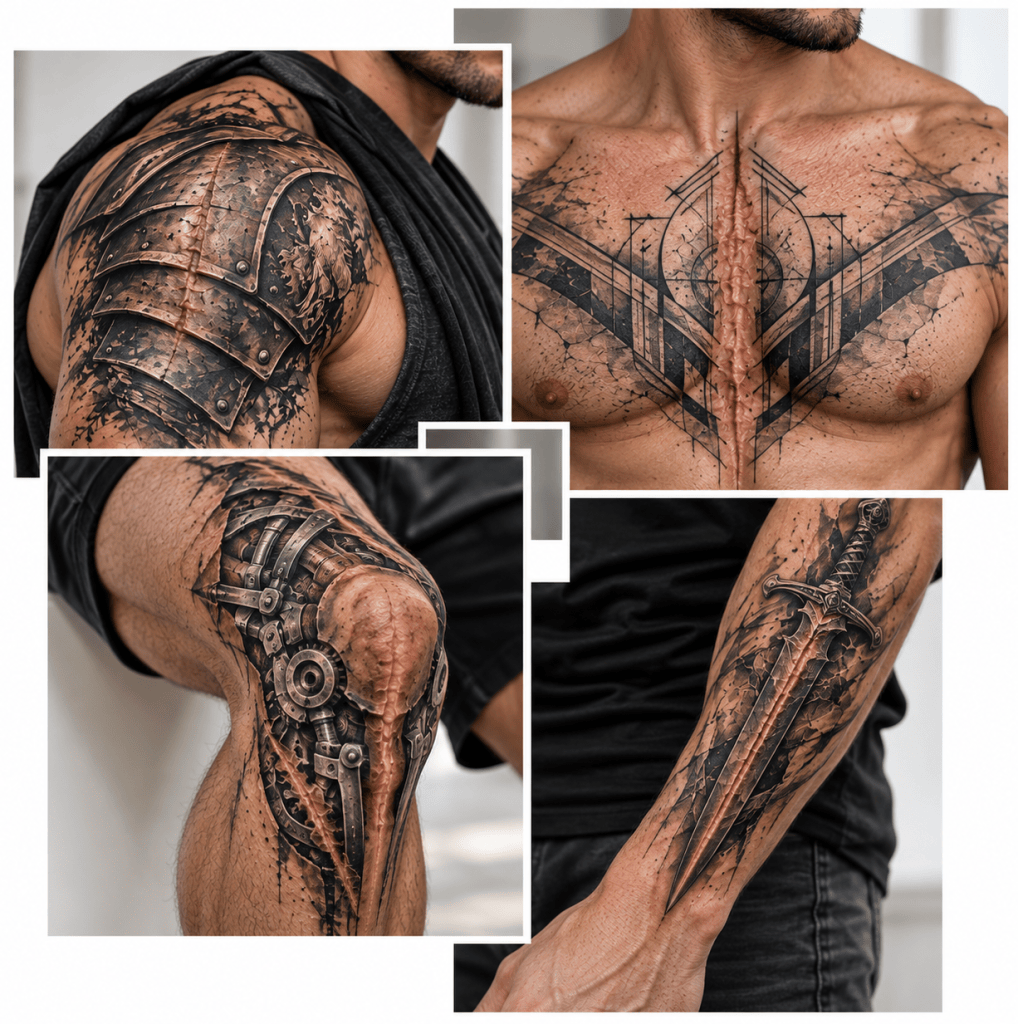


If the scar is on the shoulder, forearm, or another part of the arm, it can help to look at how men’s arm tattoos are usually composed. Scar work still needs to be adjusted to the exact area and the shape of the tissue.
How to choose the right tattoo size for a scar
A long scar does not automatically need a long tattoo.
A wide scar does not mean the whole area has to be filled with a dark design either.
Sometimes shifting the main part of the composition slightly is enough.
Only a small section of the tattoo may need to cross the scar, while most of the artwork stays on unaffected skin.
That often looks more natural.
The final size is easier to choose once the artist has seen the scar in person.
Which tattoo style works best?
There is no single tattoo style that works for every scar.
Some scars suit cleaner graphic designs, while others may work better with more shading or darker areas. In some cases, leaving more open skin around the scar gives the design a better balance.
The best choice depends on the scar’s shape, texture, and how noticeable you want it to be.
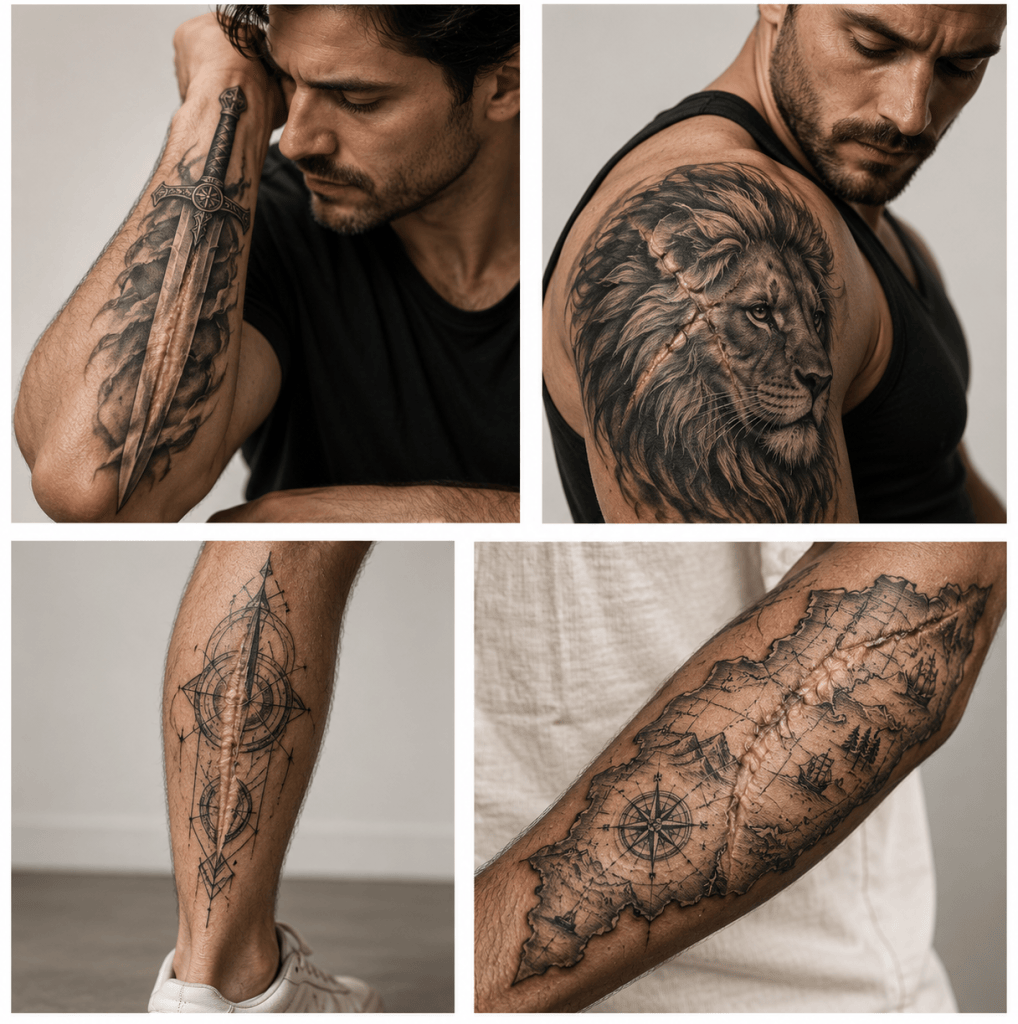
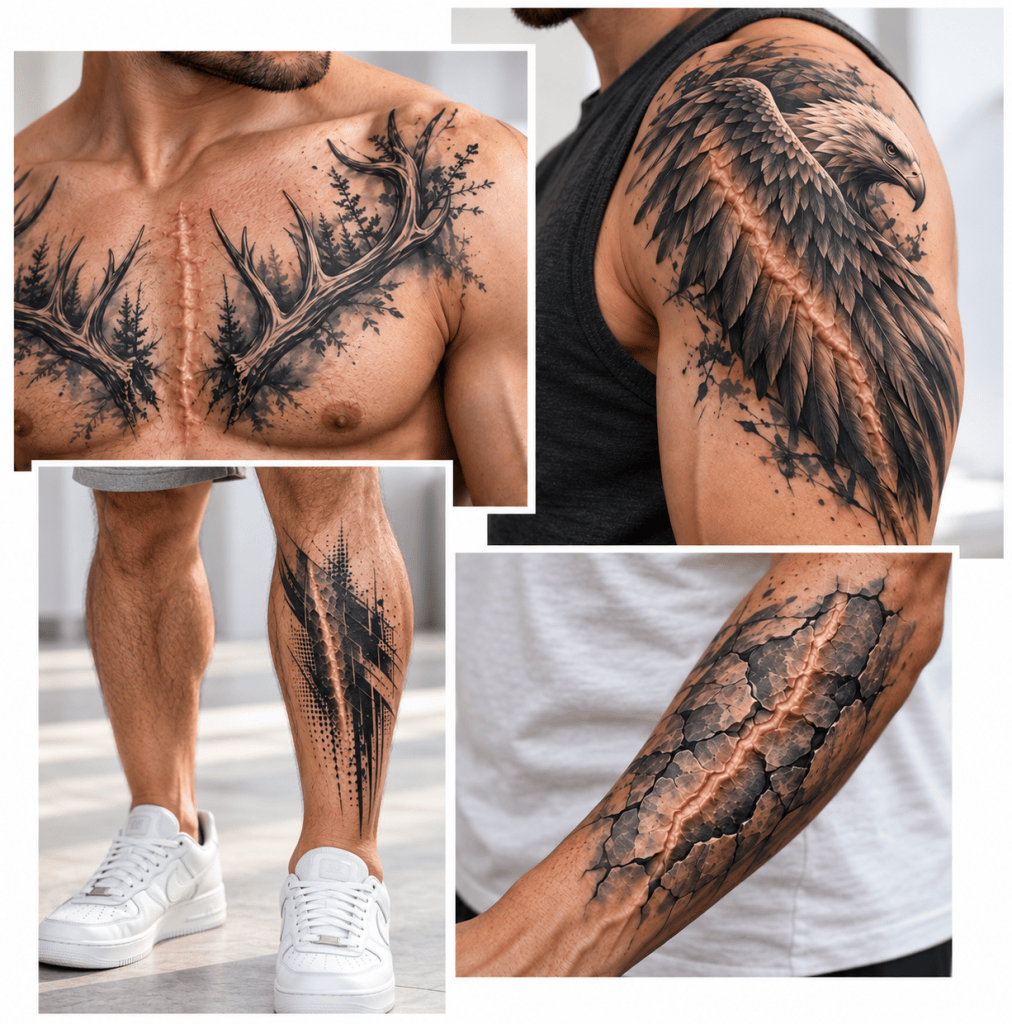
Start with the composition first. Once the placement and shape of the design make sense, it is much easier to choose a style that fits the area.
Why ink can look different on scar tissue
Even an old scar is not exactly the same as the surrounding skin.
Ink can therefore settle differently across the area.
One part may hold the color well, while another may look lighter after healing.
This is why a tattoo over a scar should not be judged immediately after the session.
Fresh tattoos almost always look brighter.
You get a much better idea of the final appearance once the skin has fully healed.
Sometimes a small touch-up is needed afterward. That does not automatically mean the tattoo was done badly. Scar tissue can simply hold ink less evenly.
Film, showering, exercise, and the first days after the session are a separate part of the process. You can find more practical guidance in tattoo aftercare for men.
If the scar is from a burn
Burn scars can be more complicated.
The area may differ not only in color but also in thickness, softness, and texture.
After a major burn or skin graft, the surface may also be uneven.
That is why it is especially important not to rush.
First, make sure the tissue itself is stable.
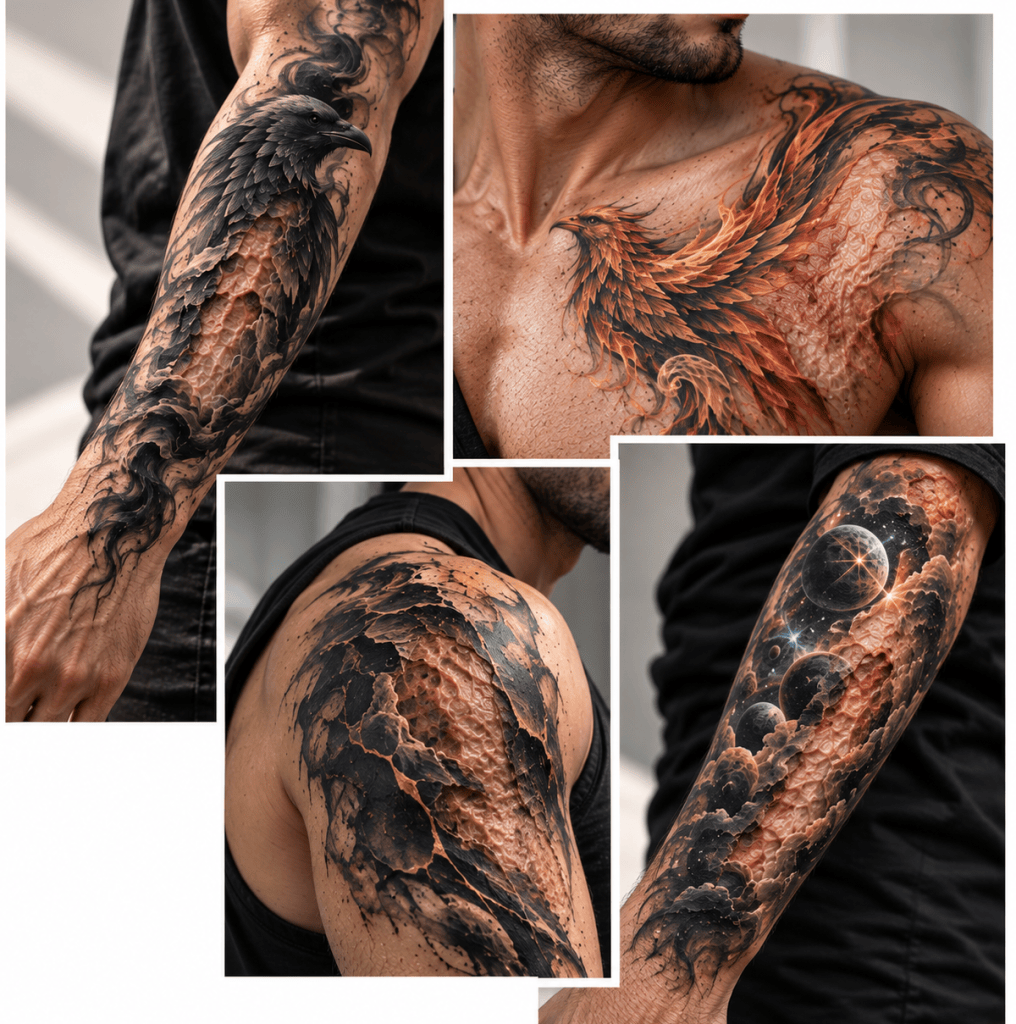
Only then does it make sense to decide which parts of the scar can be covered and which may work better as part of the design.
For a large tattoo, it can also help to try the design on the skin first.
This gives you a chance to see whether the artwork works with the scar or needs to be shifted slightly.
Scar camouflage to match your skin tone
Not everyone wants a decorative tattoo.
If the scar is pale and the main issue is the difference in color, skin-tone camouflage may be another option.
Instead of creating a visible design, pigment is chosen to blend more closely with the surrounding skin.
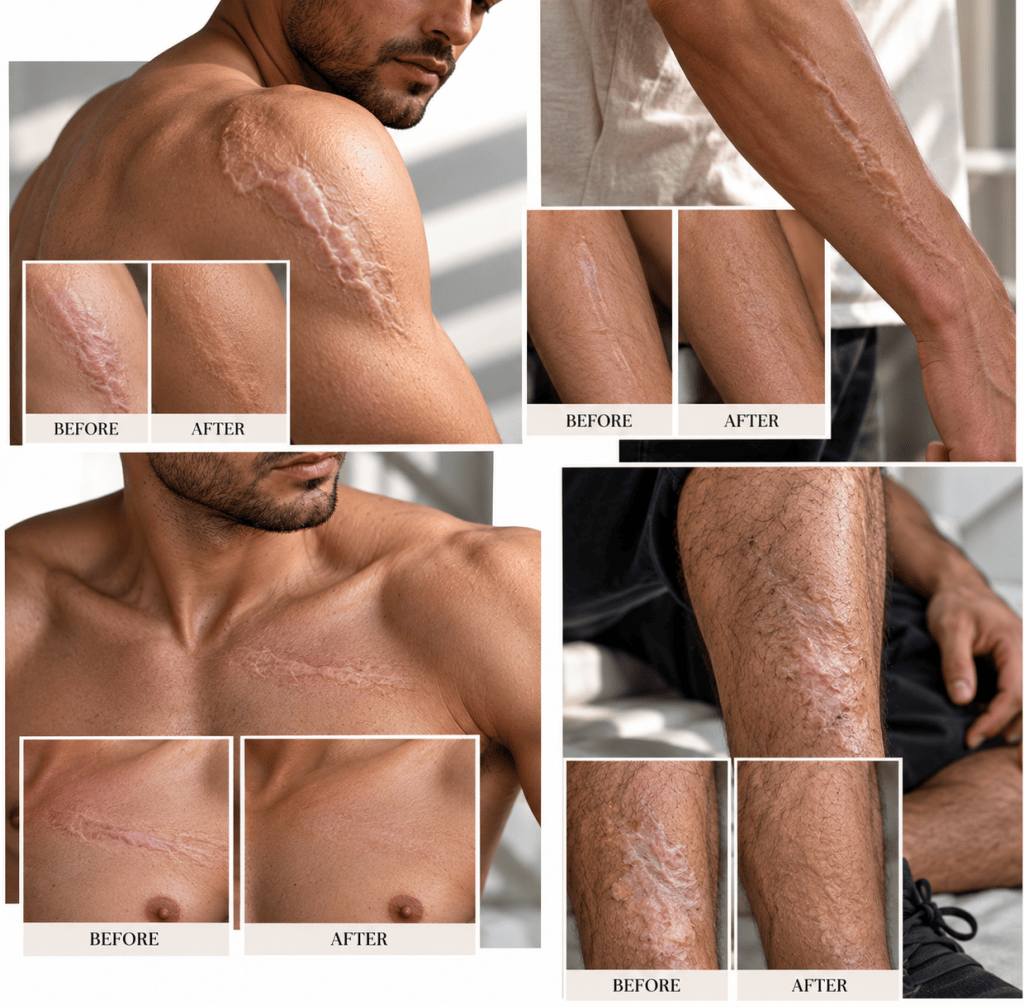
There are limits, though.
Camouflage does not remove texture, fill in an indentation, or flatten a raised scar.
A decorative tattoo and skin-tone scar camouflage are two different approaches with different goals.
How to choose a tattoo artist for scar work
A portfolio full of good tattoos is not enough.
For a scar, look for an artist who has experience working with scar tissue specifically.
Most of all, ask to see healed work.
A tattoo may look impressive immediately after the session, but a fresh photo does not show how the ink will settle in the scar weeks or months later.
Ideally, the portfolio should include:
- the scar before tattooing;
- the fresh tattoo;
- the same area after healing.
During the consultation, the artist should look closely at the scar and explain where it may be possible to work directly over it and where moving part of the design onto the surrounding skin may be a better choice.
It is also reasonable to ask whether a touch-up might be needed after healing.
A promise such as “the scar will disappear completely” should make you cautious.
A tattoo can dramatically change how the area looks, but the scar itself does not disappear.
When it’s better to wait
Do not rush if the scar:
- is still red;
- keeps getting larger;
- is becoming firmer;
- hurts;
- itches a lot;
- looks inflamed;
- pulls on the skin;
- limits movement.
Extra caution is also needed if you have developed keloid scars before.
Sometimes the right decision is simply not to tattoo the area yet.
Waiting a little longer is better than trying to fix a tattoo later on tissue that was still changing.
Common questions about tattooing over scars
Does tattooing over a scar hurt more?
It varies. Some scars have less sensation, while others are more sensitive. Even different parts of the same long scar can feel different. If the area already hurts, burns, or is very sensitive to touch before the session, find out why before tattooing it.
Can a tattoo over a scar need another touch-up?
Yes, sometimes. Scar tissue may hold ink unevenly, so certain areas can look lighter after healing. You can only judge this properly once the skin has fully recovered.
Can the scar become more noticeable after the tattoo heals?
It can. A fresh tattoo looks brighter, so the scar may seem less visible at first. As the tattoo settles, the texture of the scar may become easier to see again.
Can I see what the tattoo will look like on the scar before committing to it?
Yes. For a larger piece, the artist can place the design on the skin first or create a temporary version. This is especially useful with a large, uneven, or unusually shaped scar.