
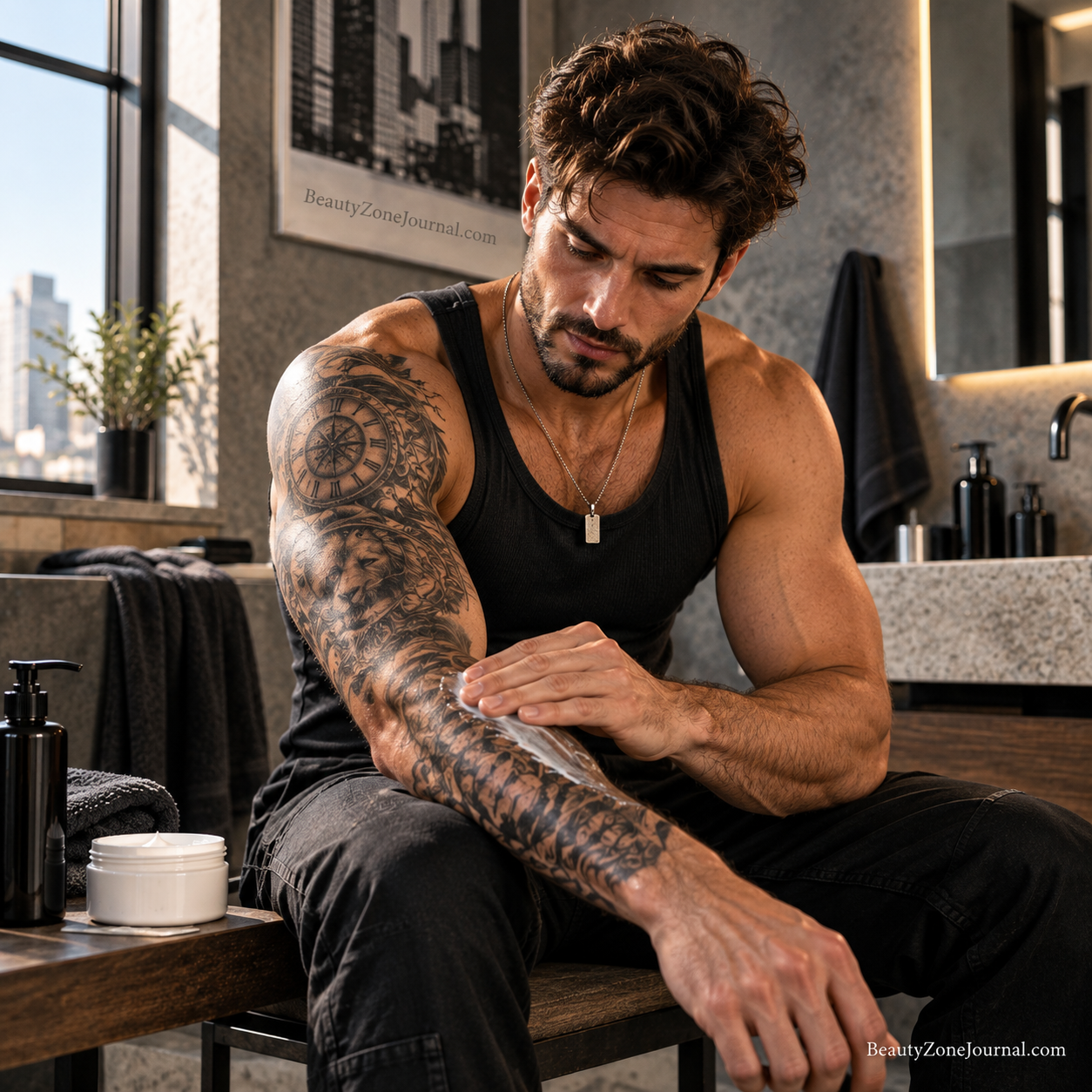
A fresh tattoo usually looks its boldest right after the session, but that appearance can change quickly.
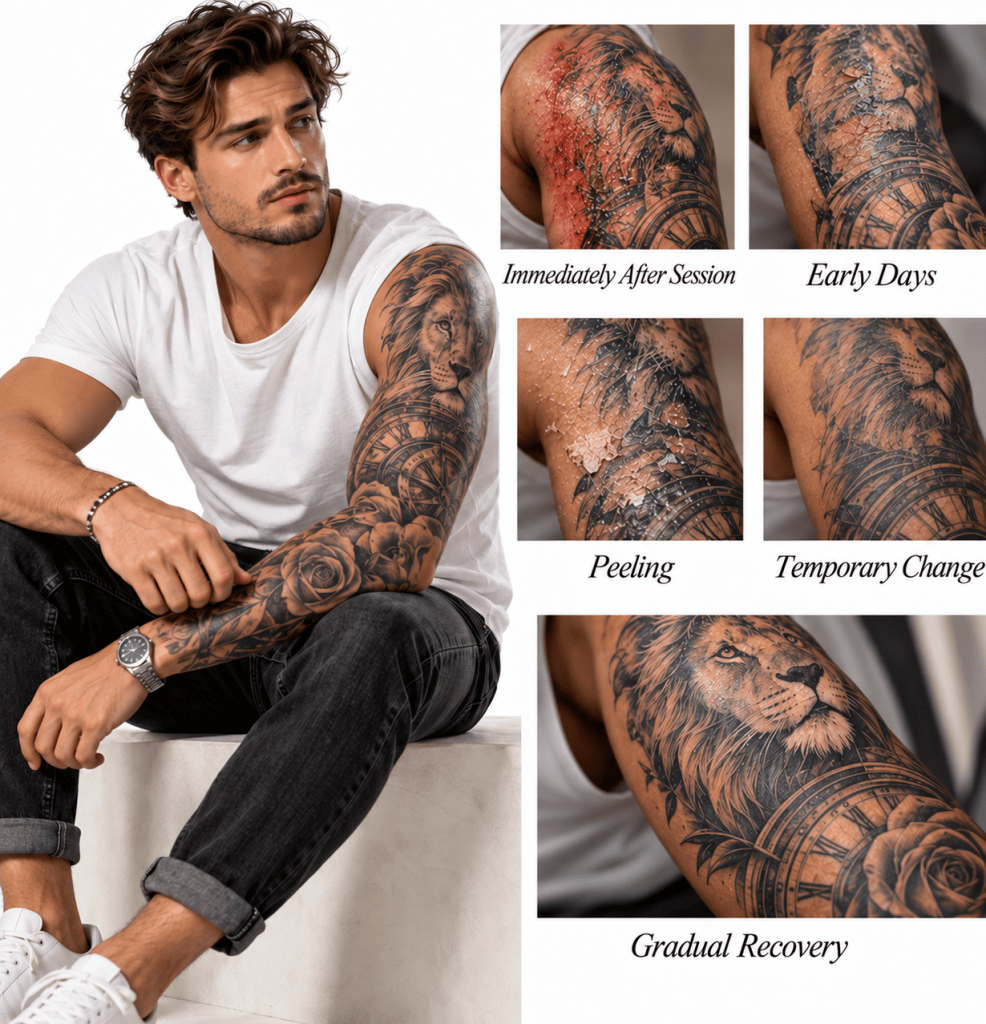
Fluid may collect under the protective film, the skin can start to feel dry or tight, and peeling may make parts of the design look temporarily duller.
That is usually when the practical questions begin: when should the film come off, how should you wash the area, can you shower normally, wear fitted clothing, go back to work, or return to the gym?
Tattoo aftercare for men does not need to be complicated. What matters most is knowing how to protect the fresh skin, reduce unnecessary friction, and recognize which changes are part of normal healing and which ones deserve more attention.
Tattoo Aftercare for Men: Protective Film or Traditional Aftercare?
Once the session is over, your artist will cover the fresh tattoo. What happens next depends on the type of protection they use.
Some tattoos are covered with a transparent adhesive healing film that stays in place for a while. Others are protected only briefly, then cared for at home with a more traditional routine.

Healing Under a Protective Film
A clear healing film helps protect a fresh tattoo from clothing, dust, and accidental contact while the skin is still sensitive.
It is normal for some fluid to collect underneath during the first hours. This is usually plasma, sometimes mixed with a small amount of pigment, so the tattoo may look blurry, shiny, or wetter than expected.
That appearance alone does not mean the ink is coming out of the skin.
How long the film should stay on depends on the product your artist used. Different films have different wear instructions, so follow the guidance for that specific covering rather than relying on a fixed number of days.
If the film lifts enough to expose part of the tattoo, water gets underneath, or the seal is no longer intact, do not try to patch it with household plastic wrap or tape. Contact your tattoo artist if you are unsure what to do next.
How to remove the film: take your time and avoid pulling it sharply away from the skin. Unless your artist or the product instructions say otherwise, remove it gradually and gently rather than peeling it straight upward.
Once the film is off, wash the tattoo carefully with clean hands.
Traditional Aftercare
With traditional aftercare, the tattoo is usually covered only for a short period after the session. Once that initial protection is removed, the rest of the care happens at home.
Wash the tattoo gently with warm, not hot, water. There is no need to scrub the area with a washcloth, brush, or anything abrasive.
After washing, avoid rubbing it dry. Pat the area gently with a clean disposable paper towel or let it air-dry.
If your artist recommended an aftercare product, apply only a thin layer. More is not better here—a heavy coating of cream will not make the skin heal faster.
| Method | What happens during the first few days | Main focus |
|---|---|---|
| Healing film | The tattoo stays covered and plasma may collect under the film | Protect the film and follow the recommended wear time |
| Traditional healing | The tattoo is left uncovered after the initial protection is removed | Gentle washing, a thin layer of product, and minimal friction |
What to Expect While a Fresh Tattoo Is Healing
A fresh tattoo will not look exactly the same from one day to the next. At first, the skin may react to the procedure itself.
Later, dryness, peeling, and temporary changes in the way the design looks can appear as the area recovers.
Right after the session, the tattooed skin may look red and feel warm, tender, or slightly tight. Mild swelling can happen too. At this stage, the best approach is usually to leave the area alone rather than checking it with your hands every few minutes.
Over the next few days, pay attention not only to the tattoo itself, but also to what keeps touching it.
A fitted T-shirt can rub against a shoulder or bicep tattoo, a sleeve may irritate the forearm, and a bag or backpack strap can sit directly over a fresh chest or back tattoo.
If the same spot keeps getting rubbed or pressed, reduce that contact where you can.
As the skin starts to dry out, peeling and itching may follow, and parts of the tattoo can look less sharp or slightly duller than they did right after the appointment. This is also when it becomes tempting to pull at loose skin.
Do not pick at scabs or peeling skin, even if they look ready to come off.
Let them separate on their own, and avoid scratching the area if it itches.
As healing progresses, the surface usually starts to look smoother and the peeling settles down. The tattoo may already look close to normal, but that does not always mean the skin has fully recovered.
Keep the routine simple: gentle cleansing, as little friction as possible, and light moisturizing if the area feels dry.
Can You Work Out After Getting a Tattoo?
There is no single rule for how long everyone should stay away from exercise after a tattoo. What matters more is the size and placement of the tattoo, how sensitive the area still feels, and what kind of workout you are planning.
A small forearm tattoo and an easy walk are one thing. A fresh shoulder tattoo before an upper-body session, or a large thigh piece before leg day, puts much more movement and friction around the tattooed area.

During a workout, a fresh tattoo can be irritated by:
- tight workout clothing;
- repeated friction;
- stretching of the skin;
- contact with benches or gym equipment;
- heavy sweating around the tattooed area.
Instead of focusing only on a fixed number of rest days, pay attention to what the workout is doing to the tattoo itself.
If a movement pulls on the skin, clothing keeps rubbing the area, or the tattoo is repeatedly pressed against equipment, it is better to modify the workout for a while.
In some cases, that may simply mean skipping a few exercises or choosing a lower-impact activity.
You do not automatically need to stop all physical activity for two weeks. But if the skin is still sensitive, irritated, or getting repeatedly rubbed during exercise, giving that area more time is usually the better choice.
Showering and Shaving After a Tattoo
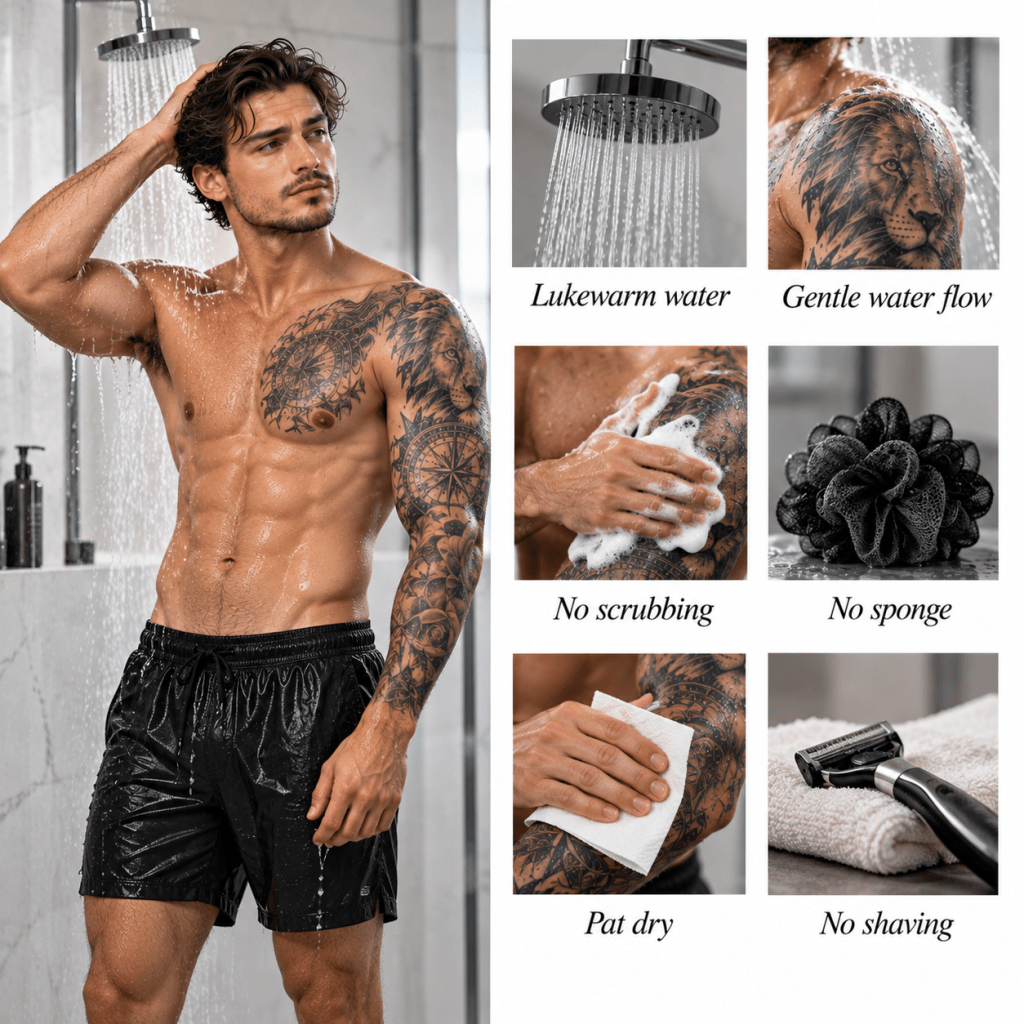
A fresh tattoo does not need to be kept completely away from water, but a quick wash and prolonged soaking are two very different things.
Once the initial covering has been removed, you can wash normally as long as you are gentle with the area. If the tattoo is still covered with a protective healing film, follow the instructions for that specific product.
Keep the water warm rather than hot. Avoid directing a strong stream straight onto the tattoo, and do not scrub the area with a washcloth, sponge, or brush.
After washing, do not rub the tattoo dry with a regular towel. If the skin is uncovered, gently pat it with a clean disposable paper towel or let it air-dry.
Baths, swimming pools, saunas, and open water are better left until the tattoo is no longer actively healing. The issue is not a brief contact with water, but prolonged soaking, heat, and extra irritation to fresh skin.
Shaving also needs a little more care while the area is healing. Do not run a razor directly over the tattoo while the skin is still tender, peeling, or forming scabs.
If you need to shave nearby, work around the tattoo rather than over it. Wait until the surface has recovered and the peeling, scabbing, and noticeable sensitivity are gone before shaving directly across the tattooed area again.
What to Wear After Getting a Tattoo
During the first few days, the main goal is to avoid constant friction over the fresh tattoo.
A very fitted T-shirt can rub against a shoulder or bicep tattoo, a tight sleeve may irritate the forearm, and a bag or backpack strap can press against a fresh tattoo on the chest or back.
The problem is not the clothing itself, but repeated contact with the same sensitive area.
This matters especially with arm tattoos, where clothing moves against the skin throughout the day.
If you are planning another piece in that area, Arm Tattoos for Men: Styles, Ideas and Placement Tips is a better place to compare different placements across the arm.
You do not need to change your entire wardrobe. For the first few days, choose clothes that do not fit tightly over the tattoo, press on it, or keep rubbing the area as you move.
What to Avoid While Your Tattoo Is Healing
A fresh tattoo usually benefits from less interference, not more.
Repeated rubbing, scratching, soaking, or harsh products can keep irritating skin that is already trying to recover.

While the tattoo is healing, try to avoid:
- scratching the area;
- picking at scabs or peeling skin;
- soaking the tattoo for long periods;
- swimming pools, saunas, and open water;
- scrubs, exfoliants, and harsh products on the tattooed area;
- clothing or gear that repeatedly rubs against the skin;
- tanning beds and prolonged exposure to strong direct sun.
Sun exposure deserves a little extra attention. Freshly tattooed skin is better kept out of strong direct sunlight while it is healing. Covering the area with light clothing is usually the simplest option when you are outdoors.
Once the tattoo has fully healed, UV protection becomes part of long-term tattoo care.
For evidence-based guidance, you can follow the American Academy of Dermatology’s recommendations for caring for tattooed skin.
There is also no need to switch creams or change your entire aftercare routine just because the tattoo looks slightly different from one day to the next.
Its appearance can change as the skin recovers. What matters more is whether the area is gradually becoming calmer or showing increasing irritation.
What Is Normal, and When Should You Get It Checked?
When a tattoo is healing, the overall direction matters more than how it looks on any single day.
If redness, tenderness, and irritation are gradually settling, that is one thing. If pain, swelling, or redness are becoming more noticeable instead of easing, it is better not to simply wait it out.
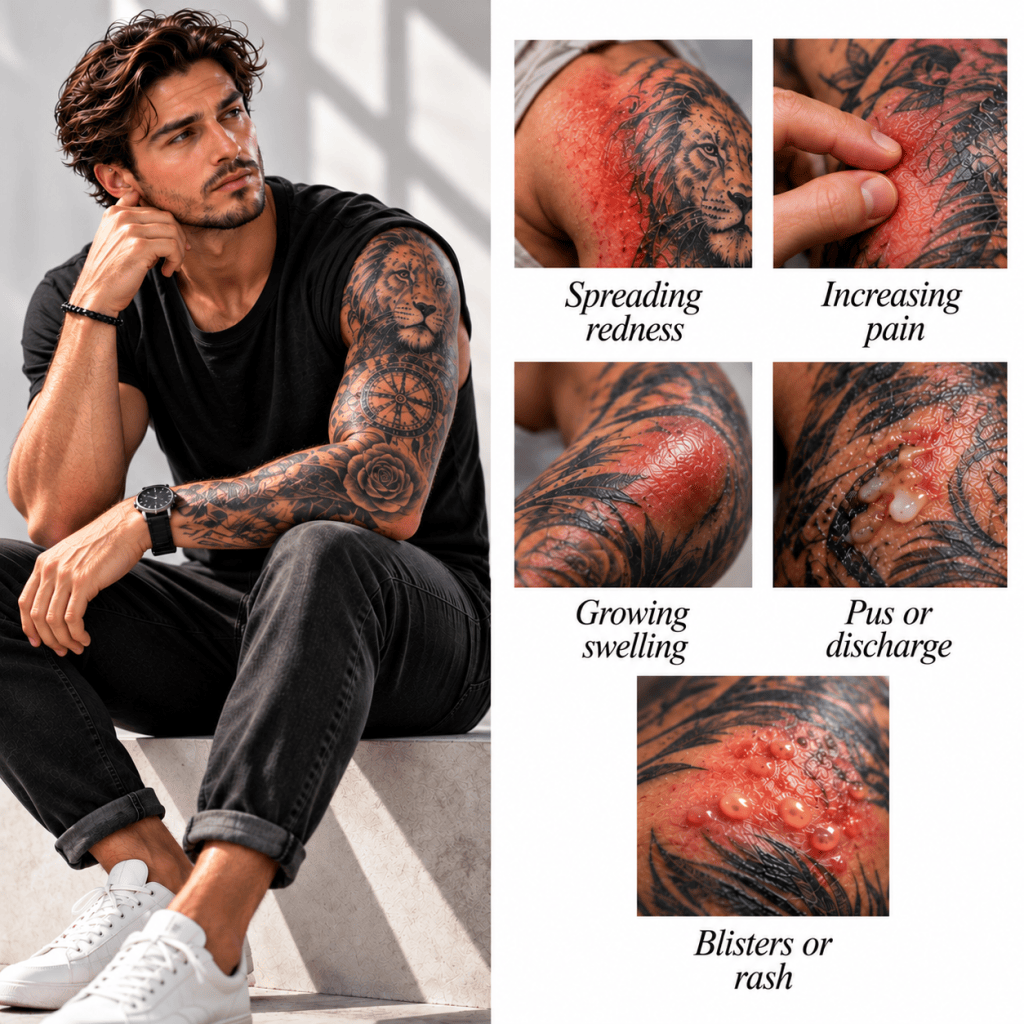
Seek medical advice if:
- redness continues to spread beyond the tattooed area;
- pain is getting worse rather than easing;
- swelling is becoming more pronounced;
- pus or other unusual discharge appears;
- open, weeping areas develop;
- you develop a fever or chills;
- blisters, a significant rash, or another unusual skin reaction appears.
In that situation, avoid trying antibacterial, steroid, or other medicated ointments on your own “just in case.” They are not a substitute for having the area properly assessed.
Common Tattoo Aftercare Mistakes Men Make
One of the most common mistakes is going straight back to your normal routine as if nothing happened.
The gym, work clothes, a backpack, a sauna, or a long hot shower may seem harmless on their own. The problem starts when the same area keeps getting rubbed, pressed, overheated, or otherwise irritated while the skin is still fresh.
The other extreme is doing too much. A new tattoo does not need constant washing, repeated checking, or a heavy layer of cream. More aftercare does not automatically mean better healing.
Another common mistake is comparing your tattoo with someone else’s healing photos. A large, heavily shaded piece on the arm, a small forearm tattoo, and a calf tattoo can all look and recover differently.
It is more useful to pay attention to your own skin: whether irritation is settling, whether anything keeps rubbing the area, and whether any of the warning signs mentioned above are starting to appear.
Common Questions
Do I need to cover the tattoo again after removing the film?
Not automatically. If your artist has not told you to reapply a specific healing film, avoid covering the tattoo with household plastic wrap, tape, or other makeshift materials.
What should I do if clothing or bedding sticks to the tattoo?
Do not pull the fabric away from the skin. Gently wet the area with warm water and let the material loosen on its own rather than peeling it off.
Can I sleep on the side where I got the tattoo?
If that position puts steady pressure on the fresh area or causes repeated rubbing against the bedding, choose another position for the first few days if possible.
Should I apply aftercare cream every time I wash the tattoo?
Follow the routine your artist recommended and the instructions for the product you are using. If moisturizer is part of your aftercare, use a light layer rather than covering the skin with a thick coating.
What should I do if the healing film starts lifting at one edge?
Do not patch it with tape or another random adhesive. If the film has lifted enough to expose the tattoo or let water underneath, check with your tattoo artist about what to do next.