

Blonde hair shades can look soft and natural, bright and icy, or rich and dimensional. From warm honey and caramel to cool platinum and pearl, there is no single version of blonde.
Choosing the right tone involves more than saving a beautiful reference photo. Your natural hair color, skin undertone, hair condition, preferred level of contrast, and willingness to maintain the color can all affect the final result.
Going blonde may also require significant lightening, especially when starting with dark hair. Depending on the amount of lift required, the process can leave the strands more porous and prone to dryness or breakage.
In this guide, we will compare warm, cool, neutral, and dimensional blonde tones, explain what to consider before choosing one, and share practical ways to keep blonde hair looking glossy and well cared for.
Table of Contents
A Brief History of Blonde Hair
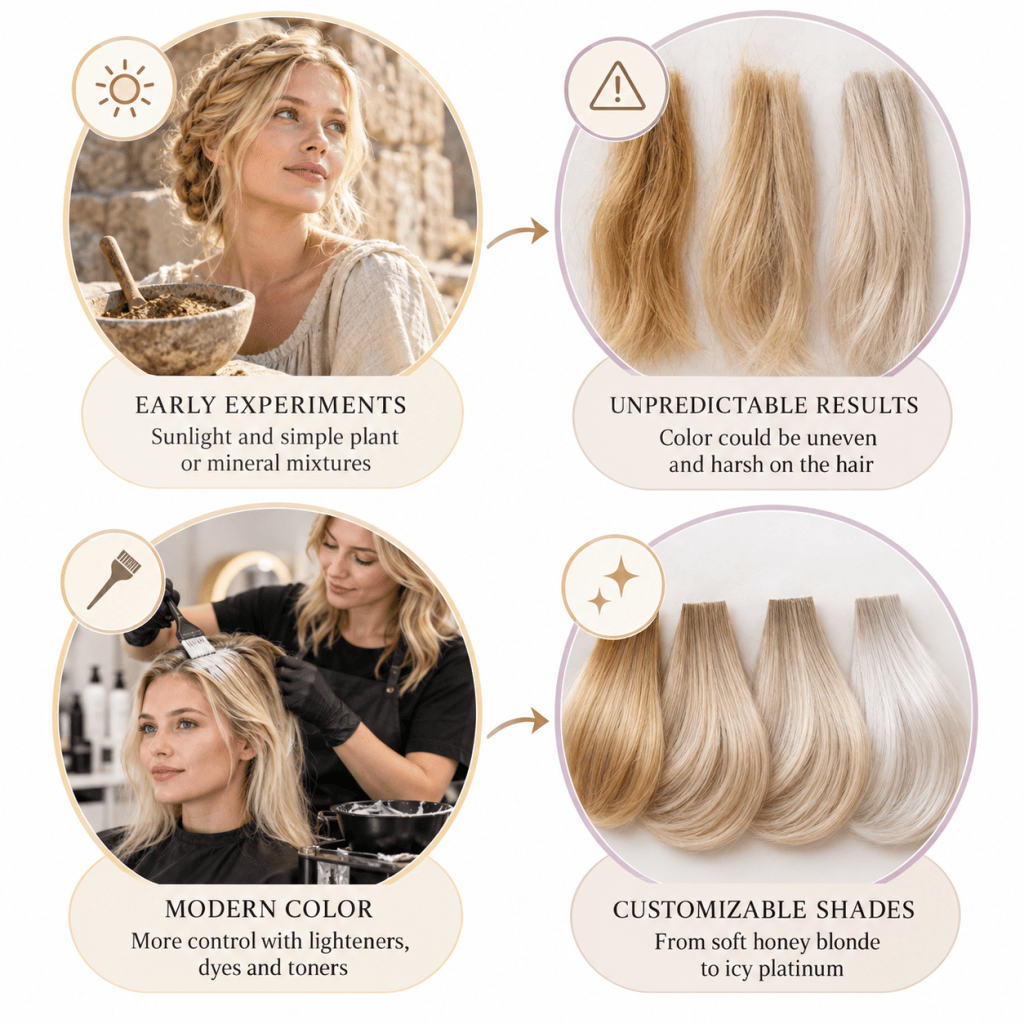
The desire for lighter hair is not a modern trend. Long before today’s salon color and toning formulas, people experimented with sunlight and different plant or mineral mixtures to alter their natural hair color.
These early methods produced unpredictable results and could be harsh on the hair. Modern lighteners, developers, dyes, and toners offer far more control, allowing colorists to create everything from soft honey blonde to icy platinum.
The techniques have changed, but the appeal of blonde hair has remained. What was once a rare and difficult color to achieve has become an entire spectrum of customizable shades.
Popular Blonde Hair Shades
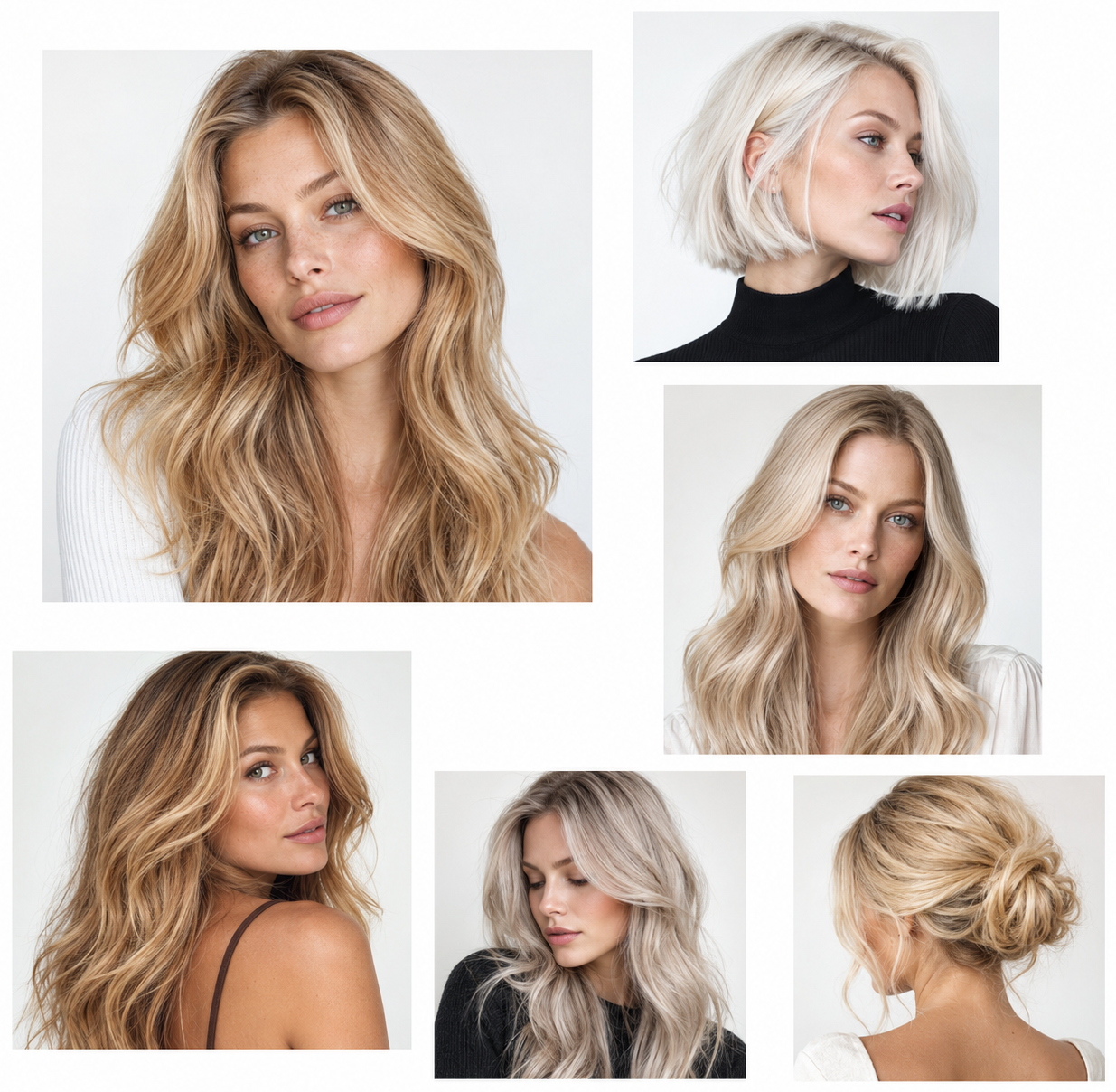
Blonde hair is not one single color. It can range from deep caramel and warm honey to soft beige, silver, or icy platinum.
The undertone changes how light, bright, warm, or muted the final shade appears. Your natural base color, skin undertone, desired contrast, and maintenance routine can all influence which option feels most flattering and realistic.
Shade names are not completely standardized between salons and color brands. Always bring reference photos and discuss the result with your colorist instead of relying on a name alone.
Warm Blonde Shades
Warm blonde shades contain golden, yellow, peach, or caramel undertones. They usually create a soft, luminous result and can range from light and creamy to deeper and more dimensional.
Popular warm blonde shades include:
- Honey blonde: a rich golden shade with warm depth;
- Wheat blonde: a soft blend of beige and muted gold;
- Caramel blonde: a deeper blonde with warm brown and golden tones;
- Vanilla blonde: a pale, creamy blonde with gentle warmth;
- Butter blonde: a bright, creamy shade with a noticeable golden tone;
- Golden blonde: a luminous blonde with clear gold reflects.
Warm blonde does not have to look yellow or brassy. A well-balanced formula can create warmth while keeping the color polished and intentional.


Cool Blonde Shades
Cool blonde shades contain ash, pearl, silver, or violet undertones. They can create a clean, bright, and polished result, but they often require regular toning to maintain their cooler appearance.
Popular cool blonde shades include:
- Ash blonde: a muted blonde with cool gray or smoky undertones;
- Pearl blonde: a luminous shade with soft violet and iridescent reflects;
- Platinum blonde: a very light blonde with little visible warmth;
- Icy blonde: a bright, cool-toned blonde with a crisp finish;
- Silver blonde: a cool blonde with noticeable silver or gray tones.
A cool shade does not automatically remove unwanted yellow or orange tones. The final result depends on the starting color, how evenly the hair has been lightened, and the toner used by the colorist.
Cool pigments gradually fade, so warmer undertones may become more visible between salon appointments.
A tinted hair glaze treatment may help refresh the tone and shine temporarily without replacing a full coloring service.


Neutral Blonde Shades
Neutral blonde shades balance warm and cool undertones without appearing noticeably golden, yellow, silver, or gray. They often create a soft, natural-looking result that is easier to blend with a variety of base colors.
Popular neutral blonde shades include:
- Beige blonde: a balanced blend of soft gold and cool beige tones;
- Neutral blonde: a shade with no strongly visible warm or cool undertone;
- Soft blonde: a muted, low-contrast blonde with a natural finish;
- Champagne blonde: a light beige blonde with subtle golden or pearly reflects;
- Sandy blonde: a dimensional blend of beige, muted gold, and light brown tones.
Neutral blonde can be a good option for anyone who finds very golden shades too warm and icy shades too cool. However, the formula still needs to be adjusted to your natural base, skin undertone, and preferred level of contrast.
These shades may look simple, but maintaining their balance can still require toning. As the color fades, previously lightened hair may begin to show more warmth.


Dimensional and Trending Blonde Looks
Not every popular blonde name describes a specific shade. Some refer to the way lighter and darker tones are blended, where the color begins, or how much natural depth remains at the roots.
Popular dimensional and trending blonde looks include:
- Old money blonde: a polished, multi-tonal blonde that combines soft highlights, depth, and a glossy finish;
- Bronde: a balanced blend of blonde and brunette tones;
- Root shadow blonde: blonde lengths paired with a softly blended, darker root area;
- Balayage blonde: strategically placed, hand-painted lightening that creates a gradual and dimensional result;
- Creamy blonde: a soft, warm-neutral blonde without an icy or strongly yellow finish;
- Lived-in blonde: a low-contrast look with blended roots and lighter lengths designed to grow out more softly.
These looks combine different tones and levels of lightness to create depth. Keeping some natural color at the roots can also make regrowth appear less noticeable than it would with an even, all-over blonde.


Terms such as “old money blonde” and “lived-in blonde” describe an overall aesthetic rather than one standardized salon formula. Reference photos are therefore more useful than the trend name alone.
How to Choose the Right Blonde Shade
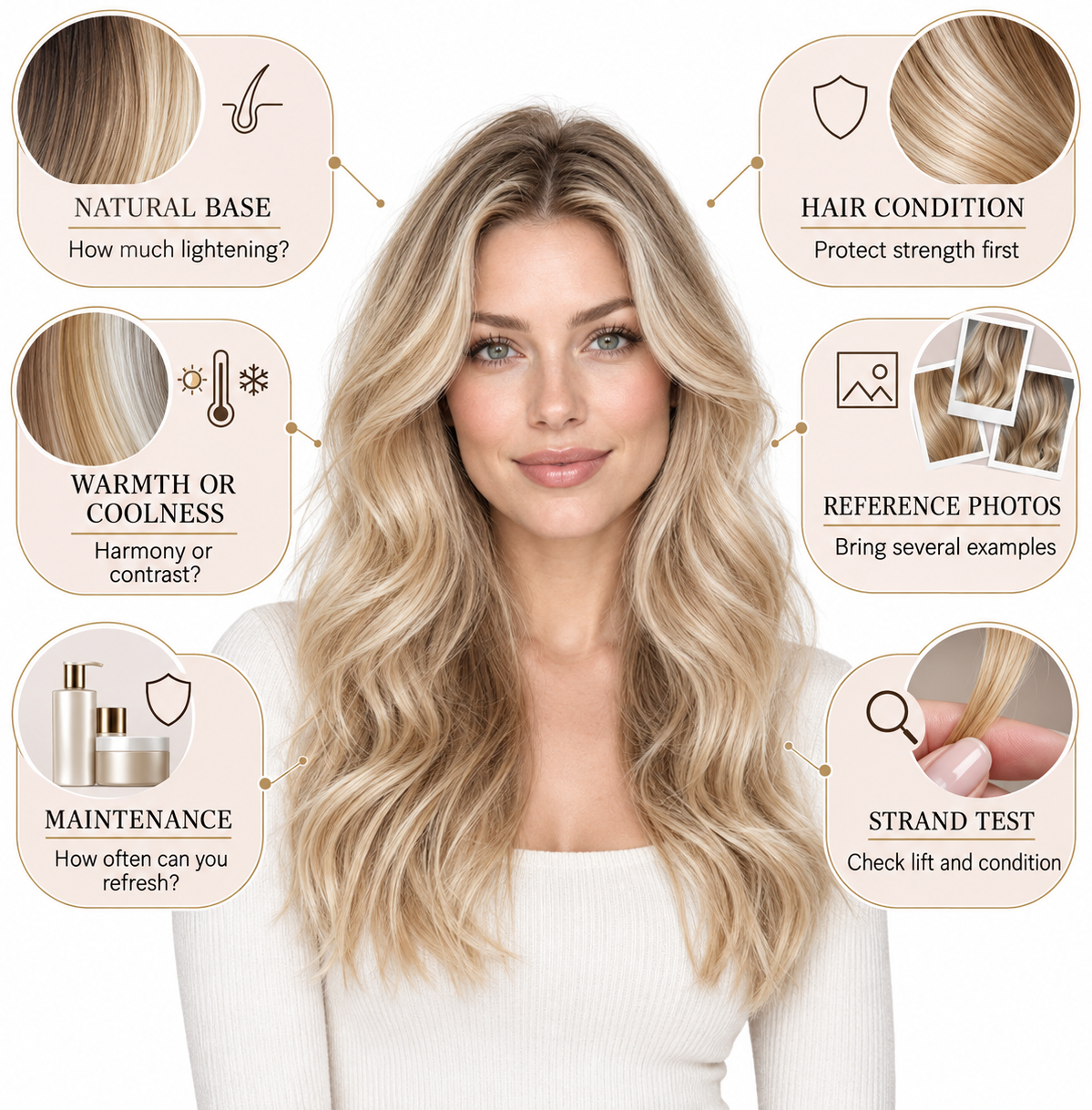
The right blonde shade is not determined by one feature alone. Your natural base, skin undertone, preferred contrast, hair condition, and willingness to maintain the color all matter.
Start with your natural hair color
The darker your starting color, the more lightening may be required to reach a very pale blonde. Honey, caramel, bronde, balayage, or a rooted blonde may be more achievable in fewer sessions than icy platinum.
Consider warmth and contrast
Warm blonde shades can create a softer, sunlit effect, while cool tones often look cleaner and more dramatic. Neutral shades sit between the two.
Skin undertone can provide a useful starting point, but it should not become a strict rule. You may prefer a harmonious shade that echoes your undertone or a contrasting color that creates a bolder look.
Be realistic about maintenance
Platinum, icy, and silver blonde usually require regular toning and more noticeable root maintenance. Bronde, balayage, root shadow, and lived-in blonde often grow out more softly.
Put hair condition before the target color
Reaching the lightest possible blonde is not always the best goal. If your hair is already dry, fragile, repeatedly colored, or prone to breakage, your colorist may recommend a darker blonde, multiple sessions, or a more dimensional technique.
Bring several reference photos
Choose images with different lighting and angles. One photograph may not show the true tone, depth, or root color accurately.
A professional consultation and strand test can help your colorist assess how your hair lifts and whether the desired result is realistic without pushing the hair too far.
How to Care for Bleached Blonde Hair
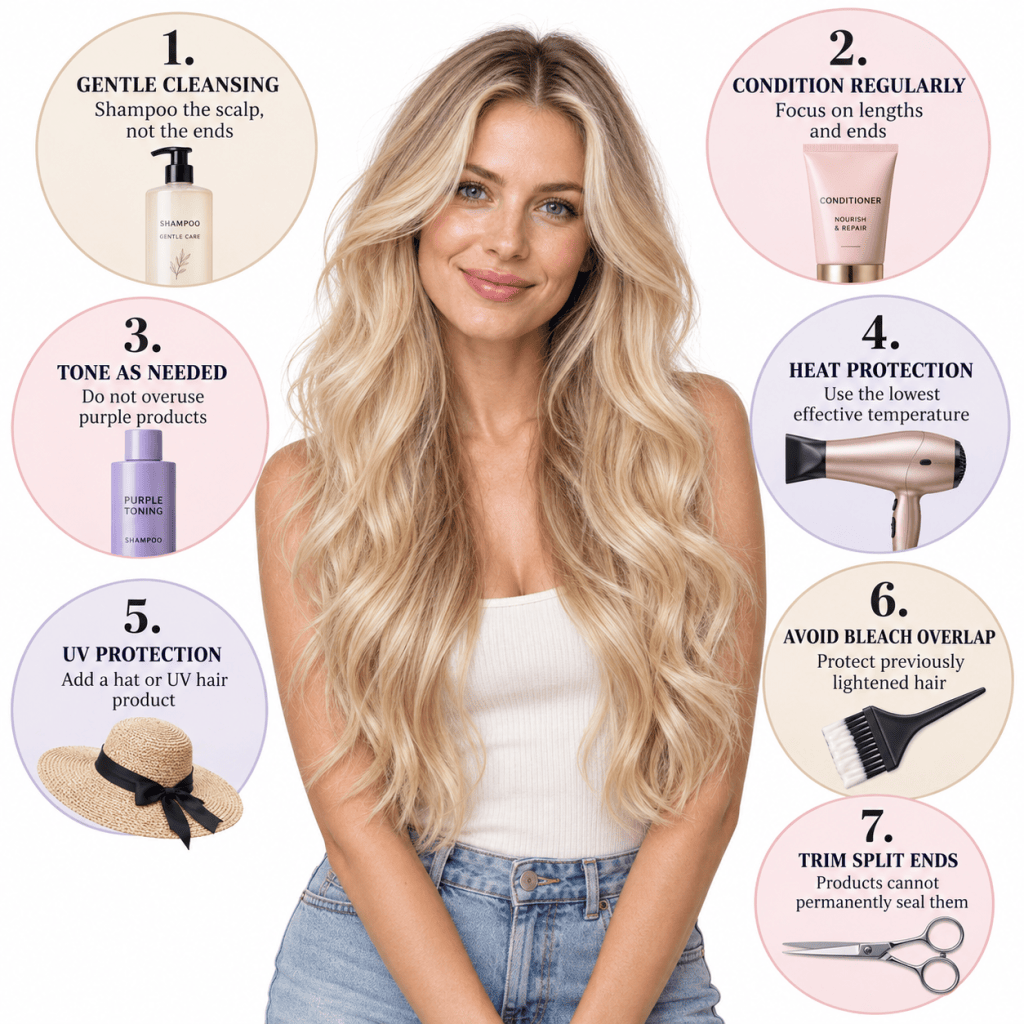
Bleached blonde hair usually needs more deliberate care than untreated hair. Lightening removes natural pigment through oxidation and can also affect the structure and surface of the hair fiber.
A full scientific review on hair cosmetics explains that bleached hair is more porous than untreated hair. Chemical damage can also weaken the hair and increase friction, tangling, split ends, and breakage.
Cleanse gently
Choose a shampoo that cleans the scalp without leaving the lengths feeling rough or stripped. Focus shampoo on the scalp and allow the foam to rinse through the ends instead of scrubbing them aggressively.
Use conditioner regularly
Apply conditioner after shampooing, concentrating on the mid-lengths and ends. Add a mask when your usual conditioner no longer provides enough softness or manageability.
Our guide to hair mask vs. conditioner explains how these products differ and whether you need to use both.
Tone only when needed
Purple or violet products can temporarily reduce the appearance of yellow tones, but they are not required at every wash. Overusing highly pigmented formulas may leave very porous hair looking dull, uneven, or violet.
Follow the product instructions and adjust the frequency according to how your color responds.
Protect your hair from heat
Bleached hair may be more vulnerable to additional damage from straighteners, curling irons, and high dryer temperatures. Apply a heat protectant for hair before styling and use the lowest effective temperature.
Protect the color from sunlight
UV exposure can contribute to dryness, fading, and changes in tone. A hat and a product labeled SPF for hair or UV protection can be useful when you spend a long time outside.
Avoid overlapping bleach
During root touch-ups, lightener should not be repeatedly applied over already lightened lengths unless a professional determines that it is necessary. Overlapping can increase dryness and breakage.
Trim damaged ends when needed
Masks, oils, and leave-in products can temporarily improve the appearance of split ends, but they cannot permanently seal them. Trimming remains the only way to remove a split section completely.
The goal is not to make bleached hair behave exactly like untreated hair. It is to maintain softness, reduce unnecessary damage, and keep the color looking polished between appointments.
Questions and Answers About Blonde Hair
Can dark hair become blonde in one appointment?
Sometimes, but not always safely. The result depends on the starting color, previous dye, hair condition, and desired shade. Reaching a very light blonde may require several appointments.
Does every blonde shade require bleach?
No. Naturally light, untreated hair may sometimes be lifted with permanent color. Darker or previously colored hair usually requires a lightener to reach a noticeably lighter result.
Why does blonde hair turn yellow or orange?
Lightening reveals the hair’s underlying warm pigments. Yellow or orange tones may become more noticeable as toner fades or when the hair has not been lifted evenly.
Can purple shampoo lighten blonde hair?
No. Purple shampoo does not remove natural pigment or make hair lighter. It deposits violet pigment that can temporarily reduce the appearance of yellow tones.
How often should blonde hair be toned?
There is no universal schedule. It depends on the formula, shade, washing frequency, water quality, heat styling, and sun exposure. Tone the hair when the color begins to lose its desired balance, following professional or product instructions.
Can severely damaged hair be safely lightened?
Further lightening may increase breakage. A colorist should assess the hair and perform a strand test before deciding whether to proceed, use a gentler plan, or postpone the service.
The Bottom Line

Blonde hair offers far more possibilities than one classic light shade. Warm honey, cool platinum, neutral beige, bronde, balayage, and rooted blonde can all create very different results.
The best option is not simply the shade that looks most attractive in a photograph. It should also suit your natural base, preferred level of contrast, hair condition, and the amount of maintenance you are comfortable with.
Very light blonde may require several appointments and regular toning, while dimensional or rooted shades can offer a softer grow-out. Whatever color you choose, gentle cleansing, conditioning, heat protection, and UV protection can help preserve its appearance.
A beautiful blonde result begins with realistic expectations, careful lightening, and a shade that feels right for you.
Read Also