
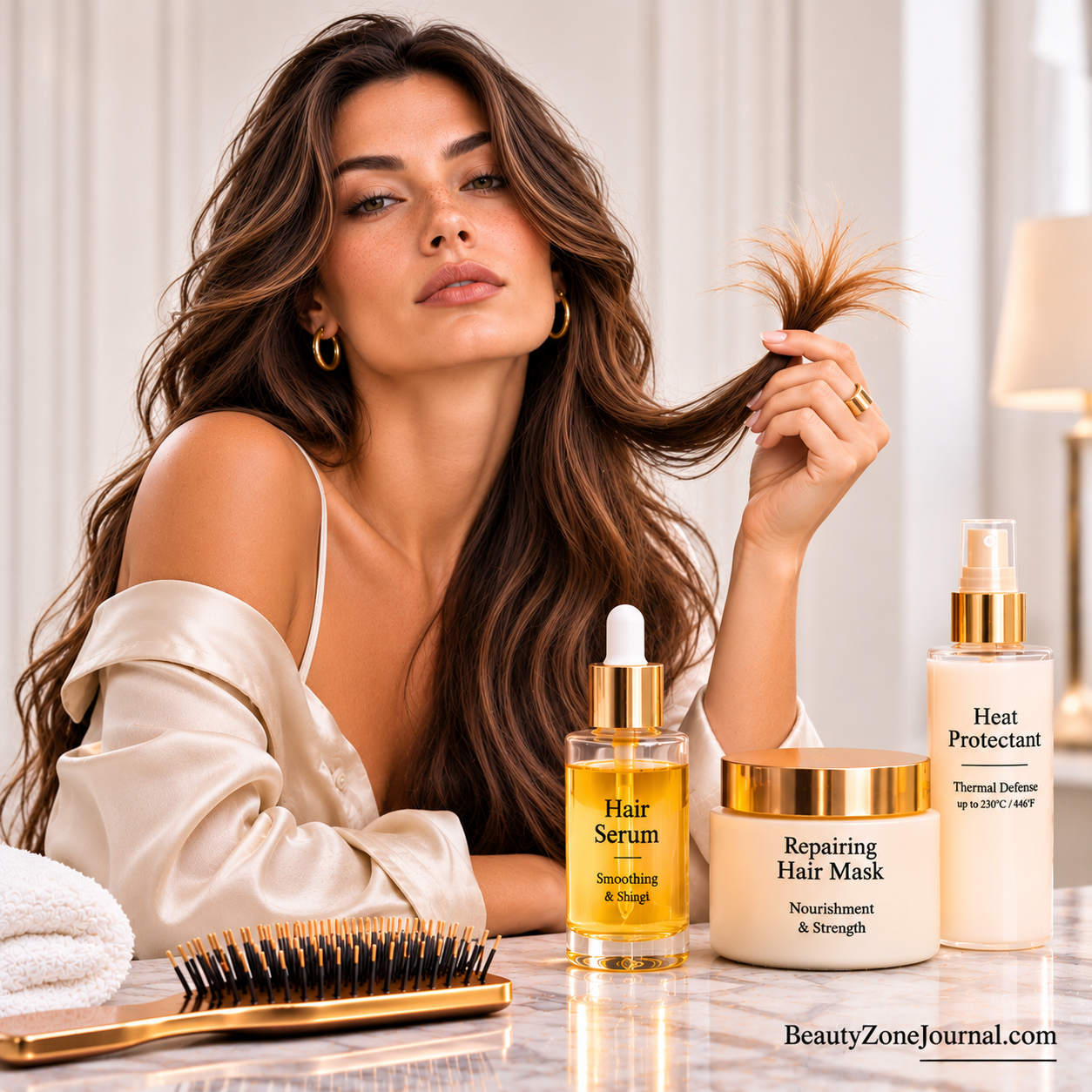
Your ends look silky after a few drops of serum. Then you wash your hair, and those tiny splits are back. Not exactly the miracle the bottle promised.
Here’s the truth about split ends: serums can smooth damaged hair, reduce friction, and make your ends look healthier. But once a strand has physically split, no cosmetic formula can permanently put it back together.
The useful question isn’t whether your serum works. It’s whether you’re asking it to fix the right problem.
Split Ends or Hair Breakage? How to Tell the Difference
Before buying another treatment, take a closer look at your ends in natural daylight.

Dry, rough ends
The hair feels coarse, catches when you run your fingers through it, or looks fluffy at the bottom. But you can’t see individual strands splitting.
What helps: Conditioner, a suitable leave-in product, and less friction may improve softness and manageability. Dryness alone doesn’t automatically mean you need a haircut.
Y-shaped split ends
An individual strand separates into two or more tiny branches. The damage has affected the hair fiber itself, not just its surface.
What helps: A serum can temporarily disguise the split, but trimming is the reliable way to remove it.
White dots or snapped strands
Small pale spots and short, broken pieces may indicate weak points along the hair shaft. They aren’t automatically proof of a particular hair disorder, but repeated breakage deserves attention.
What helps: Reduce damaging styling practices and consider a professional assessment if breakage is widespread or unexplained.
One important distinction: split ends and hair breakage aren’t interchangeable. A split travels along an individual fiber, while breakage means part of the strand has snapped off.
What Hair Serums Can Actually Repair
Most serums don’t repair split ends in the permanent sense. They improve how damaged hair looks, feels, and behaves.
Silicones such as dimethicone and conditioning polymers can create a smooth coating that reduces friction between strands. Some formulas temporarily hold frayed fibers closer together.
Think of it as smoothing down a frayed ribbon. It looks neater, but the underlying fibers haven’t magically become new.
Here’s what to look for:
| Ingredient | Best for |
|---|---|
| Silicones and conditioning polymers | Slip, shine, less tangling |
| Lightweight oils and emollients | Softening dry-feeling ends |
| Leave-in conditioners | Easier detangling and daily care |
For fine hair, start with a lightweight formula. For thick or coarse hair, a richer cream-serum may provide better control.
And don’t confuse a finishing serum with your regular conditioner. Our Hair Mask vs. Conditioner guide explains why both products have different jobs.
The same limits apply to many salon treatments. If you’re considering professional repair, read Hair Reconstruction Treatment: Can It Really Repair Damaged Hair? before expecting a permanent fix.
How to Apply Serum Without Wasting Product
If you’re squeezing half the bottle onto your ends, more product probably isn’t the answer.
Try this simple routine:
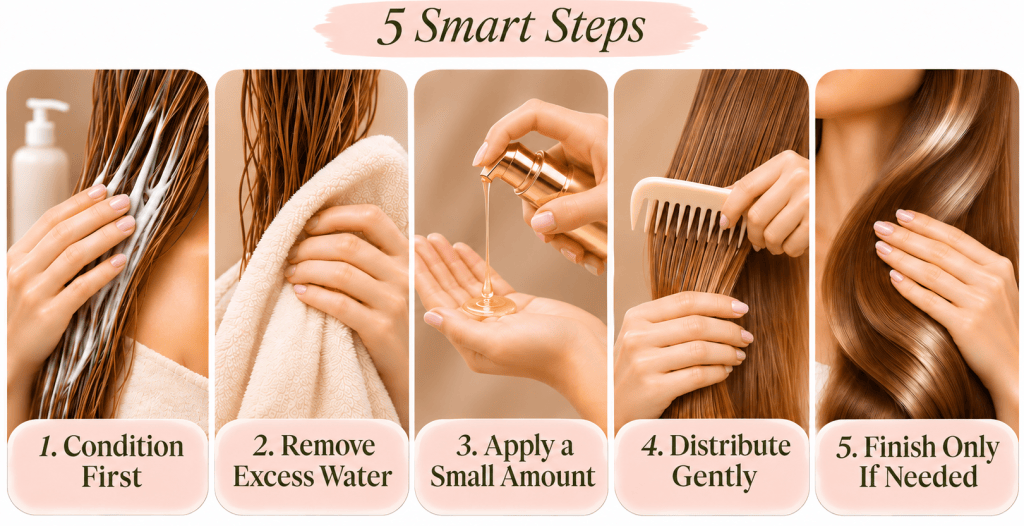
- Condition first. After shampooing, use a rinse-out conditioner suited to your hair.
- Remove excess water gently. Squeeze with a soft towel rather than rubbing the lengths.
- Apply a small amount of serum. If the formula is designed for damp hair, warm a little between your palms and smooth it over the ends.
- Distribute without pulling. Use your fingers or a suitable wide-tooth comb to work through tangles gently.
- Finish only if needed. If the instructions allow use on dry hair, add a tiny amount after styling to smooth flyaways.
Some serums are intended for dry hair only, so always check the label rather than automatically applying them to damp strands.
A useful test: If your ends look greasy, clump together, or feel sticky, reduce the amount. A good finish should make hair easier to manage, not leave it feeling coated.
And unless your serum specifically provides heat protection, don’t assume it can replace a dedicated protectant.
The Everyday Habits That Keep Damaging Your Ends
Sometimes your hair survives the salon appointment beautifully, only to spend the rest of the week fighting your wardrobe.
Coat collars and scarves
Long hair can rub repeatedly against textured clothing. If your ends are already fragile, try wearing your hair loosely secured above a rough collar rather than letting it constantly catch.
Shoulder bags and backpacks
Ever trapped your hair beneath a bag strap? Repeated pulling and friction can be especially unhelpful for weakened lengths.
Move your hair out of the way before lifting a heavy bag onto your shoulder.
Tight elastics
A ponytail secured tightly in the same place every day concentrates tension on those strands. Softer, fabric-covered hair ties and looser styles are gentler options.
Nighttime tangling
If you wake up with knots around your ends, try a loose braid or a smooth sleep bonnet that doesn’t pull at the roots. The goal is less tangling, not buying the most expensive silk pillowcase on the internet.
And if you regularly use a blow-dryer or straightener, the right heat protectant can help reduce additional heat damage.
Small changes won’t reverse existing splits, but they can help you protect the length you still have.
When to Treat Your Ends and When to Trim
Here’s the decision that matters most.
If your ends feel rough but remain intact: Start with conditioning care, a small amount of serum, and gentler handling.
If you can see Y-shaped splits: Book a trim. Cosmetic products may improve their appearance temporarily, but they won’t remove the damaged section.
If your ends keep snapping or breakage extends up the lengths: Stop aggressive styling and chemical treatments while you work out what’s causing the damage. Seek professional advice if it persists.
You don’t need a dramatic chop just because you spotted a few split strands.
At your next appointment, try saying:
“I’d like to keep as much length as possible. Can you show me where the visible splitting starts and how much needs to be trimmed?”
Don’t choose a treatment based on an invented 2 mm or 5 mm damage rule. The amount to remove depends on the condition and distribution of the damaged hair.
Frequently Asked Questions
Can split ends travel farther up the hair?
Yes. A split can extend along the same strand, especially with continued friction and handling. It doesn’t automatically travel to the root, but leaving damaged ends untreated may make the hair increasingly fragile.
Can I trim individual split ends at home?
You can remove an occasional visible split with sharp scissors intended for cutting hair, but working through your entire head strand by strand is difficult. Avoid dull household scissors, and see a stylist if the damage is widespread.
Why do my ends keep splitting even after a haircut?
The newly cut ends may still be exposed to the same sources of damage, including repeated bleaching, friction, or aggressive styling. If splitting returns quickly, review your routine rather than simply booking another trim.