
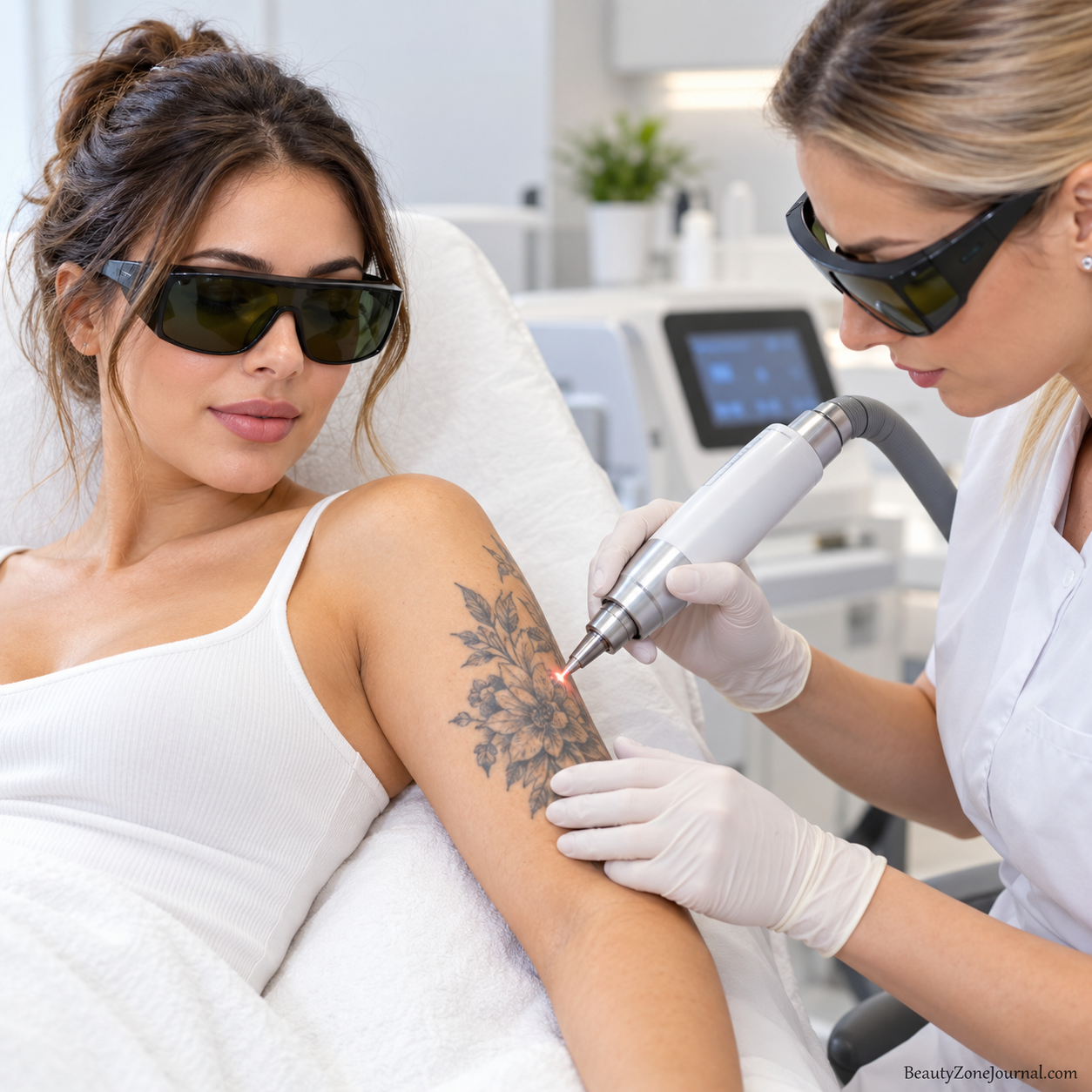
Maybe you loved your tattoo when you first got it, or maybe it simply no longer feels like you. Either way, deciding to remove one usually comes with a lot of questions.
Tattoo removal for women is rarely a one-session process. Even a small, older tattoo may need several treatments, and complete removal is not always possible.
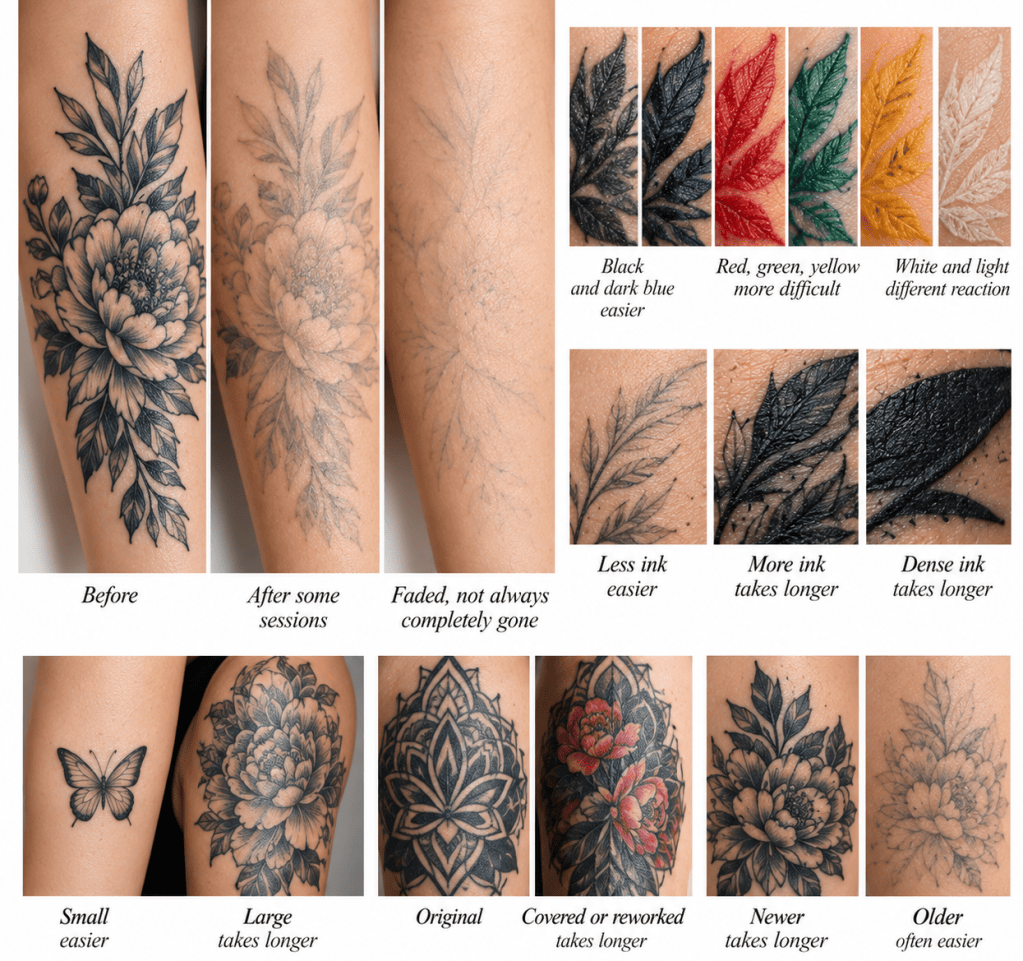
How much the tattoo fades depends on the ink color, how densely and deeply it was placed, the size of the design, your skin tone, and how your body responds.
Laser removal is the most common approach.
The laser targets the ink and breaks it into smaller particles. Your body then gradually clears those particles over time.
That is why a tattoo does not disappear immediately after a session. It usually becomes lighter little by little over the following weeks.
Can a tattoo be removed completely?
Not every tattoo can be erased completely.
Even after a full course of treatments, a faint shadow, small areas of color, or slight changes in skin tone may remain.
Black and dark blue inks often respond better to laser treatment.
Green, yellow, red, and some lighter shades can be more difficult to remove.
Colorful tattoos may also require different laser wavelengths because each shade can respond differently.
White, flesh-toned, and very light pigments need extra care. This is especially true with white tattoos, which can sometimes change shade or temporarily darken after laser exposure.

That is why the colors in the tattoo matter just as much as its size when planning removal.
How many sessions will you need?
There is no reliable way to tell exactly how many sessions you will need from a photo alone.
Several things can affect the length of the process:
- the size and colors of the tattoo;
- the amount and density of ink;
- how deeply the ink was placed;
- how old the tattoo is;
- whether it has been covered or reworked before;
- how your skin responds and recovers.
One session is usually not enough.
After each appointment, your body needs time to clear some of the fragmented ink, while the treated area needs time to recover.
This is why the gap between sessions is measured in weeks rather than days. The exact timing depends on the area being treated and how your skin responds.
Scheduling treatments too close together will not necessarily make the tattoo disappear faster. It may simply increase the chance of irritation or skin damage.
Laser tattoo removal is a gradual process, and in some cases it can take quite a long time.
What happens during laser tattoo removal?
Before treatment, the specialist will examine the tattoo, look at its size, colors, and ink density, and check the condition of the skin.
They will also ask about anything that could be a reason to postpone the session.
Laser settings are chosen for the individual tattoo. What works well for one person may not be suitable for another.
During the session, the laser treats the area with short pulses. You may feel tingling, heat, or a brief stinging sensation.
Right afterward, the skin may temporarily look white, red, or slightly swollen.
Small blisters or crusting can sometimes appear as well. These should not be popped, scratched, or picked.
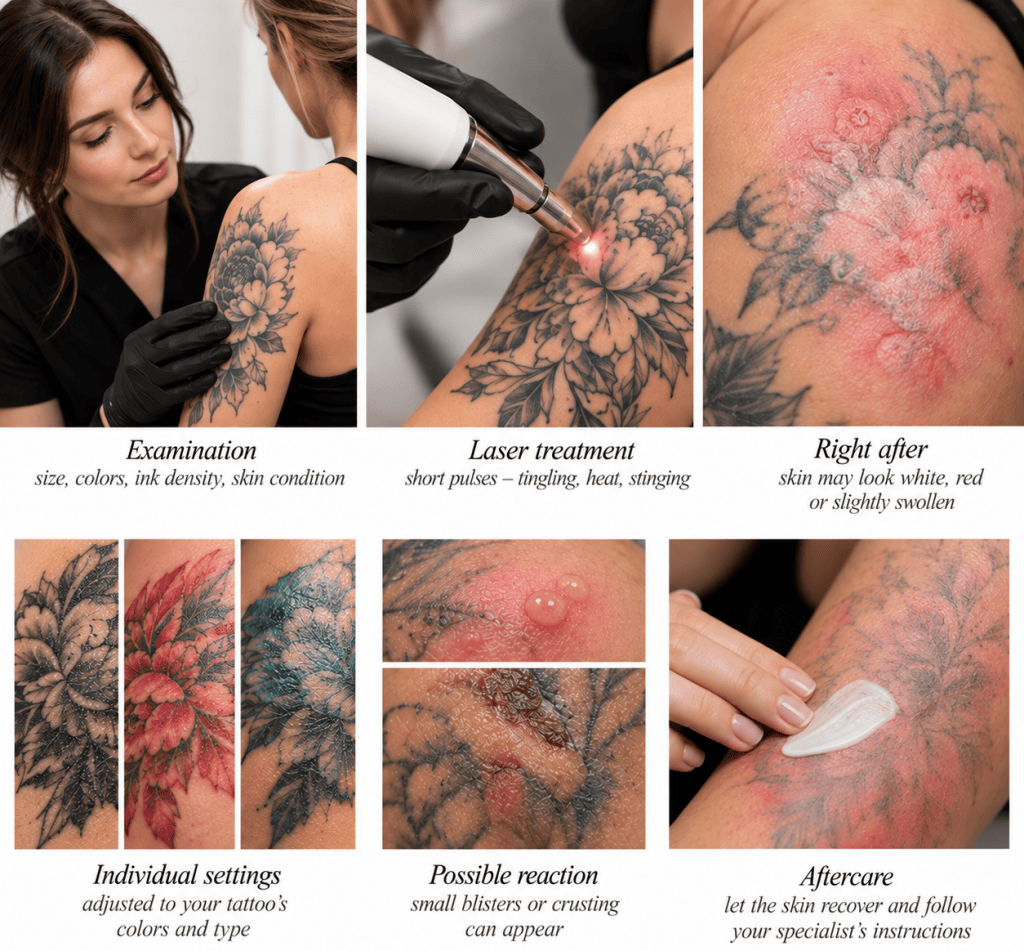
Once the session is over, the area needs time to recover and should be cared for according to your specialist’s instructions.
Does tattoo removal hurt?
Everyone experiences laser tattoo removal differently.
Many people describe the sensation as a series of quick, sharp stings or as if a thin rubber band were snapping against the skin.
How uncomfortable it feels depends on the location and size of the tattoo, the area being treated, and your own sensitivity.
Places where the skin is thinner or where bone sits close to the surface can feel more sensitive.
A small tattoo usually does not take long to treat, so even if the sensation is uncomfortable, it may only last for a short time.
Cooling or a topical numbing product may be used when needed.

Avoid applying large amounts of strong numbing cream on your own before the appointment. These products can cause unwanted reactions if they are used incorrectly.
How can the skin react afterward?
Skin does not always react the same way after laser removal. Some changes are temporary and settle as the area heals.
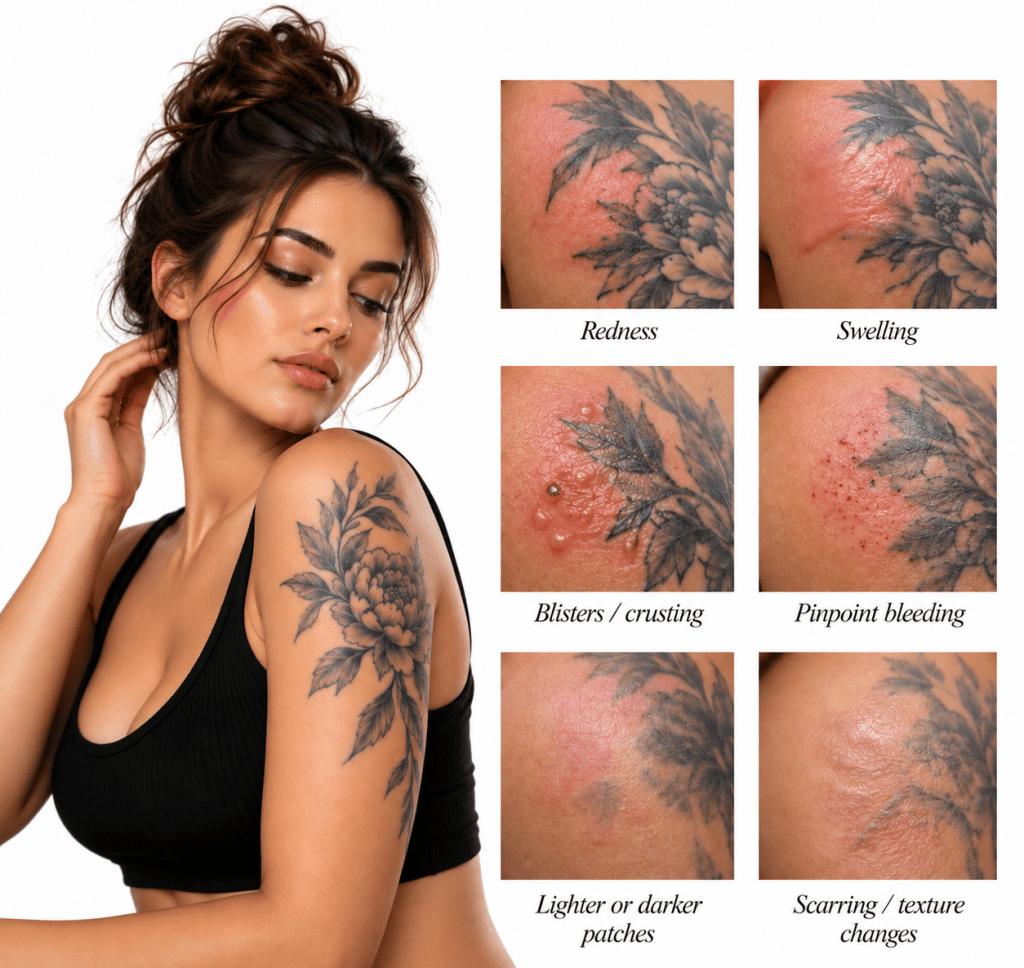
Redness, mild swelling, and tenderness can be normal shortly after a session.
You may also notice small blisters, crusting, pinpoint bleeding, or temporary changes in skin tone.
Some reactions, however, need more attention.
Possible complications can include:
- burns;
- infection;
- lighter or darker patches;
- scarring;
- longer-lasting changes in skin texture;
- incomplete ink removal.
Changes in skin tone may last for several months, and in some cases they can remain longer.
If the treated area already has scar tissue, it may also be helpful to understand how tattoos over scars can behave differently and why the condition of the skin matters.
The risk of complications may be higher if the wrong laser is used, the settings are too aggressive, or the treatment is carried out by someone without enough experience.
If pain is getting worse instead of better, or you notice increasing redness, discharge, or another unusual change, contact the specialist rather than waiting for it to settle on its own.
When should you speak to a doctor first?
Laser removal is not suitable for every person at every moment.
Sometimes it is better to delay treatment. In other situations, it makes sense to speak to a doctor first.
Tell the specialist about any chronic health conditions, medications you take, allergies, previous reactions to laser treatments, or a tendency to develop keloid scars.
Laser should not be used on skin that is inflamed, infected, injured, sunburned, or heavily irritated.
Treatment is also usually postponed during pregnancy and breastfeeding.
If there is a mole, unusual spot, lump, or changing area of skin within the tattoo, have it checked by a dermatologist before starting removal.
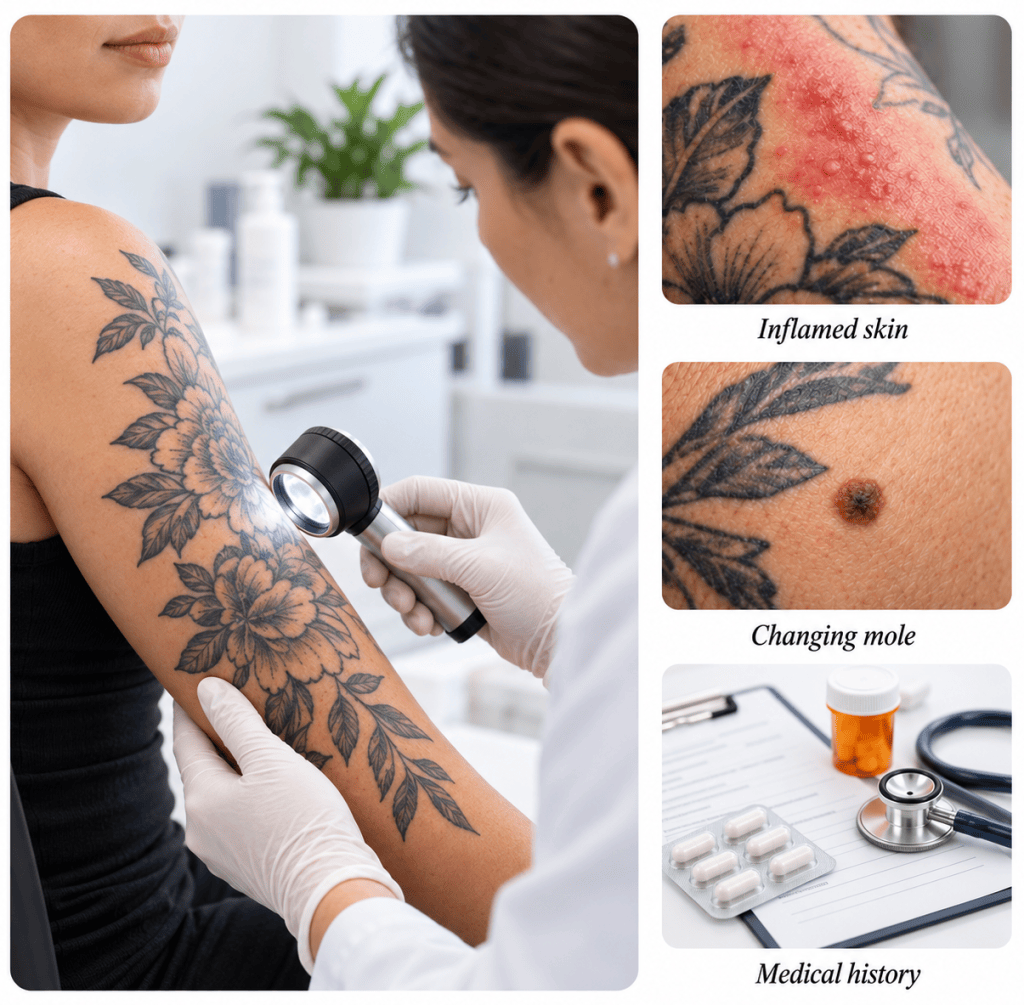
Tattoo ink can make changes in the skin harder to notice, so these areas should not be ignored.
How to care for your skin after laser removal
After laser tattoo removal, the treated area needs gentle care, protection, and time.
Keep it clean and avoid rubbing, steaming, or touching it more than necessary.
Use a mild cleanser. If your specialist recommends a recovery cream, apply only a thin layer.
Until the area has healed, it is best to avoid swimming pools, saunas, and hot baths.
You may also want to take a break from intense workouts if they cause heavy sweating or constant rubbing from clothing.
Do not pick crusts or pop blisters. Let them heal on their own.
Sun protection matters too.
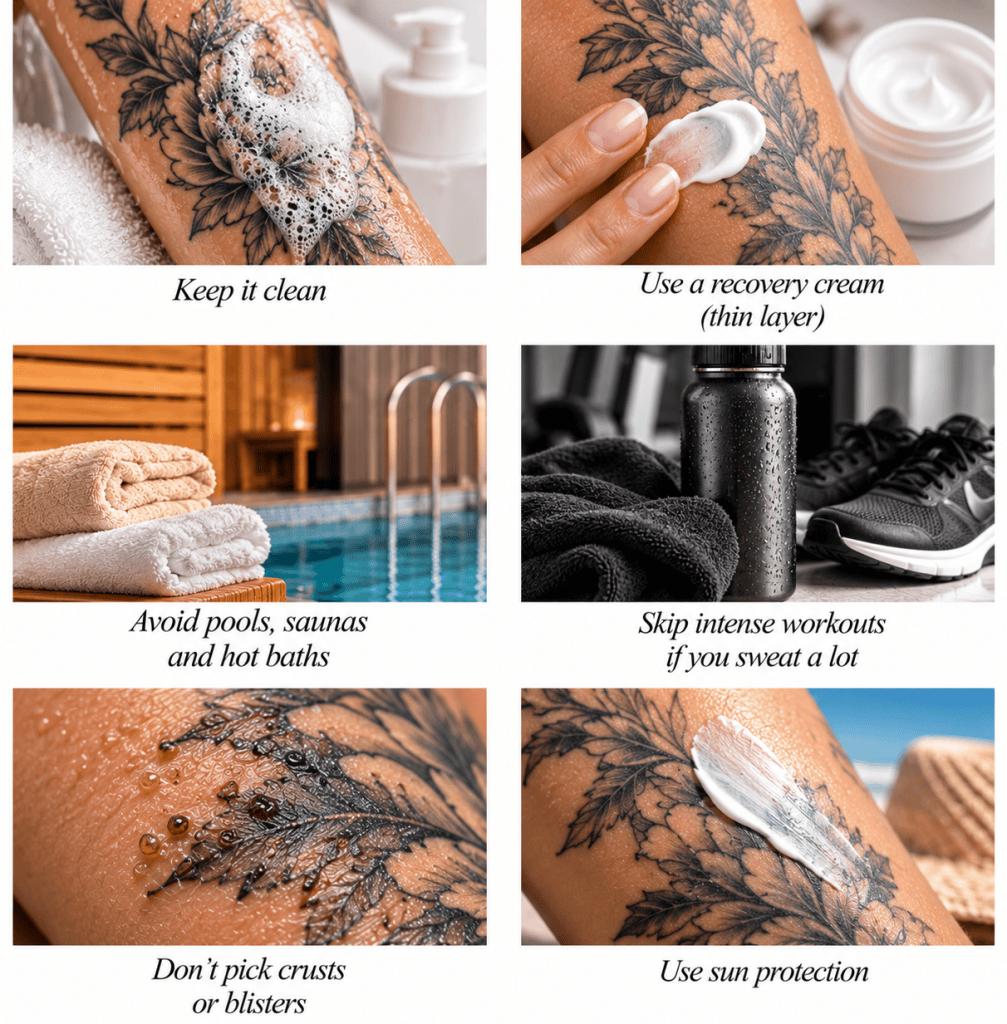
Laser treatment should not be performed on tanned or sunburned skin because this may increase the risk of burns and changes in pigmentation.
Once the area has healed, protect exposed skin from UV light and use sunscreen as recommended by your specialist.
Removal or lightening before a cover-up?
You do not always need to remove an old tattoo completely before covering it with a new one.
Sometimes lightening the darkest outlines or densest areas is enough to give the tattoo artist more freedom with the new design.
After a few laser sessions, there may be more options for a cover-up.
If you are considering black and gray tattoos, lightening the old design first can make it easier to work with softer shading and more detailed elements.
The new tattoo may be lighter, include more delicate details, and does not necessarily have to be much larger or darker than the original.
If you are planning a cover-up, it is a good idea to discuss it with both the laser specialist and the tattoo artist.

That way, you can work out how much the old tattoo actually needs to fade before the new design is started.
What not to try at home
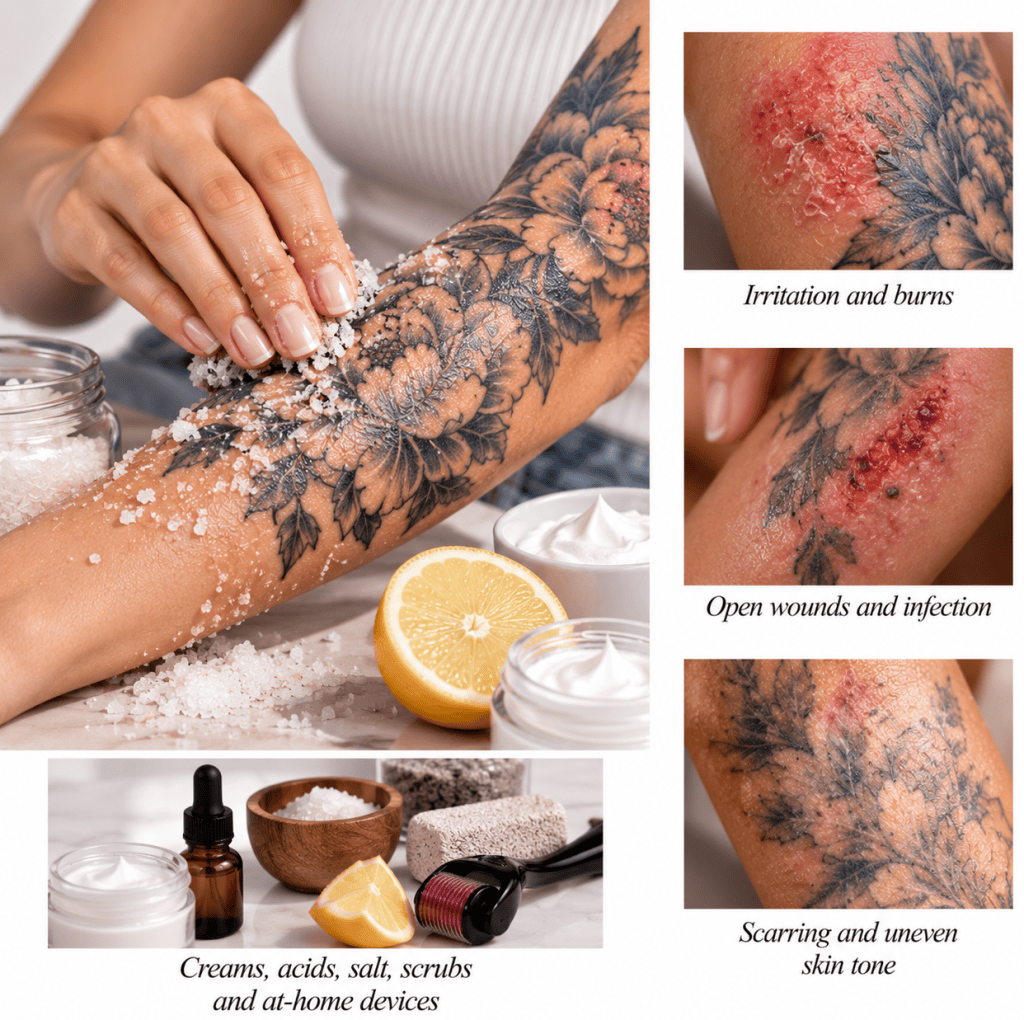
There is no safe DIY method for removing a tattoo at home.
Creams, acids, salt, scrubs, and mechanical abrasion mainly affect the surface of the skin, while tattoo ink sits deeper.
Trying to remove it this way can lead to irritation, burns, open wounds, infection, scarring, or uneven changes in skin tone.
Repeatedly damaging the area will not make the tattoo fade in a controlled way. It may leave the skin in worse condition and make professional removal more difficult later.
Avoid homemade mixtures and at-home laser devices marketed for tattoo removal.
It is also risky to have the procedure done by someone without proper training or experience.
The laser and its settings need to be chosen for the individual tattoo and the condition of the skin. A mistake can leave damage that is much harder to correct than the tattoo itself.
How to choose the right specialist
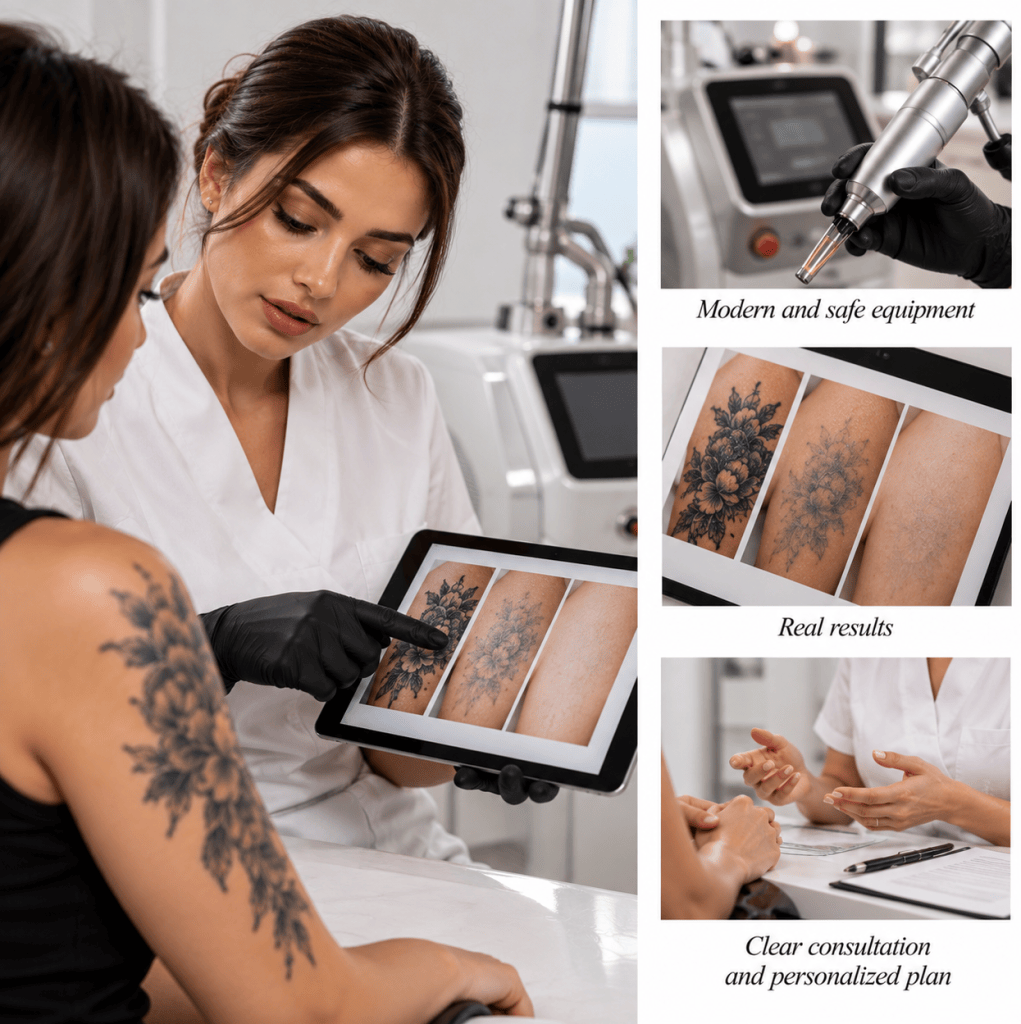
For laser tattoo removal, look for a dermatologist or a qualified professional who has experience treating tattoos with different colors and ink types.
Do not be afraid to ask questions during the consultation.
Useful things to ask include:
- what type of equipment they use;
- who will perform the treatment;
- what kind of outcome is realistic for your tattoo;
- what reactions or complications are possible;
- how to care for the area afterward;
- what to do if your skin reacts more strongly than expected.
A good specialist will not promise complete removal in one session or give you an exact number of appointments without examining the tattoo first.
According to the American Academy of Dermatology’s guidance on laser tattoo removal, a consultation helps the specialist assess factors such as the tattoo’s colors, depth, location, and your skin before discussing what results may be realistic.
Tattoo removal for women is not a quick fix. It is a gradual process.
Many tattoos can be faded significantly, but no one can promise in advance that every trace of ink will disappear.
There is no benefit in rushing it. Giving your skin enough time between appointments, following aftercare advice, and choosing an experienced professional matter much more than trying to remove the tattoo as quickly as possible.
Common questions about tattoo removal for women
How many sessions does tattoo removal take?
There is no single number that works for everyone. It depends on the size, colors, density and depth of the ink, the age of the tattoo, and how your body responds.
Which tattoo colors are easiest to remove?
Black and dark blue inks often respond well to laser treatment. Green, yellow, red, white, and flesh-toned shades can be more difficult and may need a different approach.
Why doesn’t the tattoo disappear right after laser treatment?
The laser breaks the ink into smaller particles rather than erasing it instantly. Your body gradually clears those particles, so the tattoo fades over the following weeks.
How long should you wait between sessions?
The gap is usually several weeks. The skin needs time to recover, and the body needs time to clear fragmented ink. Your specialist will decide the right interval for you.
Can laser tattoo removal leave a scar?
Scarring is possible, but the risk depends on the equipment, laser settings, the experience of the person performing the treatment, your skin’s response, and how the area is cared for afterward.
Can a tattoo be removed in one session?
Usually not. Most tattoos need a series of sessions with enough time between appointments for the skin to recover.
Can you have tattoo removal in summer?
Yes, as long as the area can be properly protected from the sun. Laser should not be used on tanned or sunburned skin.
When can you get a new tattoo after laser removal?
Only after the skin has fully healed and recovered. The exact timing should be discussed with the specialist performing the removal.
Read also: