
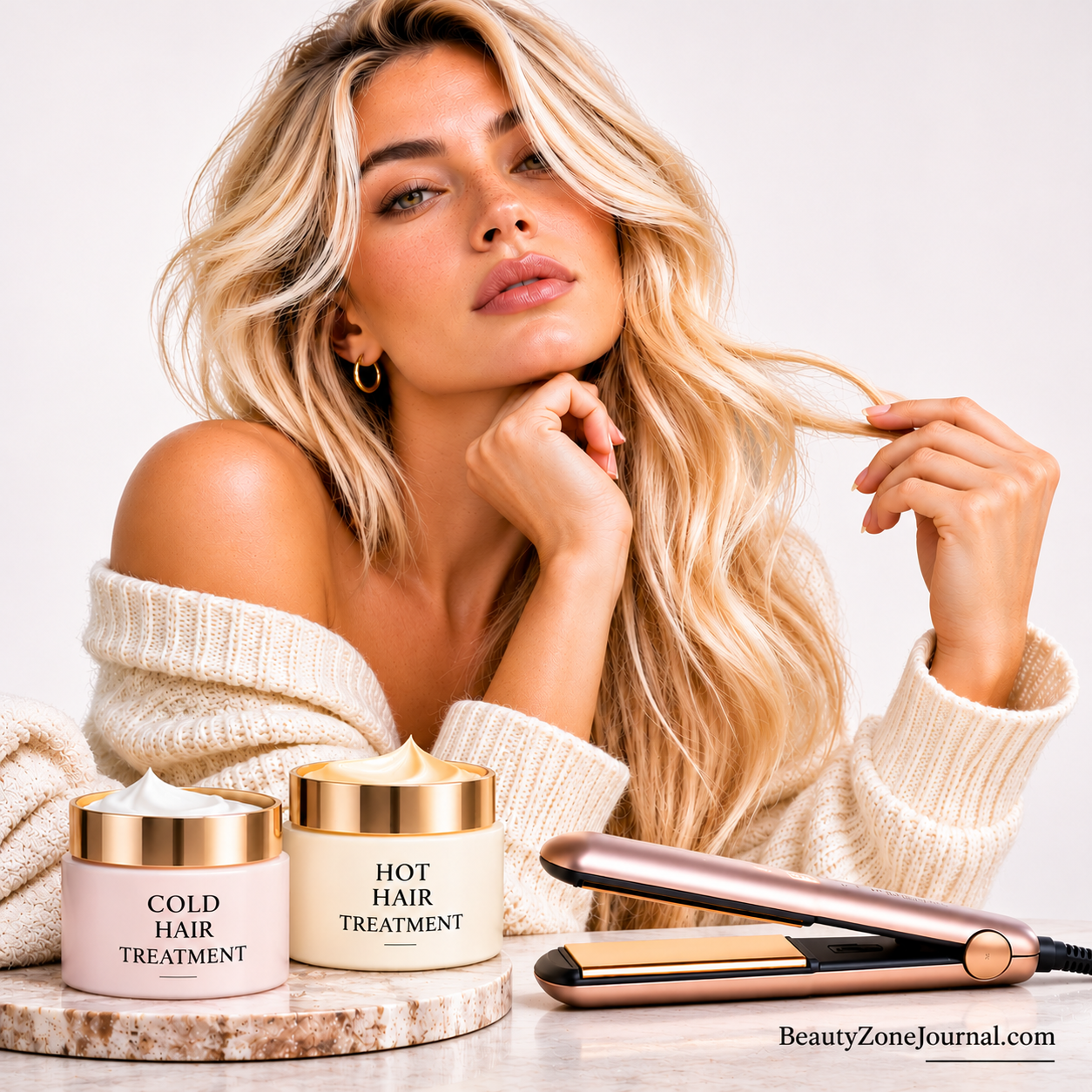
You finally have that gorgeous, expensive-looking blonde. The color is perfect, the toner is just right, and then comes the first wash at home. Suddenly, your ends feel like straw, your hair tangles around the brush, and that silky salon finish seems like a distant memory.
Naturally, you want to fix it. But when one stylist recommends cold reconstruction and another promises mirror-like shine with a hot treatment, which one is actually better for your hair?
The Cold vs. Hot Hair Treatment question matters when your blonde is already fragile. Both options can improve how hair looks and feels, but the techniques – and the risks – aren’t necessarily the same.
And when your ends are barely holding together, the last thing you need is another expensive mistake.
What Is a Cold Hair Treatment and How Does It Work?
A cold hair treatment usually refers to a salon conditioning or reconstruction service that doesn’t require a high-temperature flat iron.
Depending on the formula, your stylist may use amino acids, hydrolyzed proteins, ceramides, lipids, and conditioning ingredients to improve the feel of dry, porous hair.
The process typically involves gentle cleansing, applying the treatment in sections, allowing it to process, and finishing with products that smooth the cuticle.

What can you expect afterward?
- Softer, smoother-feeling hair.
- Less tangling during brushing.
- Better manageability without permanent straightening.
- A temporary improvement in the appearance of dry, porous ends.
There’s a catch, though. Cold reconstruction isn’t a standardized salon procedure. Two salons might use the same name for completely different formulas.
And while a well-chosen treatment may help reduce friction and everyday breakage, it won’t permanently repair split ends or restore severely damaged hair to its original condition.
If you’re wondering what professional rebuilding treatments can realistically achieve, our guide to Hair Reconstruction Treatment explains the benefits and limitations without the salon sales pitch.
What Is a Hot Hair Treatment and Why Can It Be Risky?
Hot hair treatments use heat during processing or finishing, but that doesn’t always mean the same thing.
Some conditioning services involve gentle warmth. Others, including certain keratin smoothing treatments, use a flat iron to create a sleek, polished finish.
And yes, freshly smoothed hair can look absolutely beautiful.
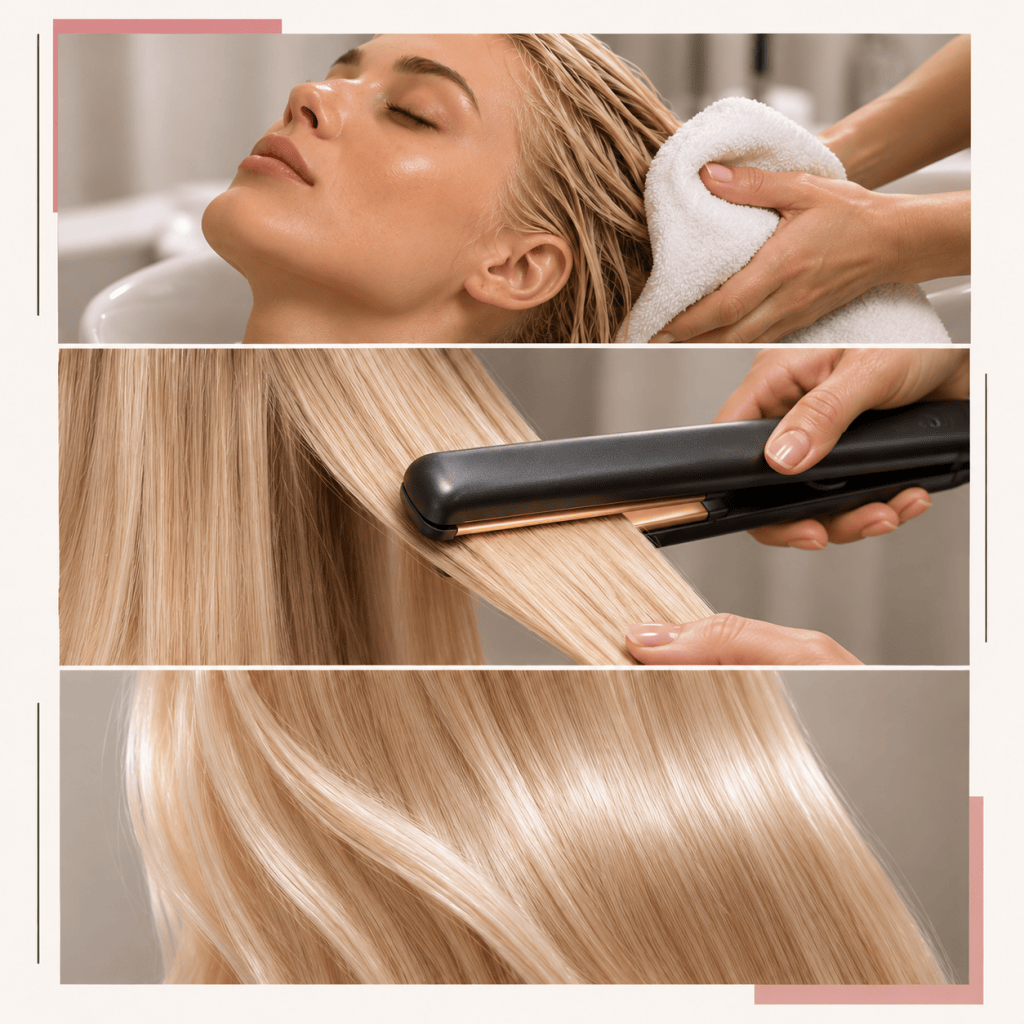
But glossy hair isn’t necessarily healthier hair.
Bleaching weakens the protective cuticle and can damage the proteins inside the hair fiber. If your strands are already fragile, repeated passes with a hot iron may increase breakage instead of improving their condition.
I’d be cautious about a heat-based treatment if:
- Your ends snap with very little tension.
- Your hair feels unusually weak after repeated bleaching.
- The stylist recommends high temperatures without examining your lengths.
- You’re promised permanent repair of chemical damage.
The temperature matters, but so do the formula, processing time, number of passes, and condition of your hair.
There’s another detail worth checking. Certain chemical smoothing products can release formaldehyde when heated, according to the U.S. Food and Drug Administration.
Before booking, ask exactly which product will be used and whether the procedure involves formaldehyde-releasing ingredients.
That glossy finish is tempting. But it shouldn’t come at the expense of an already fragile blonde.
Cold vs. Hot Hair Treatment: What’s the Difference?
The biggest difference isn’t how shiny your hair looks when you leave the salon. It’s what happens to your strands during the treatment.
| What matters | Cold treatment | Hot treatment |
|---|---|---|
| Heat exposure | No high-temperature ironing | May involve heated tools |
| Main purpose | Conditioning and softness | Smoothing or conditioning |
| Fragile blonde hair | Generally gentler | Requires more caution |
| Expected finish | Softer, manageable hair | Often a sleeker finish |
| Main limitation | Cannot reverse severe damage | Heat may increase breakage |
A cold treatment isn’t automatically better simply because it avoids intense heat. The ingredients still need to suit your hair.
Likewise, a service involving gentle warmth isn’t necessarily comparable to one requiring repeated passes with a very hot flat iron.
For severely bleached hair, the safer choice is usually the treatment that delivers adequate conditioning with the least unnecessary heat and mechanical stress.
Which Treatment Is Better for Severely Bleached Hair?
If your blonde has been lightened several times and the ends are starting to break, I’d lean toward a gentle conditioning treatment rather than high-heat smoothing.
Not because cold treatments work miracles. Your hair simply doesn’t need another round of unnecessary stress.
But before choosing anything, look at how your strands actually behave.
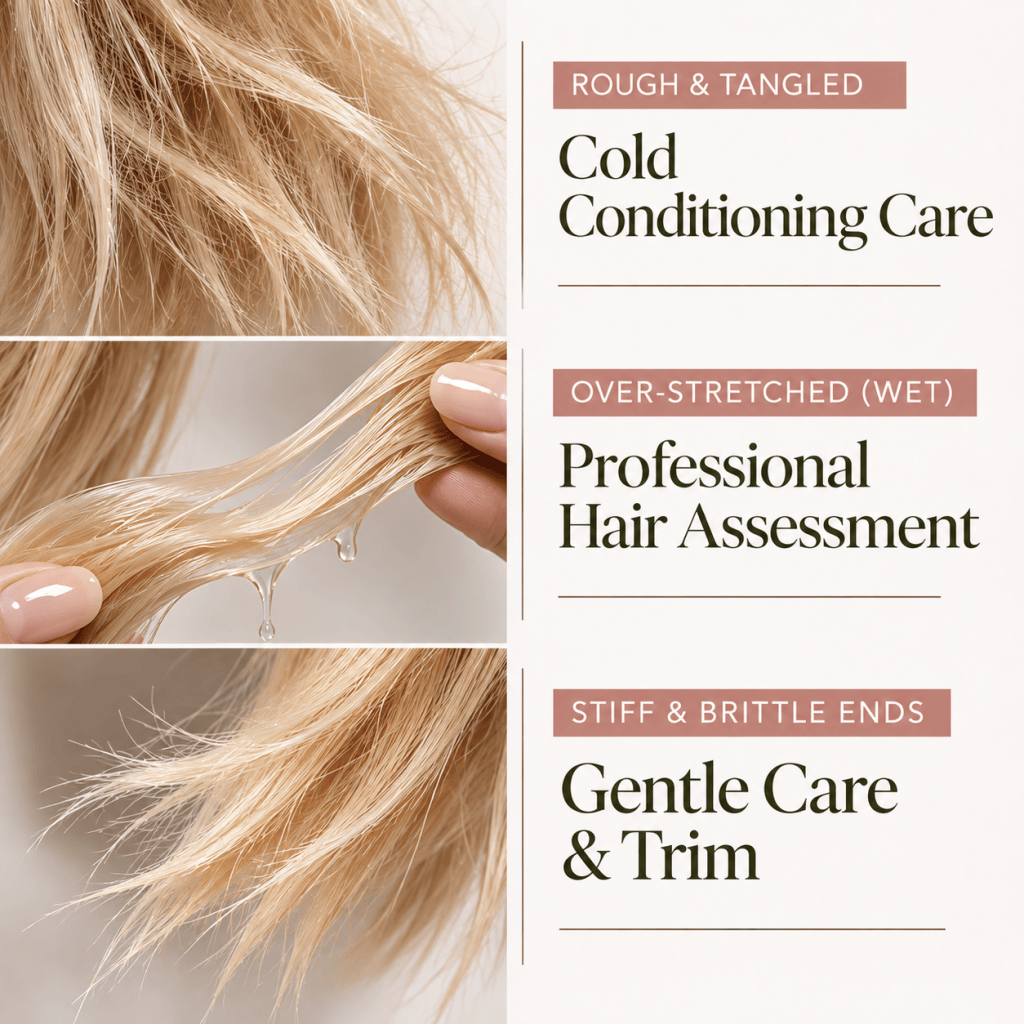
If your hair feels rough and tangles easily
A conditioning-focused treatment with ceramides, lipids, and suitable emollients may improve softness and reduce friction during detangling.
You don’t necessarily need the strongest protein formula on the salon menu.
If your hair stretches excessively when wet
This may indicate significant structural damage. Ask your stylist to assess the hair before applying intensive products or heat.
A strand that behaves like overstretched chewing gum needs careful handling, not a promise of instant perfection.
If your ends are stiff and snap easily
Don’t assume the solution is another strengthening treatment.
Repeated use of protein-rich products can sometimes leave hair feeling rigid or coated. Our guide to Protein Overload in Hair explains why brittle texture doesn’t always mean your hair needs more protein.
If your blonde is freshly bleached
The timing and compatibility of your next salon service matter, especially if your hair has recently been toned.
There’s no universal waiting period that suits every formula or every head of hair. Our Post-Bleach Hair Care guide explores how to plan professional treatments after lightening.
And if your ends are visibly splitting, a small trim may do more for their appearance than another round of reconstruction.
Not the most glamorous answer, I know. But sometimes the scissors deserve more credit than the expensive treatment bottle.
What to Ask Your Stylist Before Booking
Before agreeing to a cold or hot treatment, make sure your stylist understands what your hair has already been through.
Bleaching history, previous smoothing treatments, current breakage, and the condition of your ends should all influence the recommendation.
Save these five questions for your next salon visit:
- “Is this a conditioning treatment or a chemical smoothing service?” The name alone doesn’t tell you what the procedure actually does.
- “Will you use a flat iron, and at what temperature?” Ask whether high heat is essential and how many passes will be made.
- “Which ingredients are in the formula?” Your stylist should explain why the product suits your hair’s current condition.
- “Can we test a small section first?” This is particularly sensible for repeatedly bleached or extremely fragile strands.
- “What will my hair feel like after several washes?” A glossy salon finish is lovely, but you want results that still make sense once you’ve washed and styled your hair at home.
A good stylist should be comfortable answering every one of these questions.
If you’re promised that one treatment will permanently reverse years of bleaching damage, I’d think twice before handing over my hair.
Frequently Asked Questions
Can a cold hair treatment permanently straighten wavy hair?
A conditioning-only treatment may temporarily reduce frizz or make waves appear softer, especially if the formula is rich. It shouldn’t permanently change your natural curl pattern. If lasting straightening is promised, ask whether chemical processing is involved.
Can a hot treatment make bleached hair break off immediately?
Severely weakened strands may break during or after intensive heat styling, particularly when high temperatures are combined with repeated passes or strong mechanical tension. A strand test can help identify obvious problems before treating the entire head, although it cannot guarantee complete safety.
Can cold reconstruction affect my blonde toner?
Yes. Some cleansing or treatment formulas may affect toner or semi-permanent color, especially on porous hair. Tell your stylist when your hair was last colored and ask whether the proposed treatment is compatible with your shade.
What if my hair feels worse after a salon treatment?
Avoid additional chemical services and high-temperature styling until you’ve worked out what happened. Use gentle cleansing and conditioning, and contact your stylist to review the products and techniques used.
If you experience scalp burning, persistent irritation, or unusual shedding, seek medical advice rather than trying another intensive treatment.