

Minimalist Office Nails are proof that a manicure doesn’t need bold color or elaborate nail art to feel considered. A barely-there line, a seamless ombré, or a soft pearlescent reflection can introduce just enough detail to make an otherwise simple manicure interesting.
But subtle doesn’t mean effortless. The most successful designs rely on precise placement, controlled opacity, and finishes that catch the light without overwhelming the nails. Here’s how to choose a minimalist look that feels modern, wearable, and appropriate for your working day.
Minimalist Office Nail Designs: Clean Lines & Micro Accents
Minimalist nail art works best when every detail has a purpose. Instead of covering the nail with decoration, it uses a small amount of contrast to draw attention to its shape, negative space, or a single point of interest.

Where to Place a Minimalist Accent
Placement matters more than the number of details. A fine line positioned slightly off-center feels contemporary, while a small dot near the cuticle creates a controlled focal point without interrupting the overall design.
For a balanced result, consider three approaches:
- Single vertical line: A narrow stroke can visually elongate a short nail, particularly when it follows the center or one side of the nail plate.
- Micro dot: One small accent near the cuticle or sidewall adds interest while leaving most of the base visible.
- Asymmetric detail: A short diagonal line or restrained geometric mark on one or two nails creates variation without turning the manicure into a full nail-art set.
The base should support the artwork rather than compete with it. Sheer pink, translucent beige, neutral ivory, and softly tinted clear bases provide enough visual separation for a delicate accent to remain readable.


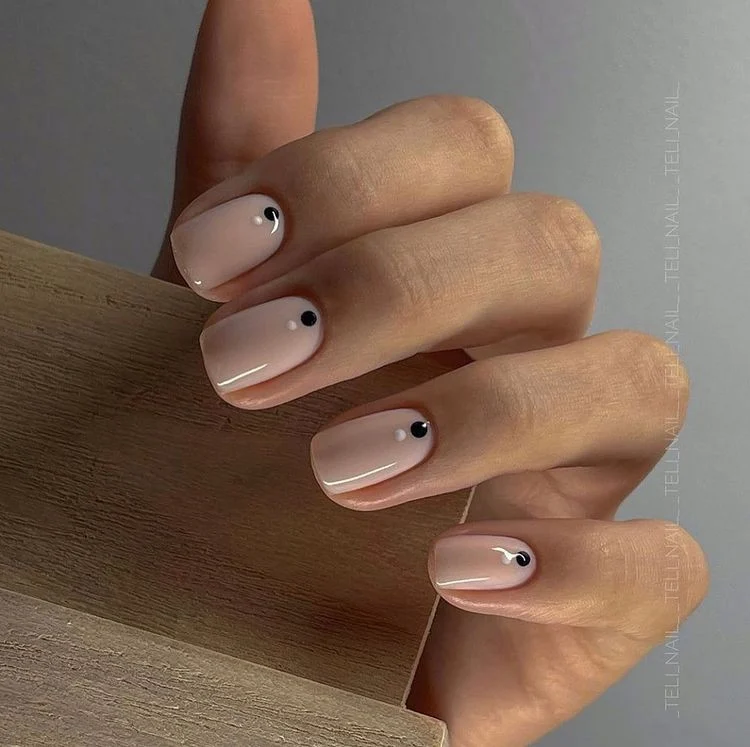

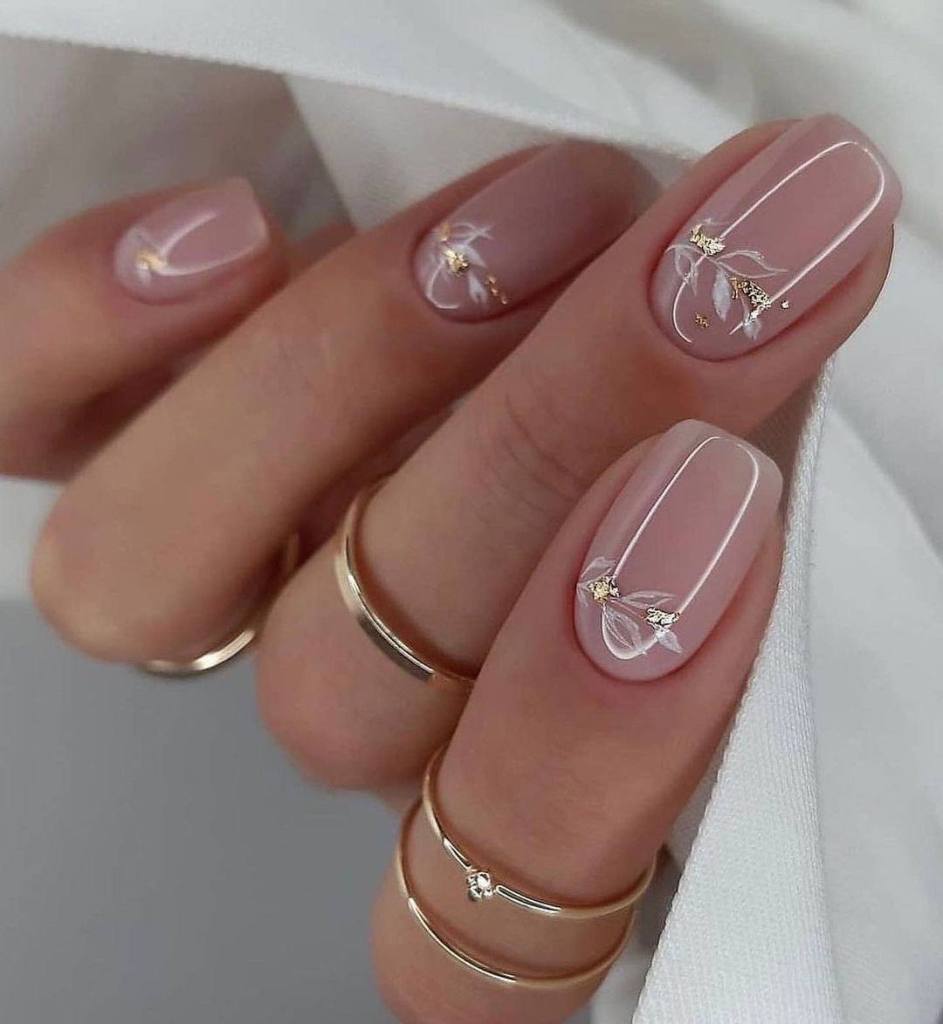
On very short nails, avoid placing several competing details close together. A line that’s too thick or a dot that’s slightly oversized can make the design feel crowded. Negative space is part of the composition, not an area that needs to be filled.
If you prefer the detail to sit entirely along the nail’s edge, our guide to Micro French Nails explores that technique in greater depth. Here, the focus is on accents placed across the nail rather than the traditional tip.
Soft Ombré & Baby Boomer Nails for Work
Soft ombré offers something that a solid color cannot: movement between two tones without a visible dividing line. When the gradient is controlled, it gives the nails dimension while preserving the understated character of a neutral manicure.

What Makes a Baby Boomer Gradient Look Seamless?
Baby boomer nails blend a natural-looking pink or beige base into a pale, diffused white toward the free edge. Unlike a traditional French manicure, the transition is deliberately blurred rather than defined by a crisp smile line.
The most flattering versions avoid a heavy block of white at the tip. Instead, the lighter pigment gradually increases toward the edge while allowing the base to remain visible through the transition.
For shorter nails, the gradient needs careful proportioning. If the white begins too low on the nail plate, the result can look compressed. A narrower, more diffused transition generally gives the design a lighter appearance.


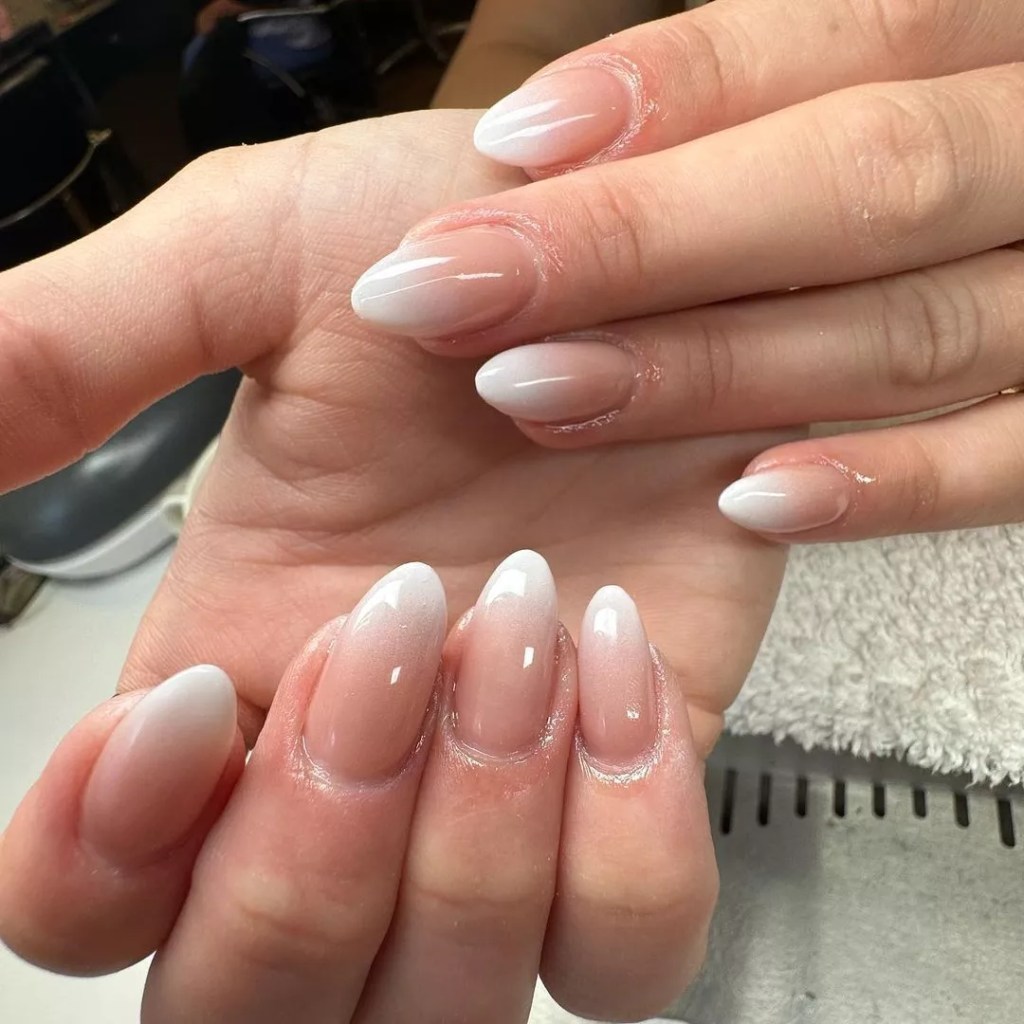
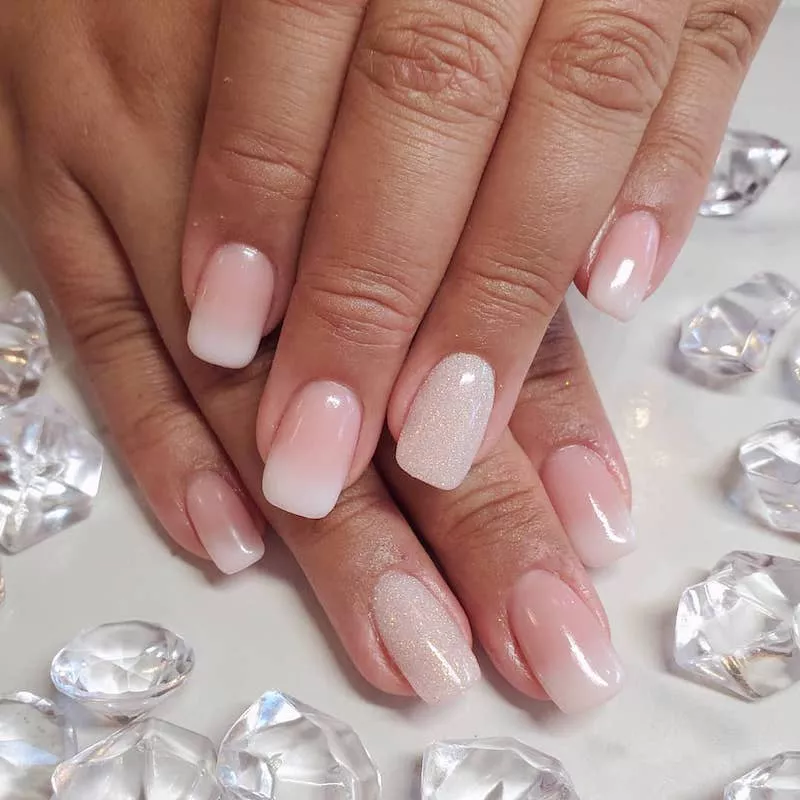
A baby boomer manicure also allows more flexibility in the base shade than its name suggests. A neutral beige transition can feel warmer, while a cool pink-to-white blend creates a fresher contrast. The choice should depend on how the two pigments blend together, not simply on which colors look attractive separately.
Pearl Sheen & Sheer Chrome: Subtle Shine Without the Glitter
Not all shine comes from glitter. Pearl finishes and translucent chrome effects reflect light across the nail’s surface, creating a soft luminosity rather than distinct sparkling particles. That difference makes them especially useful when you want a manicure that looks understated indoors but catches the light as your hands move.

Pearl, Glazed and Chrome: Understanding the Finish
These effects are often grouped together, but they don’t produce identical results.
- Pearlescent polish contains fine reflective pigments that create a delicate, multidirectional glow. The finish may appear creamy, pink, ivory, or softly iridescent depending on the formula.
- Glazed nails emphasize a smooth, luminous surface. Depending on the technique, the effect may come from a translucent shimmer product or a fine powder layered over a pale base.
- Sheer chrome adds a reflective veil over the underlying color. On a translucent base, a very light application can create a restrained sheen; heavier application moves toward a more metallic appearance.
For a minimalist office manicure, the base color should remain recognizable beneath the reflective layer. A sheer champagne, soft pink, or neutral ivory usually allows the light effect to read as part of the manicure rather than an entirely separate metallic coating.


What to check at the salon: Look at the finish under both direct and diffused lighting. A powder that seems almost invisible in shade can become distinctly metallic in sunlight. If you want a softer result, ask for a translucent application rather than a fully opaque chrome layer.
For a different interpretation of pearl and chrome concentrated along the nail tip, explore our guide to Shimmer French Nails. This article focuses on a fine reflective finish across the nail surface instead of a French design.
How to Match Minimalist Nail Designs to Your Work Wardrobe
The most successful minimalist manicures don’t need to match every item in your wardrobe. They work because their color temperature, contrast, and finish feel consistent with the clothes you wear most often.

Start with the overall character of your workwear, then choose a design that complements it rather than competing for attention.
| Wardrobe style | Manicure direction |
|---|---|
| Structured tailoring and crisp shirts | Sheer neutral base with one fine geometric accent |
| Soft knits, cream and beige separates | Warm nude-to-ivory ombré or subtle champagne pearl |
| Cool grays and monochrome outfits | Cool pink base with a restrained silver-toned accent |
| Relaxed business casual | Asymmetric micro detail or softly glazed neutral nails |
| More traditional office dress codes | Low-contrast baby boomer gradient or barely visible pearl sheen |
Jewelry can also influence the effect. Warm pearl and champagne shades tend to feel cohesive with yellow-gold accessories, while cooler pink and silvery finishes complement steel-gray or silver-toned details. These are styling options, not strict matching rules.
One Detail Is Usually Enough
A fine line, a soft gradient, and a reflective finish can each be beautiful independently. Combining all three in a single manicure may weaken the simplicity that makes minimalist nail art appealing.
If you’re choosing nail art for a presentation, interview, or everyday office routine, decide which detail should lead. Keep the remaining elements quiet: a smooth base, balanced length, and consistent finish are often all the support the design needs.
Prefer a completely traditional look without added nail art? Classic Office Nails covers nude, milky, and French options in greater detail. If you want to explore neutral polish shades themselves, see Short Nude Nails.
The appeal of minimalist nail art lies in how much a small detail can change. One precisely placed line feels modern. A beautifully blended ombré softens the entire manicure. A whisper of pearl catches the light without demanding attention.
The best Minimalist Office Nails aren’t necessarily the simplest to create. They’re the ones where every detail feels intentional – and nothing looks as though it was added just to fill the space.
Frequently Asked Questions About Minimalist Office Nails
Can rhinestones and nail stickers work in a minimalist office manicure without looking excessive?
Yes, but the size, placement, and finish of the embellishments matter more than their number. A single tiny crystal near the cuticle can resemble a delicate piece of jewelry, while a fine metallic sticker can create a precise accent without the thickness of hand-painted nail art.
For a cleaner result, choose flat, low-profile decorations and avoid placing raised stones near the free edge, where they’re more likely to catch on clothing or hair. Thin decals should be applied to a properly prepared surface and sealed with a compatible topcoat. Raised crystals require an appropriate adhesive or gel system and secure placement; topcoat alone may not hold them reliably.
The goal is a detail that looks intentional, not an embellishment that competes with the manicure.
Why can a baby boomer gradient look patchy or grainy after application?
Uneven pigment distribution, an unsuitable blending medium, excessive product, or inconsistent application pressure can create visible patches in an ombré. Pale white pigment is particularly unforgiving because dense areas stand out against the translucent base.
A smoother result usually comes from controlled, thin applications with enough blending between color transitions. The exact technique varies by product: sponge-applied lacquer, airbrushed color, and gel gradients should not be treated as interchangeable systems. The topcoat enhances smoothness but cannot reliably hide a poorly blended color layer.
Why does a pearl or chrome manicure sometimes lose its reflective finish around the edges?
Reflective powders depend on the surface they’re applied to and how the finished coating is sealed. Poor powder adhesion, incomplete coverage near the sidewalls, incompatible products, or inadequate sealing at the free edge can contribute to premature wear.
For gel-based chrome techniques, the nail technician should follow the powder and gel manufacturers’ compatible application and curing instructions. Applying more powder is not necessarily the answer; correct preparation, adhesion, and edge protection are more important for lasting results.