
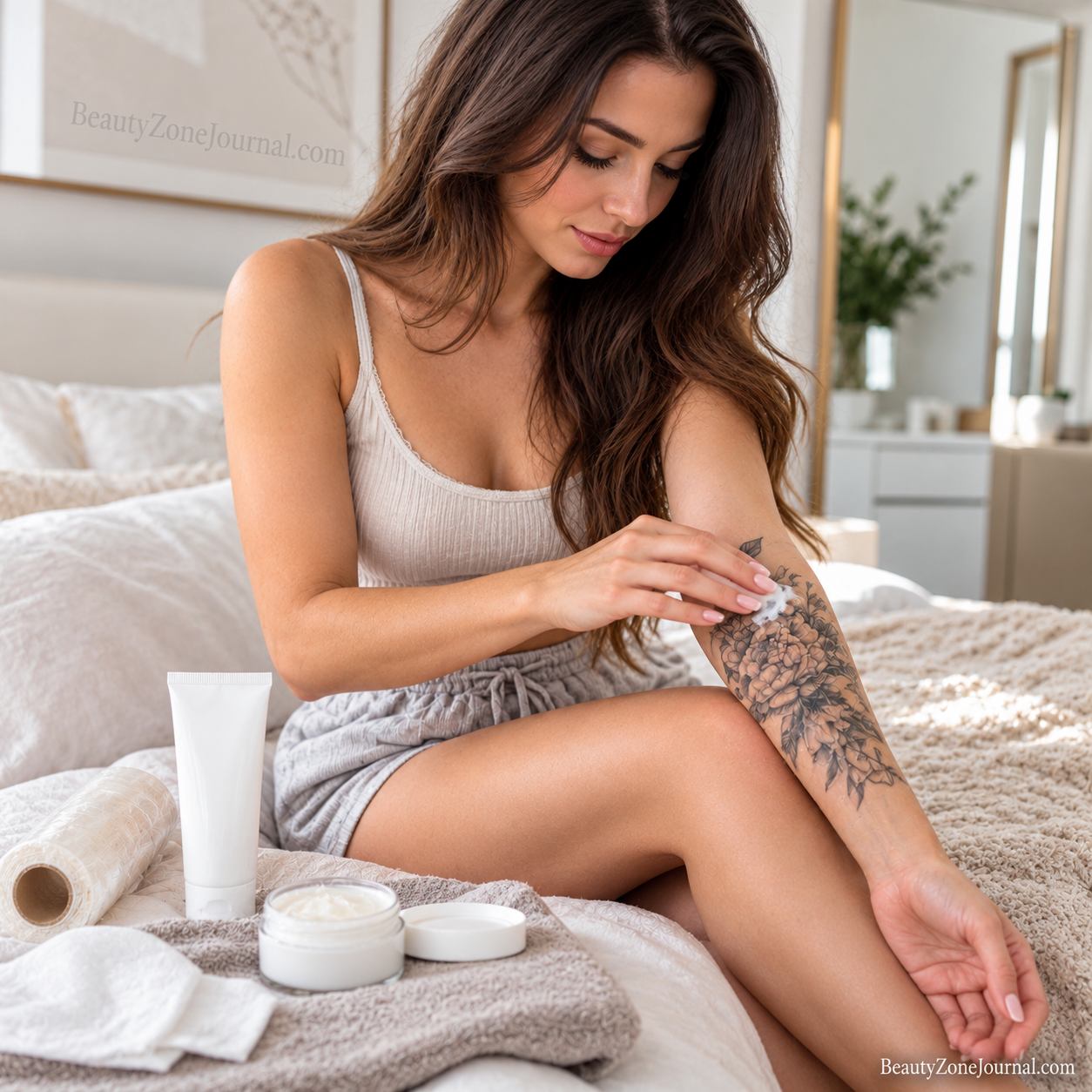
A fresh tattoo can look very different on day one than it does a week later. At first, the skin may look red and feel sensitive.
A few days later, dryness, itching, and peeling can appear. That is often the point when you start wondering whether everything is healing normally or something is wrong.
Tattoo aftercare for women during the first two weeks involves more than washing the area and applying moisturizer. Where the tattoo is placed matters too. A bra band, leggings, underwear, shoulder straps, or workout clothes can all rub against freshly tattooed skin.
Healing does not look exactly the same for everyone. A small forearm tattoo may behave very differently from a large color piece on the thigh. Still, the general timeline can help you understand what to expect during those first 14 days and when a reaction may need more attention.
Table of contents:
How a tattoo heals during the first 14 days
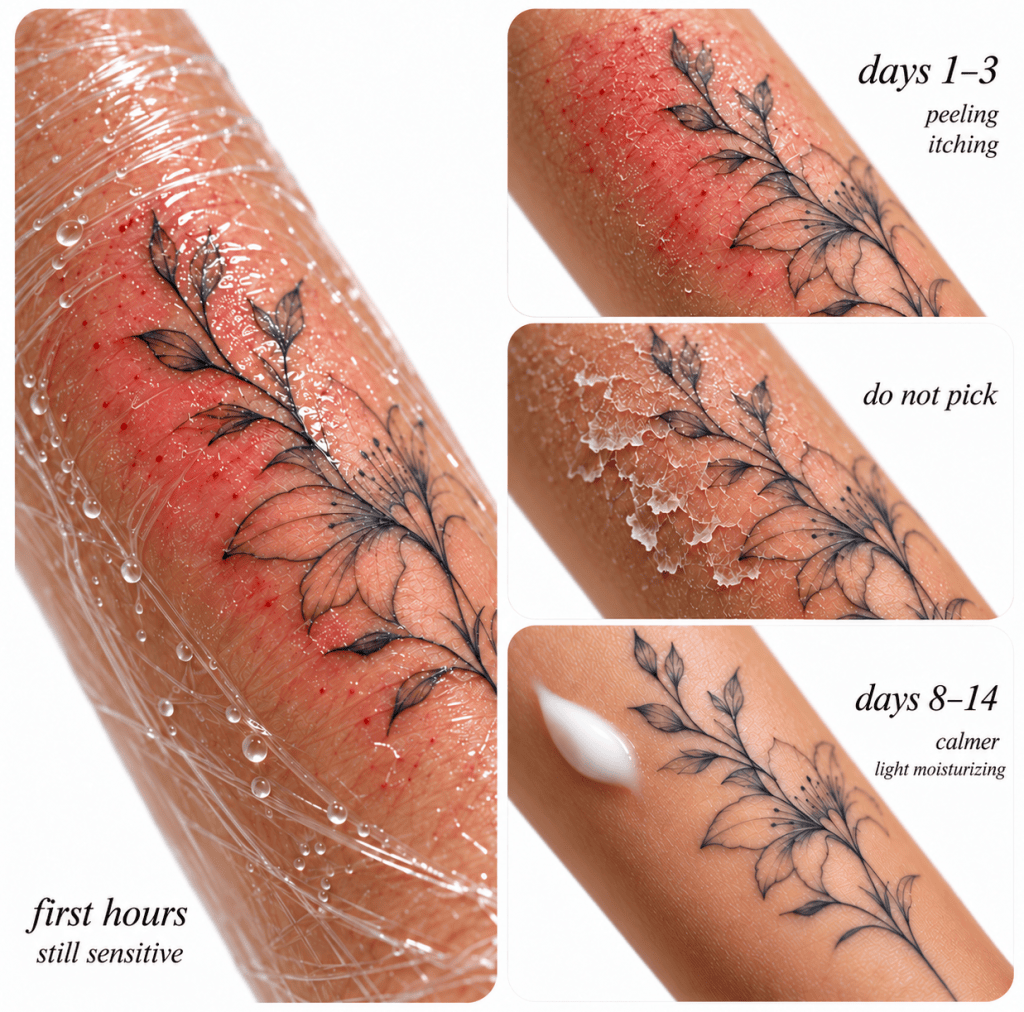
It is easier to think of the first two weeks as several stages rather than one long healing period. Your skin can look and feel quite different at each stage.
| Stage | What you may notice | What to focus on |
|---|---|---|
| First few hours | Redness, tenderness, mild swelling, clear fluid | Avoid unnecessary touching and follow the instructions for your protective covering |
| Days 1–3 | Tightness and gradually decreasing sensitivity | Gentle cleansing, a thin layer of the recommended product, minimal friction |
| Days 4–7 | Dryness, itching, peeling, temporary dullness | Do not pick at flakes or scabs |
| Days 8–14 | Less peeling and a smoother surface | Continue gentle care and do not rush back into every part of your usual routine |
The first few hours after getting a tattoo
Right after your appointment, the tattooed area will usually feel sensitive. Mild redness, swelling, warmth, or tightness can occur.
The skin may also release some clear fluid. If the tattoo is covered with a transparent healing film, that fluid can mix with a small amount of ink and make the tattoo look blurred underneath.
That does not mean the tattoo is ruined or that the ink is “leaking out.”
For the first few hours, try not to touch the area unless you need to, and follow the aftercare instructions given by your tattoo artist.
Days 1–3: the skin is still sensitive
During the first few days, the tattoo may still feel tender when touched, moved, or rubbed by clothing.
You may notice this more on the ribs, thighs, shoulders, or other areas that move frequently.
Clean the area gently. If your artist recommended an aftercare product, apply only a thin layer.
More cream does not mean faster healing.
One simple rule helps here: only touch a fresh tattoo with clean hands, and only when you actually need to.
Days 4–7: peeling and itching
After a few days, the tattoo may start to look less bright.
The skin can become drier and begin to peel, and itching may appear. This is often the stage when it is tempting to pull away loose pieces of skin.
Try not to.
Do not pick at scabs or peeling skin.
Even if a tiny piece looks as though it is about to come off, it is better to let it shed on its own.
Avoid scratching too. Fingernails can easily irritate or damage skin that is still healing.
Days 8–14: it looks better, but healing is not over
By the second week, the tattoo usually looks much calmer.
Peeling starts to settle, the surface becomes smoother, and strong sensitivity often fades.
That does not necessarily mean the skin has finished healing.
At this point, aftercare is usually simpler: gentle cleansing, light moisturizing if the area feels dry, and as little irritation as possible.
The skin should feel comfortable, not stay coated in a thick layer of product.
Healing film or traditional aftercare: what changes?
The first few days can look different depending on the type of protective covering your tattoo artist uses.
Healing under a protective film
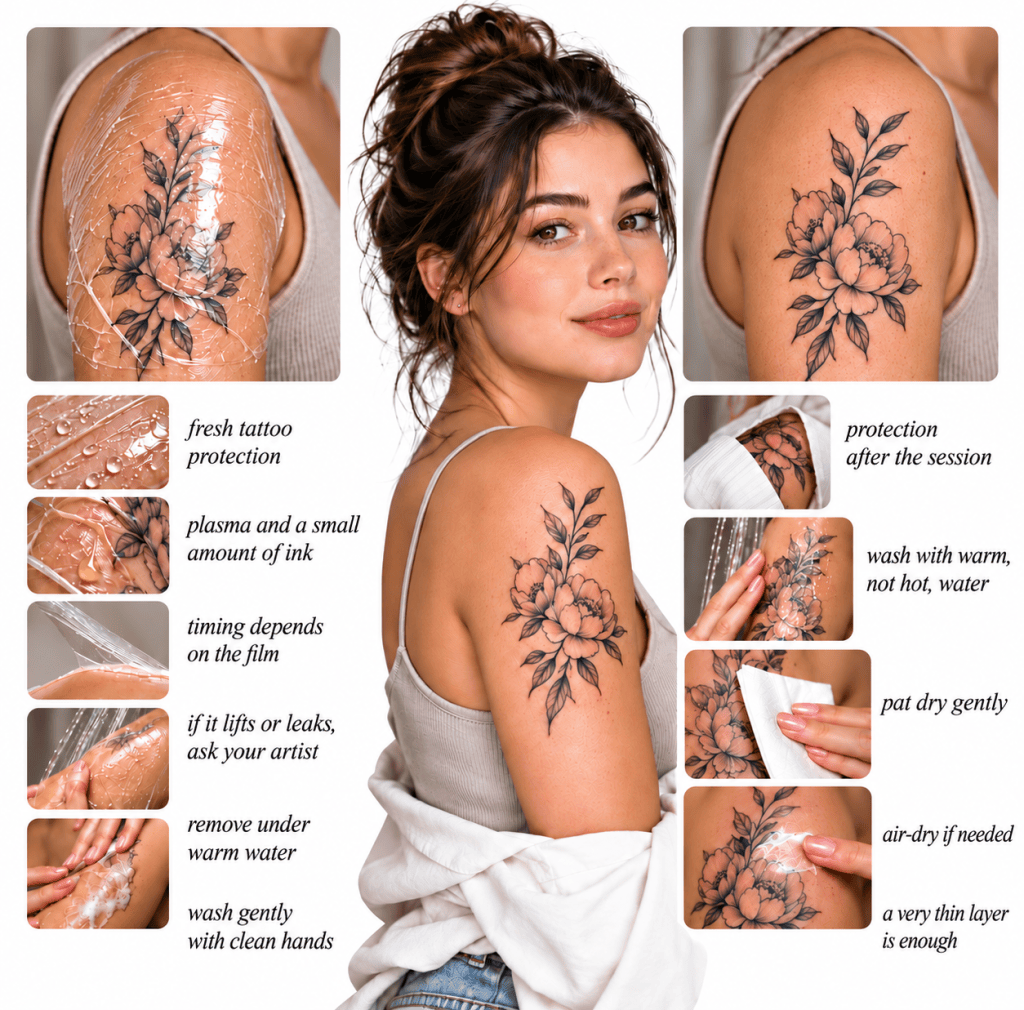
A transparent healing film helps protect a fresh tattoo from dust, clothing, and accidental touching.
Plasma can collect underneath it, sometimes mixed with a small amount of ink. This tends to be more noticeable with larger tattoos or areas with heavier color saturation.
How long you should keep the film on depends on the specific product. Different films come with different instructions, so there is no single time frame that applies to every tattoo.
If the film lifts significantly, water gets underneath it, or it is no longer sealing the tattoo properly, ask your artist what to do next.
How to remove the film: do not pull it sharply away from dry skin. It is usually easier to remove it under warm water, slowly stretching the material along the surface of the skin.
After removing it, gently wash the tattoo with clean hands. There is no need for a washcloth, sponge, or brush.
Traditional healing
With traditional healing, the tattoo is covered for a limited time after the appointment, and the rest of the care happens at home.
Gently wash the area with warm, not hot, water.
Do not rub the tattoo with a regular towel after washing. You can gently pat it with a clean disposable paper towel or let it air-dry.
If you are using an aftercare product, a very thin layer is enough.
What can interfere with a woman’s tattoo healing
There are a few practical details that matter more with certain placements. It is not because women’s skin needs a completely different healing routine, but because clothing, placement, and everyday habits can affect a fresh tattoo.
Clothing and underwear
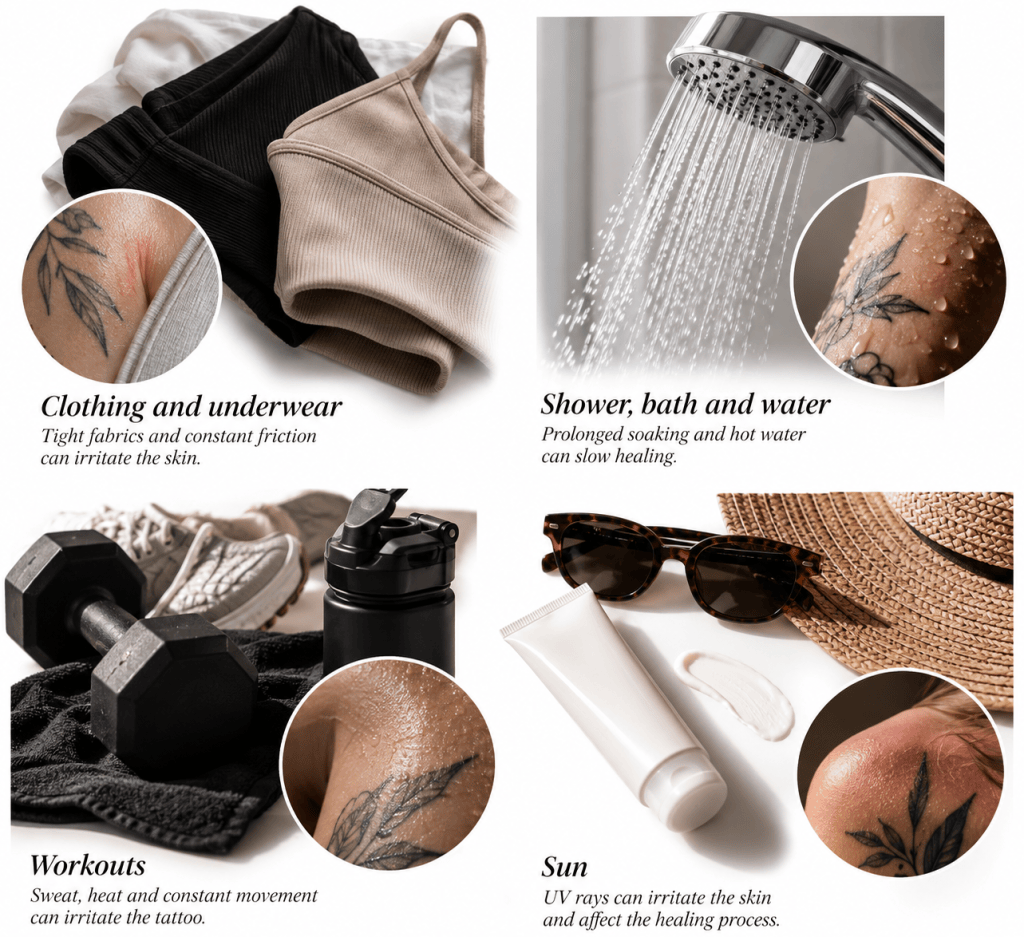
A rib tattoo may sit directly under the band of a bra. A back tattoo can rub against the clasp. Straps may irritate a fresh tattoo on the shoulder or collarbone.
With tattoos on the thigh, lower abdomen, or hip area, tight jeans, leggings, or underwear may create friction.
You do not need to change your entire wardrobe.
Just pay attention to what is constantly rubbing against the fresh area.
Showering, baths, and water
A quick shower is very different from soaking the tattoo for a long time.
If your tattoo can already get wet according to your artist’s instructions and the type of film being used, a short shower is usually fine.
Keep the water warm rather than hot. Avoid directing a strong stream of water straight onto the tattoo, and do not scrub it with a washcloth.
Baths, swimming pools, saunas, and open water are better left until the active healing stage has passed.
Working out
Whether you need a break from exercise depends on the size and placement of the tattoo.
A small forearm tattoo and a gentle walk are one thing. A large thigh tattoo before leg day is another.
Sweat is not the only issue. Tight workout clothing, stretching the skin, friction, and contact with gym equipment can also irritate the area.
If a particular movement keeps bothering the tattoo, adjust or pause that type of exercise for a few days.
Sun and SPF
A fresh tattoo is best kept out of direct sun.
While the surface is healing, it is usually easier to cover the area with light clothing or avoid long periods in strong sunlight.
Once the tattoo has fully healed, UV protection becomes part of long-term tattoo care.
You can follow dermatologists’ recommendations for caring for tattooed skin.
What to avoid during the first two weeks
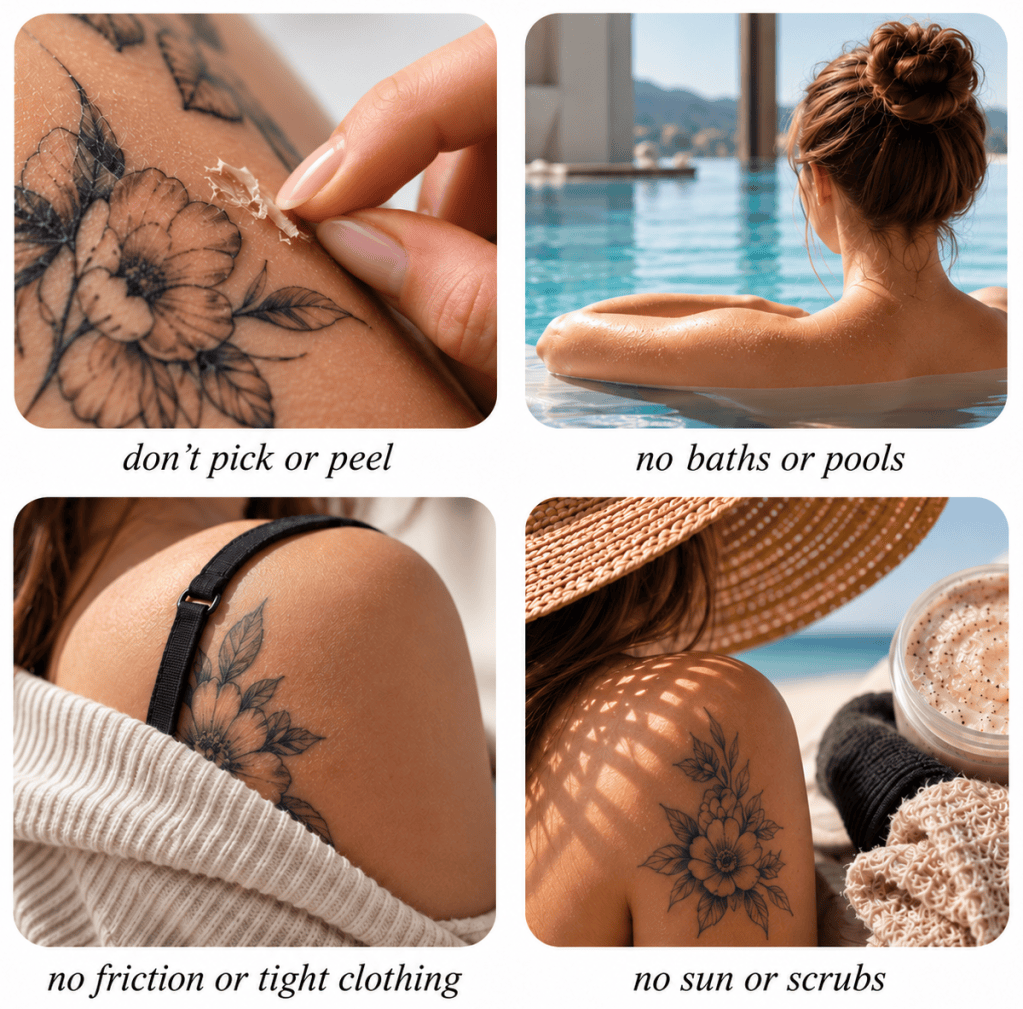
A fresh tattoo does not need a complicated routine with a shelf full of products.
During active healing, try to avoid:
- picking at scabs or peeling skin;
- scratching;
- soaking in a bath for long periods;
- swimming pools, saunas, and open water;
- tanning beds;
- strong direct sun;
- scrubs and exfoliants on the tattooed area;
- heavily fragranced or harsh skincare products;
- tight clothing that constantly rubs the tattoo.
There is also no need to switch products every time the tattoo looks slightly different. The appearance naturally changes as it moves through different healing stages.
What is normal, and when should you see a doctor?
Mild redness, tenderness, and swelling during the first few hours can be part of a normal skin response.
Later, dryness, itching, and peeling may appear.
It helps to look not only at the symptom itself, but at how it changes over time.
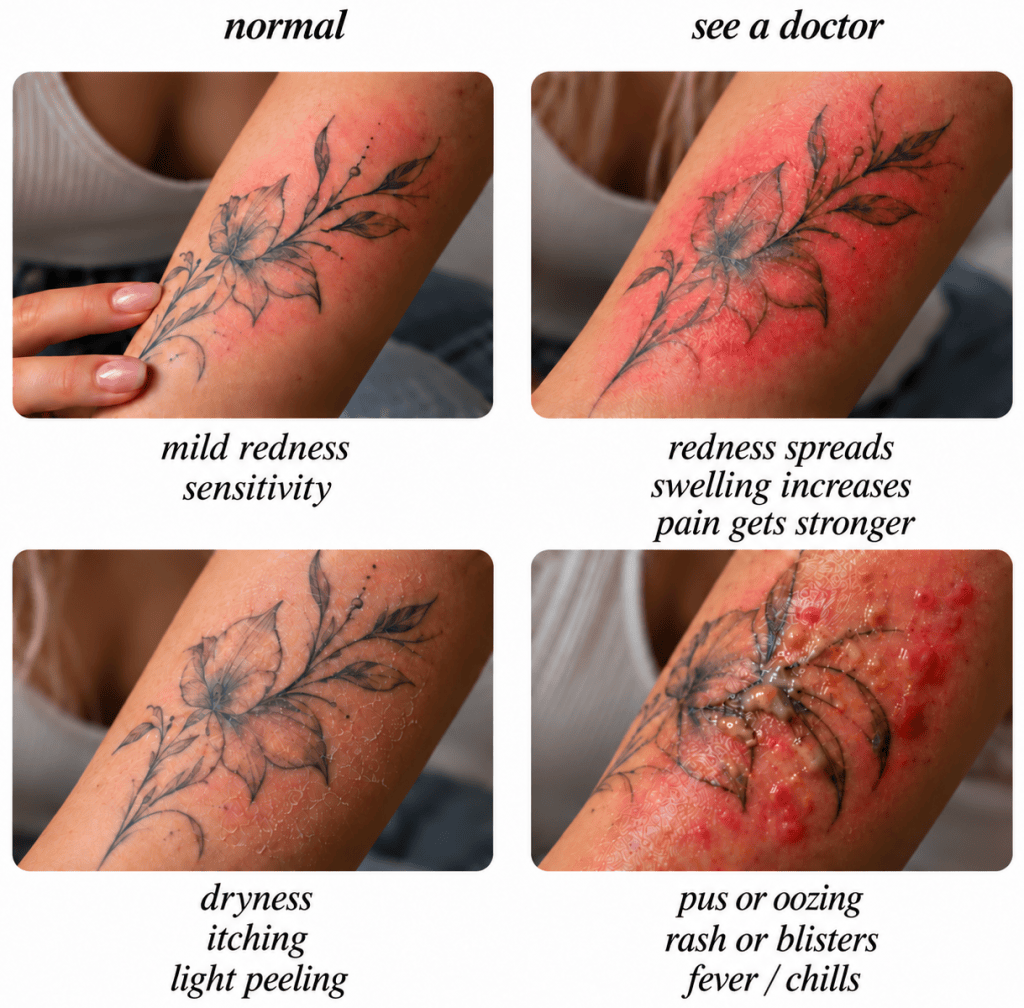
If the area looks calmer each day, that is one situation. If pain, redness, or swelling keeps increasing, that is different.
Seek medical advice if:
- the redness continues to spread;
- pain becomes stronger;
- pus appears;
- swelling noticeably increases;
- open, weeping areas develop;
- you develop a fever or chills;
- you notice a pronounced rash, blisters, or another unusual reaction.
In that situation, it is better not to experiment with medicated ointments on your own.
Why one tattoo may heal faster than another
Even two tattoos on the same person may heal differently.
A small fine-line design on the forearm and a large, heavily saturated thigh tattoo do not affect the skin in the same way.
The size of the tattoo, the amount of saturated color, the placement, repeated friction from clothing, and your individual skin response can all affect the healing process.
That is why comparing your tattoo with someone else’s day-five or day-seven healing photo is rarely very useful.
Common tattoo aftercare mistakes women make
One extreme is doing too much.
Constantly washing the tattoo, applying too much cream, touching the area, or switching from one product to another is unnecessary.
The other extreme is ignoring the tattoo as soon as it stops hurting.
By day seven or ten, the surface may look almost normal even though the skin is still recovering.
Another common mistake is copying a friend’s aftercare routine. She may have had a different type of film, a different placement, a smaller tattoo, or a completely different skin response.
It makes more sense to follow the advice given for your tattoo and pay attention to how your own skin is behaving.
Common Questions
Is it normal to have fluid under the healing film?
A small amount of plasma can appear during the first few days. If the film is damaged, leaking, or the skin underneath looks unusual, contact your tattoo artist.
Can I wear a bra after getting a tattoo on my ribs or back?
If the band, strap, or clasp sits directly on the fresh tattoo and keeps rubbing it, try to reduce that contact temporarily.
What should I do if my tattoo is very itchy?
Do not scratch it. Mild itching can come with peeling, but strong itching together with a rash, blisters, or significant swelling deserves more attention.
Can I use my regular body lotion?
During the first few days, avoid experimenting with heavily fragranced products. Use something appropriate for this stage that does not irritate the area.
Is a tattoo fully healed after two weeks?
Not necessarily. The surface often looks much better after 14 days, but full recovery can take longer.
Read also: