

Dry heels, tight-feeling skin, rough patches on the feet, and the constant urge to apply yet another layer of cream are familiar problems for many women.
They often become more noticeable in winter after months of closed shoes, or in summer when feet are exposed to sun, dust, and open sandals.
Sometimes a regular moisturizer simply is not enough.
A paraffin wax treatment for feet works differently. Instead of only adding another skincare product, it creates a warm, occlusive layer that helps reduce moisture loss and leaves the skin noticeably softer.
The treatment does have its limits. Paraffin wax will not permanently remove calluses, treat unexplained heel cracks, or fix an underlying foot condition. It should also never be applied over damaged or inflamed skin.
Here is what actually happens during a paraffin foot treatment, how the process is usually done, and how to tell whether it makes sense for your feet.
What is a paraffin wax treatment for feet?
Beauty salons and foot-care professionals use cosmetic-grade paraffin wax made specifically for this type of treatment. Once heated, the wax melts and can be applied warm to the skin.
As it cools, the paraffin gradually hardens into a dense layer that allows very little moisture to escape.
That is the main reason the treatment works.
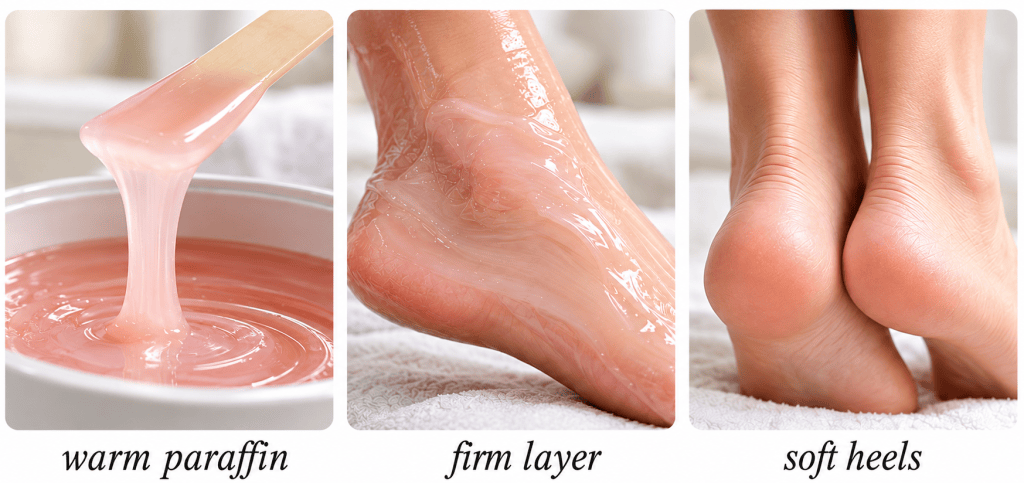
Under the paraffin layer, water evaporates from the skin more slowly. At the same time, the gentle warmth temporarily raises the skin’s temperature and increases local circulation.
After the treatment, feet usually feel:
- softer;
- smoother;
- less dry;
- warm and relaxed;
- more comfortable to the touch.
The difference is often most noticeable on the heels and other areas where the skin tends to become rough quickly.
Why does paraffin make the skin feel softer?
Paraffin treatments are sometimes explained too simply, with claims that the wax “opens the pores” or “feeds the skin.”
The real mechanism is a little more interesting.
Paraffin itself is not a nourishing active ingredient and does not supply the skin with vitamins.
Its main job is to create a warm, occlusive layer.
When less moisture escapes from the surface, the outermost layer of the skin gradually holds more water and becomes more flexible.
That is why rough heels can look and feel much smoother after the treatment.
A foot cream, mask, or other conditioning product is often applied before the paraffin.
Because it is covered by the wax, the product does not dry out or rub off as quickly, so it stays in contact with the skin for longer.
This is one reason a paraffin wax treatment for feet can work especially well as the finishing step after a pedicure or as part of a more intensive foot-care routine.
Who may enjoy this treatment?
Paraffin therapy is usually chosen not because there is a serious foot problem, but because the skin feels dry, rough, or uncomfortable.
It may be a good option if:
- your heels become dry quickly;
- the skin on your feet feels rough;
- you want to keep that smooth feeling longer after a pedicure;
- your feet often feel cold and you enjoy gentle warmth;
- the skin feels tight;
- regular creams only seem to help for a short time.

Paraffin treatments can feel especially good during the colder months.
After 15–20 minutes in warm thermal socks, the feet do not just feel more cared for. The warmth itself can be very relaxing.
What paraffin therapy cannot do
It helps to be realistic about what this treatment is designed to do.
Paraffin can soften the outer layer of the skin, but it does not correct the cause of recurring heel cracks, significant hyperkeratosis, or painful calluses.
For example, heels that crack again and again may be affected by more than simple dryness. Foot pressure, footwear, skin characteristics, fungal infections, and certain health conditions may all contribute.
In that situation, repeatedly doing paraffin treatments is not the best long-term answer.
Paraffin therapy also cannot replace professional foot care when there is already a significant buildup of thick, hardened skin.
That should be managed first. Paraffin can then be used later as supportive care.
How a paraffin wax treatment for feet is done in a salon
The exact technique can vary slightly from one salon to another, but the basic process is usually similar.
Preparing the feet
Before starting, the professional checks the condition of the skin.
This step matters more than it may seem.
There should be no fresh cuts, bleeding cracks, rashes, weeping areas, significant inflammation, or other skin conditions that could make heat and occlusion inappropriate.
The feet are then cleansed and dried thoroughly.
If the paraffin treatment is part of a classic pedicure, it is usually done near the end of the appointment.
Gentle exfoliation
Depending on the condition of the feet, a mild scrub or another gentle exfoliating product may be used first.
The goal is not to aggressively remove as much skin as possible.
It is simply to lift some of the dry surface flakes so the feet feel smoother afterward.
If the skin is already irritated or very sensitive, this step may not be needed at all.
Cream or mask
A cream, balm, or foot mask is applied to clean, dry skin.
For very dry feet, formulas designed to hold moisture and soften the outer layer of the skin are often used.
The combination of the conditioning product and the occlusive paraffin layer is what creates that noticeably smooth feeling many people like after the treatment.
Applying the warm paraffin
There are several ways to apply paraffin.
With the classic method, the foot is coated several times with warm cosmetic-grade wax. Some salons use a brush instead, while others work with single-use paraffin systems.
The temperature should always feel comfortable.
The treatment should not burn or sting.
After several layers, a fairly thick wax coating forms around the foot.
Keeping the feet warm
A protective bag or wrap is placed over the paraffin, followed by thermal socks.
This helps the warmth last longer.
The treatment usually stays on for around 15–20 minutes while the wax slowly cools and hardens.
Removing the paraffin
The hardened wax is removed together with the protective wrap.
There is no need to scrub or wash the feet immediately afterward.
Any cream or mask left on the skin can simply be massaged in.
This is usually when the difference feels most noticeable: the heels feel smoother, while the skin on the feet feels more flexible and comfortable.
Hot vs. cold paraffin therapy: what is the difference?

Alongside traditional heated paraffin, you may also see products sold as cold paraffin creams.
These do not need to be warmed and usually have a texture closer to a thick balm.
| Option | How it differs |
|---|---|
| Hot paraffin | Provides noticeable warmth and creates a dense occlusive layer |
| Cold paraffin | Used without heating and works more like an intensive conditioning mask |
| Regular foot cream | Suitable for daily care but does not create the same heavy occlusive layer |
Cold paraffin is not automatically suitable for everyone who cannot use the heated version.
If there are issues with the skin, circulation, or sensation in the feet, it is better to understand the reason for the restriction first.
Can paraffin therapy be done after a pedicure?
Yes. In fact, the two can work very well together.
A pedicure mainly focuses on the nails and areas of hardened skin, while the paraffin step helps restore softness and reduce that dry, tight feeling.
There is one catch.
If the skin was cut, irritated, or overworked during the pedicure, hot paraffin should not be applied immediately afterward.
Strong heat on freshly irritated skin can make discomfort worse.
After a combination pedicure, paraffin can be a relaxing finishing step as long as the skin is calm and undamaged.
What if your heels are extremely dry or cracked?
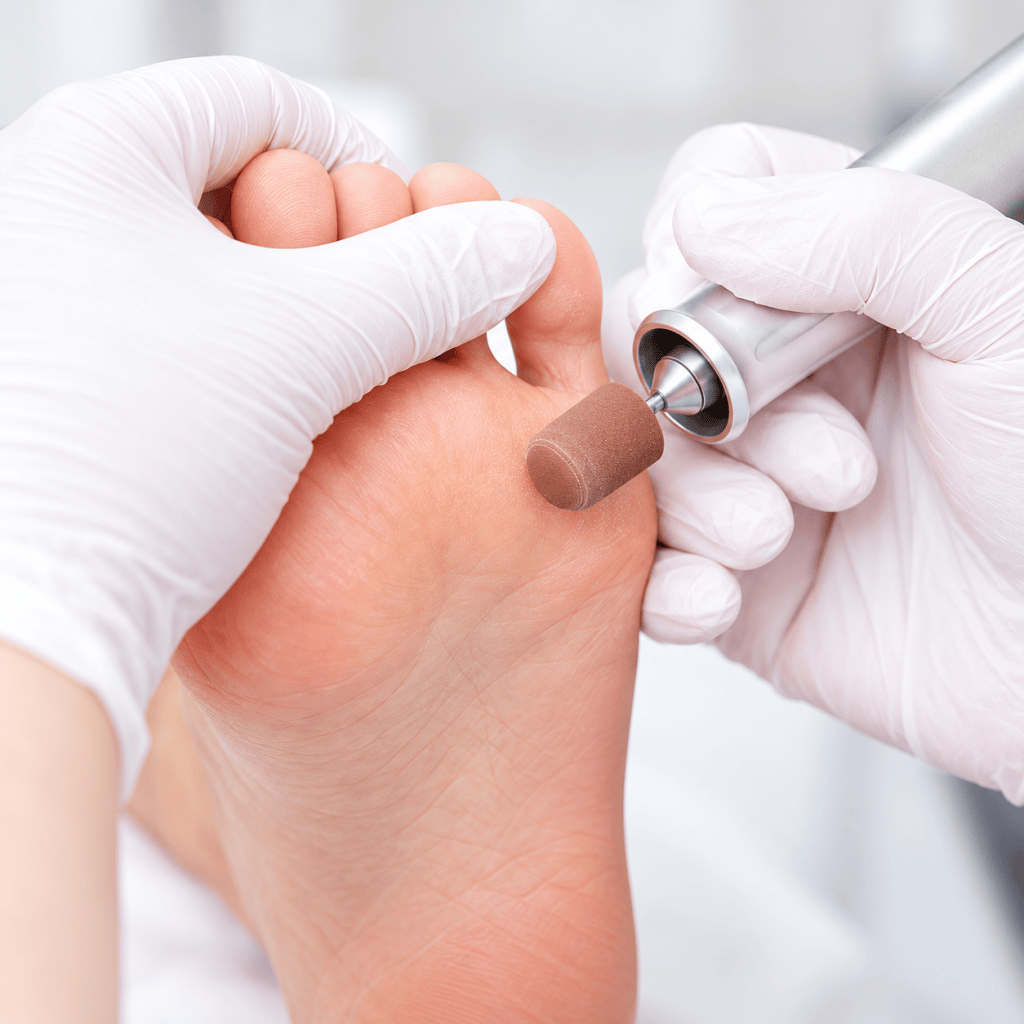
This is where things can be a little counterintuitive: very dry heels are not always a reason to go straight for paraffin.
First, look at the type of cracking.
If you only have surface dryness and fine lines without pain or bleeding, intensive moisturizing care may help make the skin more flexible.
But if a crack:
- is deep;
- hurts when you walk;
- bleeds;
- has red or inflamed edges;
- is weeping;
- does not heal,
hot paraffin should not be applied over it.
If you have deep cracks, painful calluses, or significant thickening of the skin, you may need more than regular cosmetic care. In some cases, a medical pedicure is the more appropriate next step.
The priority is to understand what is causing the problem, allow the skin to recover, and only then return to cosmetic treatments.
When should you avoid paraffin therapy for feet?
Even though paraffin therapy may seem like a simple beauty treatment, heat and heavy occlusion are not suitable for every type of skin.
Avoid applying paraffin over:
- open wounds;
- fresh cuts;
- bleeding cracks;
- pustules;
- active irritation;
- weeping areas;
- suspected skin infections.
Extra caution is also needed if sensation in the feet is significantly reduced or circulation is impaired.
In those situations, it may be harder to notice that the wax is too hot.
If you have diabetes, neuropathy, significant vascular problems, or a chronic skin condition affecting the feet, heat-based foot treatments are something to discuss with a healthcare professional rather than treating as a routine at-home spa step.
Can you do paraffin therapy at home?
Yes, but technique matters.
Use cosmetic-grade paraffin designed for skincare treatments, not ordinary candle wax.
The easiest option is a paraffin bath that melts the wax and keeps it at a controlled temperature.
Always check the temperature before applying it.
The wax should feel pleasantly warm, never hot enough to burn the skin.
Hygiene is another point to consider.
If a paraffin bath is used by several people, repeatedly dipping different feet into the same wax is not good practice. In a professional setting, proper hygiene protocols should be used to avoid contaminating the product.
With a personal home device, the risk is lower, but clean skin and clean equipment still matter.
How often can you have a paraffin treatment?

There is no universal schedule.
For cosmetic foot care, the frequency usually depends on how the skin feels.
If your feet stay soft after one session, there is no reason to repeat the treatment simply because a week has passed.
On the other hand, if your heels become very dry again after only a few days, the issue is probably not that you did not use enough paraffin.
Your everyday routine may need more attention.
A good foot cream used consistently at home will usually matter more over time than an occasional salon treatment.
How to make the softness last longer
The easiest approach is not to wait until your heels become extremely dry again.
Apply foot cream after a shower or bath while the skin is still slightly damp.
For feet that are prone to significant dryness, products with ingredients that help retain water and soften the outer layer of the skin can be especially useful.
There is also no need to file the heels aggressively every day.
Too much mechanical exfoliation can have the opposite effect: the skin may become sensitive, while roughness returns very quickly.
A moderate amount of exfoliation combined with consistent home care is usually a better approach.
What to expect after the first treatment
The difference can usually be seen and felt right away.
The heels tend to feel smoother, dry areas may look less noticeable, and the skin often feels more supple.
But this is a cosmetic effect, not a permanent change in the structure of the skin.
If regular foot care stops, dryness will gradually return.
That is why a paraffin wax treatment for feet works best as part of an ongoing care routine rather than as a one-time fix.
Common Questions
Can you have a paraffin treatment before gel polish?
If the treatment includes a rich cream or foot mask, it usually makes more sense to complete the nail coating first. Oily residue on the nail plate can interfere with proper nail preparation.
Do you need to wash your feet after paraffin therapy?
Usually not. Once the wax is removed, any remaining cream or mask can simply be massaged into the skin.
Can you put shoes on immediately afterward?
Yes, but if possible, give the product a few minutes to absorb first. This also helps prevent your feet from feeling slippery inside your shoes.
Why does paraffin therapy work better for some people than others?
A lot depends on the starting condition of the skin. With simple dryness, one session may make a noticeable difference. If there is thick hyperkeratosis, calluses, or deep cracking, paraffin therapy alone is unlikely to be enough.
Can paraffin dry out the skin?
A properly performed treatment should not dry out the skin. If an aggressive peel or excessive filing was done beforehand, discomfort afterward may be related to over-exfoliation rather than the paraffin itself.
Do you have to have paraffin therapy done in a salon?
No. Home paraffin kits and baths are available. The advantage of a salon treatment is that the condition of the skin can be assessed first, the feet can be prepared properly, and the temperature can be controlled throughout the session.